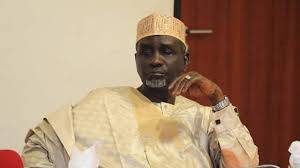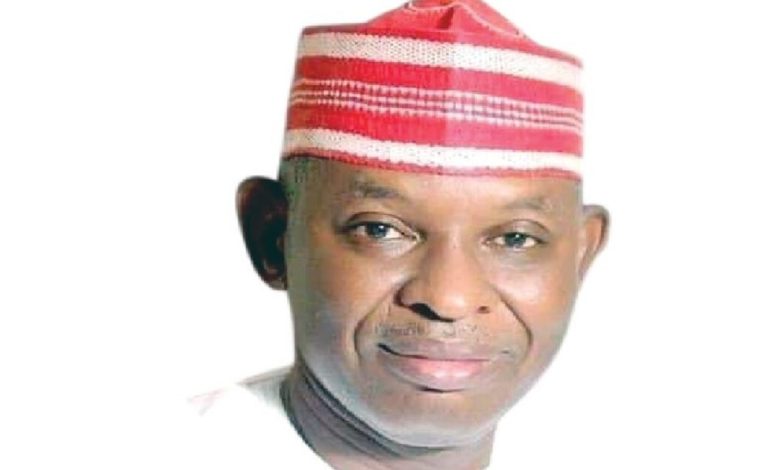
As the 2027 general elections draw near, HUSSAINI IBRAHIM examines the latest political developments in Kano State where bigwigs like Governor Kabir Yusuf, ex-deputy governor Nasiru Gawuna, and former governor Musa Kwankwaso have defected from one party to another
The political landscape in Kano State has entered one of its most volatile and unpredictable phases in recent history, following a series of high-profile defections, counter-defections, and strategic realignments steadily reshaping political loyalty and power structures ahead of the 2027 general elections.
What began as isolated movements by key actors has now evolved into a broader reconfiguration of alliances across major political blocs, with implications extending beyond Kano into national politics.
At the centre of this unfolding political alliance are Governor Abba Yusuf of Kano State, former governor Rabiu Kwankwaso, and former deputy governor Nasiru Gawuna—three influential figures whose shifting allegiances continue to redefine political identity in the state.
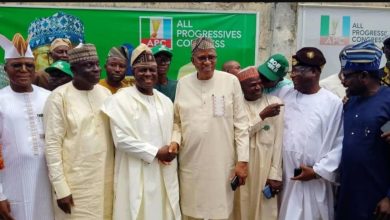
In the evolving political configuration, what stands out is a striking reversal of earlier alignments. Governor Yusuf, who rose under the Kwankwasiyya political movement led by Kwankwaso, has recalibrated his position by aligning with the political structure of former governor Abdullahi Ganduje, through his return to the All Progressives Congress.
The move has been widely interpreted as a strategic effort to consolidate governance and strengthen access to federal support.
Conversely, Gawuna—once a key figure within the APC and its 2023 governorship candidate—has repositioned himself within the emerging opposition coalition, aligning with the African Democratic Congress. His defection is widely regarded as one of the most consequential political shifts in Kano’s recent history.
The political tremors intensified when Kwankwaso formally exited the New Nigeria Peoples Party and joined the ADC, a decision that sent shockwaves across party structures and grassroots networks built around his long-standing influence.
Speaking during his formal registration at his Gidan Kwankwasiyya residence, Kwankwaso described the move as painful but necessary.
“I wish to formally announce my resignation from the New Nigeria Peoples Party with immediate effect,” he said, adding that the decision was driven by the need for a broader political alignment in a changing national landscape.
The event drew high-profile political figures, including David Mark, Aminu Tambuwal, Rotimi Amaechi, and Peter Obi, signalling the emergence of a broader opposition coalition around the ADC.
Amid these shifts, the Kano State Chairman of the ADC, Musa Ungogo, said the party was adopting a consensus-based strategy to manage the influx of new members and maintain internal cohesion.
According to Ungogo, the ADC’s focus goes beyond political appointments, emphasising solutions to pressing socio-economic challenges.
“It’s not about gaining appointments, but about saving the people from banditry, hunger and poverty,” he said, adding that Kwankwaso’s entry had strengthened the party’s structure and reinforced calls for unity.
He disclosed that the party leadership had agreed to adopt consensus in selecting candidates, noting that such an approach would prevent internal conflict and ensure fairness ahead of 2027.
Ungogo also revealed that discussions with Kwankwaso centred on supporting any candidate that emerges through consensus, a move seen as strategic in consolidating opposition strength.
On the ground, the realignments are already reshaping structures at the grassroots. The Kwankwasiyya Movement, through its spokesperson, Mansur Kurugu, maintained that the defections had strengthened the ADC and boosted confidence among supporters.
“The realignments we are witnessing today are a clear indication that the entry of Senator Rabiu Musa Kwankwaso into the ADC has inspired confidence across the board,” he said.
Kurugu, however, described Governor Yusuf’s exit from the movement as a significant loss, though he insisted the grassroots base remained intact.
“We acknowledge that losing a sitting governor is a big loss, but what was lost is the individual, not the people,” he added.
The unfolding political developments have been further complicated by a fresh crisis within the APC, following the resignation of the Deputy Governor, Aminu Gwarzo, which has triggered intense political consultations and renewed contestation over his replacement.
The resignation, which was announced on Friday, March 27, in a statement issued by the spokesperson for the Kwankwasiyya Movement, Habibu Mohammed, followed ongoing impeachment proceedings initiated against Gwarzo by the Kano State House of Assembly.
Although details of the allegations were not officially disclosed at the time of his resignation, the move was widely interpreted by political observers as a strategic step to forestall a possible impeachment, which could have further escalated tensions within the state’s political space.
The sudden exit of the deputy governor has since ignited widespread debate across party lines and political blocs on who should succeed him, with various interests within the APC and beyond positioning for influence in the succession process.
Amid the growing uncertainty, Ganduje had reportedly endorsed Murtala Garo as his preferred candidate for the vacant position.
A credible source, who spoke to Sunday PUNCH on condition of anonymity because he was not permitted to speak on the matter, disclosed that Ganduje made the push during a closed-door meeting with President Bola Tinubu at the Presidential Villa, Abuja.
President Tinubu had earlier received Ganduje and the former Minister of Defence, Badaru Abubakar, in separate meetings at the Presidential Villa, which is seen as part of ongoing political consultations across key states ahead of future electoral contests.
According to the source, Ganduje presented Garo as a loyal political ally with strong grassroots mobilisation capacity across Kano State, describing him as a dependable figure within the APC structure and someone capable of strengthening the party’s political fortunes.
The source quoted the former governor as expressing confidence in Garo’s ability to consolidate party structures and mobilise support across strategic voting blocs, particularly at the grassroots level where electoral outcomes are often determined.
“He sees Garo as someone who understands the political terrain very well and has consistently demonstrated loyalty to the party. His grassroots network is also considered a major advantage,” the source said.
Garo, who previously served as Commissioner for Local Government and Chieftaincy Affairs under Ganduje’s administration, is widely regarded as one of the former governor’s closest political associates, with significant influence across local government structures in the state.
He was also the deputy governorship candidate of the APC in the 2023 general elections, running alongside Gawuna. The pairing reflected his political relevance and strategic importance within the party’s electoral framework.
However, even before Ganduje’s reported endorsement, political stakeholders within Kano South had begun internal consultations, raising concerns over zoning and representation in the selection of a new deputy governor.
Findings by Sunday PUNCH indicate that key APC stakeholders from the Kano South senatorial district, led by Senator Abdulrahman Sumaila, held an emergency meeting to deliberate on developments surrounding the vacant position.
Those in attendance at the meeting included Sumaila, a member of the House of Representatives, Alhassan Doguwa, as well as other influential political figures such as Jibrin Kofa and Alhassan Rurum.
The spokesperson for Sumaila, confirmed to Sunday PUNCH that the meeting centred on issues affecting the political interest of the zone.
“The meeting was convened to discuss critical political developments affecting Kano South and to ensure that the zone is not sidelined in the ongoing discussions surrounding the vacant position of deputy governor,” he said.
He added that stakeholders from the area were united in their demand for fairness and inclusiveness in the decision-making process.
However, another source familiar with the deliberations disclosed that the meeting was specifically convened to push for the emergence of a deputy governor from Kano South, citing long-standing concerns over marginalisation in the state’s power-sharing arrangement.
According to the source, the stakeholders argued that the position of deputy governor had historically rotated within Kano North and Kano Central, leaving Kano South underrepresented in the state’s executive structure.
“The meeting was more than just consultations. It was about asserting the political relevance of Kano South and making a strong case for the zone to produce the next deputy governor,” the source said.
Political observers note that the interplay between Ganduje’s endorsement, zoning agitations and ongoing consultations at the national level could shape the eventual outcome, while also determining the level of cohesion within the party ahead of future elections.
The defection of Gawuna has equally generated intense political debate. His ally, Ahmad Gogel, described the move as driven by constituency interest rather than personal ambition.
“After wide consultations with family, supporters and close associates, the decision was taken in the collective interest,” he said.
Gogel emphasised that Gawuna remains committed to party unity and would support any candidate that emerges through the ADC’s selection process.
“If the party decides to give him the ticket, that’s fine. If not, whoever emerges, he will support,” he added.
Also reacting, a former ADC governorship candidate in the 2023 elections, Ibrahim Khalil, said the wave of defections should be seen as part of a broader effort to strengthen the party’s structure.
Speaking through an ally, he stressed the need for careful management of internal dynamics to avoid friction between old members and new entrants.
“Politics is about numbers and structure. What we are witnessing is an expansion of both, but it must be managed carefully to avoid division,” he said.
Beyond party positions, political analysts say the unfolding developments reflect deeper structural shifts in Kano politics.
A political scientist at Bayero University Kano, Kamilu Fagge, argued that the realignments are largely driven by personal ambition rather than ideology.
“What we are witnessing in Kano is a fluid political landscape where loyalty is secondary. The dominant motivation is personal political survival and ambition,” he said.
Fagge noted that the emergence of the ADC as a viable platform has transformed Kano’s political contest from what was once a near one-horse race into a highly competitive multi-bloc environment.
He, however, maintained that Kwankwaso’s grassroots influence remains formidable, particularly among young voters.
“Kwankwaso still commands a strong emotional and political connection with the youth. That structure remains a major advantage,” he said.
Fagge warned of internal tensions within the APC, identifying competing factions linked to Ganduje, Barau Jibrin, and other emerging blocs, all vying for influence ahead of 2027.
“If these contradictions are not managed carefully, they could weaken the party’s cohesion,” he cautioned.
As Kano State inches closer to 2027, the state remains in a fluid political environment defined by shifting alliances, strategic repositioning, and intensifying competition.
While the APC projects confidence, the Kwankwasiyya movement insists it retains grassroots dominance, and the ADC continues to attract influential actors seeking new political platforms.
What is increasingly clear is that the battle for 2027 has already begun—not just as a contest for votes, but as a struggle for political relevance, structure, and survival in one of Nigeria’s most dynamic political theatres.
🚨BREAKING: Watch The Video Clip Here ➤