A chilling tale from Ekiti offers a powerful lens through which to examine Nigeria’s unfolding political drama ahead of 2027. It tells of a feared strongman who once held his community hostage, reducing many to servitude. To survive, some residents abandoned their identities and took on his name, while others fled. A few, however, stood their ground.
Despite repeated spiritual attempts to bring the tyrant down, nothing worked—until a child suggested a simple but decisive strategy: observe closely and learn what was missing. When the strongman unknowingly revealed the final ingredient needed to defeat him, his fate was sealed. The next attempt succeeded, and the once-invincible oppressor fell. The community regained its freedom.
The lesson is clear: no power is absolute, and even the mightiest figure has a weakness.
This story mirrors today’s political climate. Across Nigeria, insecurity persists, and figures like bandit leader Bello Turji continue to instill fear, particularly in the North-West. Yet, the deeper concern lies in the political leadership’s response—or lack thereof.
Recent public remarks by Bola Ahmed Tinubu and Senate President Godswill Akpabio have raised eyebrows. At a government event, both men appeared to mock the opposition, with Tinubu describing them as “confused” and joking about sending Akpabio to destabilize their ranks. While the exchange drew laughter, it also highlighted a troubling disconnect from the realities facing ordinary Nigerians.
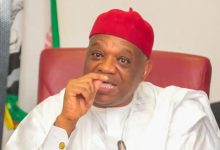
Akpabio went further, suggesting that much of Nigeria’s insecurity is politically driven and could subside after elections. Such a claim, coming from a top official, raises serious questions. If true, why has there been no formal inquiry? If not, why make such a statement at all?
The situation calls to mind the Greek god Ares—powerful yet erratic, feared yet flawed. Like Ares, who was known for both strength and cowardice, modern political actors may project confidence while masking deeper insecurities. Public bravado often conceals private fear.
Tinubu’s repeated insistence that he is “not scared” of 2027 may suggest otherwise. His administration’s actions—tightening control over political space, limiting opposition activities, and clinging to controversial figures in key institutions—point to a leadership wary of genuine competition.
For instance, questions have been raised about the neutrality of electoral bodies and the reluctance to reform them. In a healthy democracy, institutions must be beyond reproach. When they are not, public trust erodes.
The Ekiti folktale reminds us that even the most dominant figure can fall when the people unite with clarity and purpose. The “missing ingredient” in Nigeria’s political equation may well be an informed and determined electorate.
As 2027 approaches, Nigerians face a critical choice. Will they continue under the weight of familiar power structures, or will they seek a new direction? The answer may lie not in the strength of politicians, but in the will of the people.
In the end, it took just one overlooked detail—a symbolic “agama lizard”—to bring down a tyrant. Today, that decisive factor rests in the hands of voters.
The question is: will they use it?
🚨BREAKING: Watch The Video Clip Here ➤