Britain’s King Charles III is expected to meet U.S. President Donald Trump at the White House and address Congress. However, the royal diplomacy is widely seen as capable of easing tensions, but unlikely to resolve substantive disputes.
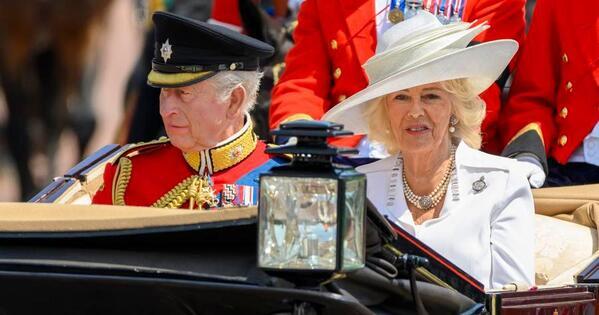
LONDON, April 27 (Xinhua) — Britain’s King Charles III began a four-day state visit to the United States on Monday, his first since ascending the throne, at a moment of mounting strain in bilateral relations.
He is expected to meet U.S. President Donald Trump at the White House and address Congress. Yet the royal diplomacy faces unusual challenges. It is widely seen as capable of easing tensions, but unlikely to resolve substantive disputes.
The visit came amid a widening rift, with Trump repeatedly criticizing Britain’s decision to stay out of U.S. strikes on Iran. Israel and the United States launched joint strikes against Iran on Feb. 28. Iran has ever since tightened its grip on the Strait of Hormuz, a key global route for oil and gas shipments, sharply driving up energy prices worldwide.

Prime Minister Keir Starmer has firmly defended that stance. “I will never let this country be dragged into a war that is not in our interest. Never,” he said at a trade union conference on Monday.
The disagreement over Iran has become the clearest sign of broader tensions. Britain has declined to support U.S. military action and at one point refused to allow bases under its control to be used for bombing operations. Differences have also surfaced over NATO, trade, and Britain’s digital services tax, with Trump threatening tariffs if the levy is not scrapped.
As a constitutional monarch, King Charles cannot negotiate policy, resolve trade disputes, or alter Britain’s position on war and peace.
Nevertheless, Dafydd Townley, a senior teaching fellow in international security at the University of Portsmouth, described the king as “arguably the greatest soft power tool available to Britain,” despite his lack of decision-making authority.
Starmer has also defended the visit, saying the bilateral relationship remains “very important on a number of levels,” and that “the monarchy can reach through the decades” in sustaining ties.
However, analysts warn that expectations in Washington may exceed what the monarch can realistically deliver. Ian Scott, professor of U.S. politics and history at the University of Manchester, said some within the Trump administration appear to overestimate the king’s influence.
“There are some who believe that the King can tell Starmer what to do,” he said. “Aside from misunderstanding the British constitutional system, it is unclear what substantive policy Trump will put forward.”
For some observers, the visit amounts to “crisis management through ceremony.” Salvador Santino Regilme, associate professor of international relations at Leiden University, noted that its symbolism still carries weight, particularly as it coincides with the 250th anniversary of American independence. “That symbolism is not ornamental, it does diplomatic work,” he said.
Despite the tensions, the dispute over Iran does not signal a complete strategic rupture. “Both administrations share the same objectives in the Middle East; they differ mainly in how to achieve them,” Townley said.
Still, the accumulation of disagreements has raised concerns that relations are entering a more difficult phase. Scott described ties as “choppy, troubled, and delicate,” warning of deeper “structural divisions” if rhetoric is not toned down.
“It’s not just that there are ‘policy’ divisions … There is a fundamental difference in outlook,” he said, pointing to contrasts between Washington’s more unilateral approach and Britain’s preference for multilateral coordination.
“Trump has refused to support the international rules-based order since the start of his second term, and this has jarred a number of European leaders,” Townley said.
In Europe, the visit is being closely watched as a barometer of broader transatlantic strains. French daily Liberation said on Monday warned that the king must avoid giving the impression of a humiliating effort to placate an unpredictable U.S. president.
Meanwhile, Swedish daily Dagens Nyheter said on Monday that Britain is using the monarchy as “a diplomatic buffer.” As relations with Trump deteriorate, the king may prove a useful but limited instrument, being able to soothe the atmosphere but unable to settle policy disputes.
Behind the scenes, Britain has spent months preparing the trip. Politico, citing officials familiar with the process, said the trip reflects high-level strategic planning, with implications for Ukraine, NATO, and defense ties.
At home, however, the visit has drawn criticism. Protesters gathered outside Buckingham Palace on Monday, wearing masks of King Charles and Trump, accusing the government of appeasing Washington.
The British people are “sick and tired” of the British government appeasing Trump, protesters said on social media.
Trump “has lit the fuse on a stick of dynamite underneath the world economy by bombing Iran and driving a global energy crisis,” they said. “What this visit does is it signals to Donald Trump that he can violate international law at every turn and he can still be honored by the UK government.”
🚨BREAKING: Watch The Video Clip Here ➤