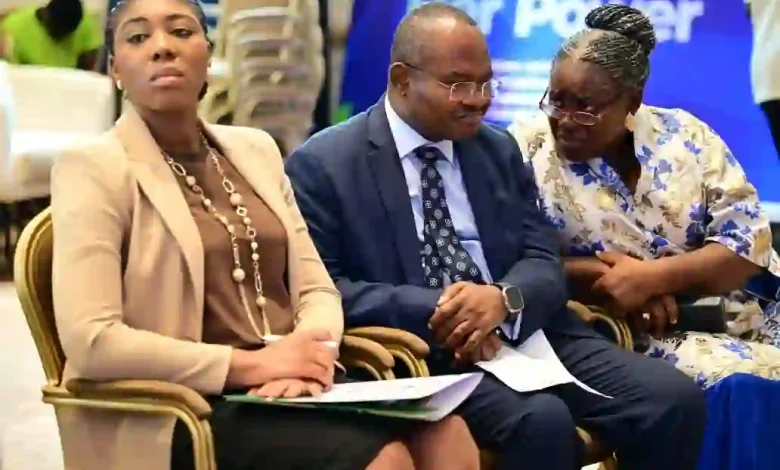
The Executive Director of the Policy and Legal Advocacy Centre (PLAC), Clement Nwankwo, has expressed grave concern over the slow pace of constitutional reform, warning that the “struggle for power” is beginning to eclipse the National Assembly’s legislative commitments.
Speaking at a televised town hall dialogue in Abuja on Thursday, 16 April 2026, Nwankwo noted that while the 10th National Assembly had originally indicated that 45 critical Alteration Bills would be passed by December 2025, the process has stalled as the country moves closer to the next election cycle.
“The indication that we received at the beginning was that latest December of 2025, these bills would have been passed,” Nwankwo said. “The reason for that decision was that it was going to be so important that these bills are passed before politics sets in. Unfortunately, I think politics set in far too early.”
Nwankwo urged lawmakers to “step down” political ambitions to focus on the 12 thematic areas of reform, which include judicial and electoral reforms, local government autonomy, and state policing. He reserved his strongest advocacy for the “Special Seats Bill” for women, describing the current lack of female representation in the 469-member National Assembly as “unjust, unfair, and undemocratic.”
“You cannot have 469 members of the National Assembly and have under 20 of them only be women,” he stated. “If there is anything short [of passing the special seats bill], I think Nigerians will be terribly, terribly disappointed.”
Addressing the same forum, the Deputy Speaker of the House of Representatives and Chairman of the House Committee on Constitution Review, Rt. Hon. Benjamin Kalu, defended the legislature’s efforts, describing the constitution as a “living document” that must evolve with the nation’s realities.
“A nation’s constitution is not merely a legal document, it is the mirror of its aspirations and the machinery of its progress,” Kalu told the audience. He assured the public that the 10th House remains committed to a process that is “inclusive, transparent, and responsive to the will of the people.”
While the Deputy Speaker characterised the review as a “national rebirth process,” Nwankwo argued that the primary responsibility for driving these reforms rests with the Executive. He noted that most current proposals have come from members of the National Assembly as private member bills rather than executive-sponsored legislation.
“It is the Executive that knows what it has promised Nigerians, what it wants to implement, and what it should implement for the improvement of society,” Nwankwo said, adding that the political class must move beyond merely improving the legal framework to “increasing the respect for laws and the constitution.”
The town hall dialogue highlighted several contentious areas still under deliberation, including state policing—a move strongly advocated by President Bola Tinubu—and fiscal reforms aimed at strengthening local government development.
🚨BREAKING: Watch The Video Clip Here ➤