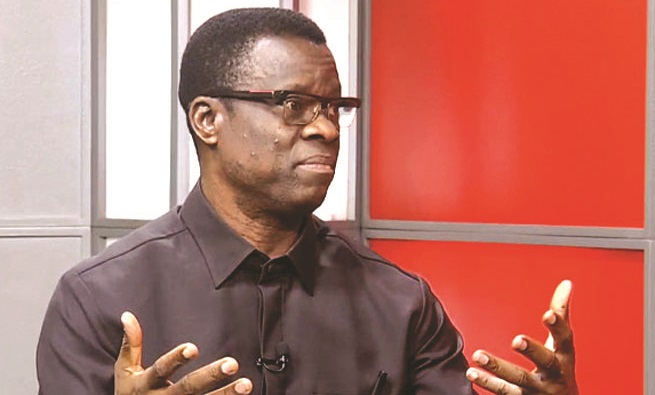
A former Resident Electoral Commissioner of the Independent National Electoral Commission (INEC), Dr. Mike Igini, has raised fresh concerns over the credibility of Nigeria’s 2027 general elections, warning that ethical lapses among political actors could derail the process despite improvements in electoral technology and law.
Speaking at a political parties’ summit in Ibadan on Saturday, Igini said the country risks repeating past electoral failures if urgent steps are not taken to strengthen integrity across all stakeholders involved in the electoral process.


He argued that while innovations such as the Bimodal Voter Accreditation System (BVAS) and the INEC Result Viewing portal (IReV), alongside the Electoral Act 2026, provide a framework for credible polls, they cannot guarantee success without accountability, transparency and commitment from those who operate the system.
“The greatest threat to 2027 might not be technology failure; it is ethics failure,” Igini said, pointing to persistent concerns over vote-buying, political violence, falsification of results, and other forms of manipulation that continue to undermine elections in the country.
He described the 2027 elections as a defining moment for Nigeria’s democracy, stressing that flawed polls could erode public trust, weaken national stability and undermine the legitimacy of elected leaders.
Igini also called on political parties to urgently push for amendments to contentious provisions in the Electoral Act 2026, including sections he said could undermine the sanctity of the ballot if left unchanged.
He emphasised that credible elections are a collective responsibility involving INEC, political parties, the judiciary, security agencies, civil society organisations, the media and voters, noting that no single institution can guarantee electoral integrity.
Beyond legal reforms, he placed responsibility on political parties to deepen internal democracy, conduct credible primaries and deploy well-trained polling agents capable of safeguarding votes at the grassroots.
“Elections are won or lost at polling units, not collation centres,” he said, cautioning that untrained or compromised party agents could nullify the benefits of even the most advanced electoral technologies.
He also warned that the presentation of questionable or forged credentials by candidates poses a serious risk to the 2027 elections, stressing that political parties must take responsibility for the candidates they field.
On post-election processes, Igini stressed the importance of the judiciary as the final arbiter, urging stakeholders to seek redress through legal channels and respect court decisions to sustain democratic order.
On security, he urged law enforcement agencies to remain neutral, professional and impartial, while accusing politicians of fueling election violence through the recruitment of thugs.
He further emphasised the need for all stakeholders to reject vote-buying, avoid interference with electoral technologies and commit to peaceful conduct before, during and after the polls.
“A free election means anyone can win; a credible election means everyone can trust how the winner emerged,” he added, urging political actors to be prepared to accept both victory and defeat in line with democratic principles.
🚨BREAKING: Watch The Video Clip Here ➤