Follow our live coverage here.
LONDON – Companies from consumer goods to travel and mining warned on April 22 that the US-Israeli war with Iran is driving up costs, disrupting supply chains and hurting consumer confidence, clouding financial outlooks.
The cautious tone so far in the quarterly earnings season highlights the pressure on businesses that were already grappling with punishing US tariffs, higher input costs and weak demand before the conflict erupted in late February.
While some companies stuck to their full-year forecasts, executives flagged rising transport and raw material costs, particularly linked to disruption in the Strait of Hormuz, and sharply reduced visibility.


Dulux paint maker AkzoNobel said the conflict was pushing up supply costs, though higher pricing and cost savings helped it beat market expectations.
“Our raw material basket is going to go up by something like the high teens (percentage), given the disruption of the Strait of Hormuz,” CEO Greg Poux-Guillaume said, adding that the full impact would be felt over the next two quarters.
AkzoNobel sells branded products ranging from decorative paints to specialty coatings used on cargo ships and Formula 1 cars, giving it greater scope to pass on price increases than more commodity chemical-exposed peers.
Disrupted shipping routes and higher transport and input costs have emerged as a recurring theme of the earnings season, weighing most heavily on consumer goods groups with global supply chains.
Investors and economists are watching to see whether companies can continue to absorb the shock, or if prolonged uncertainty over energy, transport and geopolitics forces more firms to raise prices further or rein in forecasts.
Much hinges on how long the conflict lasts and whether the Strait of Hormuz – a conduit for about a fifth of global oil and liquefied natural gas flows – fully reopens, easing supply constraints that have pushed up prices.
According to a Reuters review of company statements since the start of the war, 21 companies have withdrawn or cut financial guidance, 32 have signalled price hikes, and 31 have warned of a financial hit from the conflict – a pattern echoed across sectors from consumer goods to aerospace.
French food group Danone highlighted on April 22 how the pressures are filtering through supply chains, reporting first-quarter sales growth that topped expectations but slowed sharply from late in 2025, citing war-related disruption alongside a baby-formula recall in Europe.
Shipments of baby formula imported from Europe that transit through the Middle East were affected.
Even so, Danone kept its full-year guidance unchanged, saying its health-focused portfolio provided resilience in an environment that remained “volatile and uncertain”.
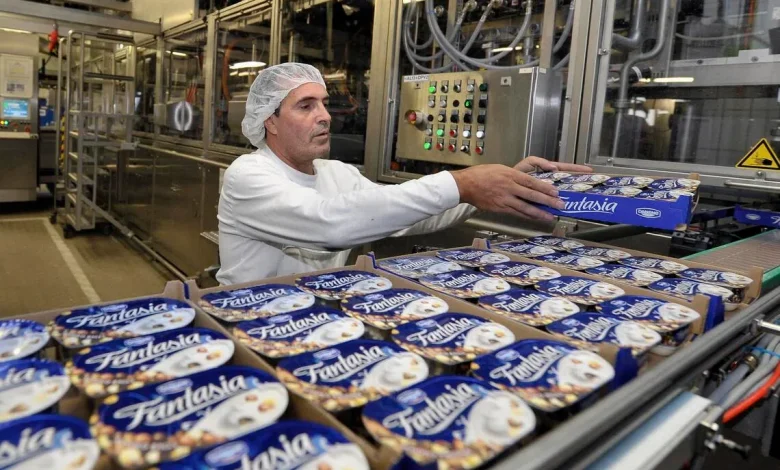
French food group Danone, which makes the yoghurt Fantasia, says pressures from the war are filtering through supply chains.
PHOTO: BLOOMBERG
Dettol soap maker Reckitt missed quarterly like-for-like net revenue expectations for its core business on April 22 and warned of lower first-half margins, citing high oil prices and lower demand for its cold and flu products.
Travel companies have been among the hardest hit, as higher jet fuel prices force airlines and tour operators to hike fares, add fuel surcharges or ground aircraft, while geopolitical tension dents consumer confidence.
German tourism group TUI cut its full-year underlying operating profit forecast and suspended its revenue guidance, citing limited visibility due to the war.
“The ongoing conflict in the Middle East and the uncertainty surrounding its duration continue to limit near-term visibility and drive consumer caution,” the group said in a statement.
US carrier United Airlines also flagged pressure on demand, forecasting second-quarter and full-year profits below Wall Street estimates on April 21.

US carrier United Airlines forecast second-quarter and full-year profits below Wall Street estimates on April 21.
PHOTO: AFP
Resource companies are feeling the strain, too.
Diversified miner South32 cut its full-year forecast for its Australia Manganese unit after heavy rainfall and Tropical Cyclone Narelle disrupted operations, and warned that Middle East tensions were adding to cost pressures through higher freight rates and raw-material prices.
“We have implemented measures across our operations to mitigate potential supply chain impacts arising from the conflict in the Middle East,” South32 said, adding that while it was not currently experiencing diesel fuel shortages, it was closely monitoring the situation.
Results earlier this week show how the Iran war is adding a fresh layer of uncertainty even for companies that started 2026 with solid order books and pricing power.
On April 21, GE Aerospace’s CEO Larry Culp said the company would have raised its forecast were it not for the current uncertainty, and 3M warned that higher oil prices could result in a 50-basis-point increase in product prices.
GE Aerospace said its outlook assumes Brent crude prices remain elevated through the third quarter before easing by the end of the year, and factors in near-term constraints on fuel availability. REUTERS
🚨BREAKING: Watch The Video Clip Here ➤