Is Israel once again undermining peace efforts?
Israeli violations on the ground complicate peace efforts as the Israeli army has expanded areas under its control inside Gaza, shifting what negotiators describe as a “yellow line” deeper into the territory.
These moves have raised questions about whether conditions for a full withdrawal, a core element of the peace plan, are being met. At the same time, restrictions on aid and movement continue to limit humanitarian access, further straining trust between parties and undermining confidence in the process.


Just on Tuesday morning, an Israeli strike killed three Palestinians in Khan Younis in southern Gaza. Despite an October 10 ceasefire, Gaza remains gripped by daily violence by the Israeli military.
Earlier, the Israeli Defence Minister Israel Katz insisted that Israel will not move “one millimetre” from the “Yellow Line” in Gaza until Hamas is disarmed.
The plan is structured in phases where after a halt in attacks, it envisages expanded aid access, gradual reopening of crossings and improved medical access. However, continued Israeli attacks and restrictions on crossings and aid have limited these steps, which are seen as key preconditions that must be met before any move towards Hamas disarmament.
Ongoing Israeli violations and uncertainty over security arrangements make it difficult to establish the stable conditions needed for negotiations to succeed. Without a clear and consistent commitment to de-escalation, each new development risks pushing talks further off track and prolonging the crisis.
What about reconstruction?
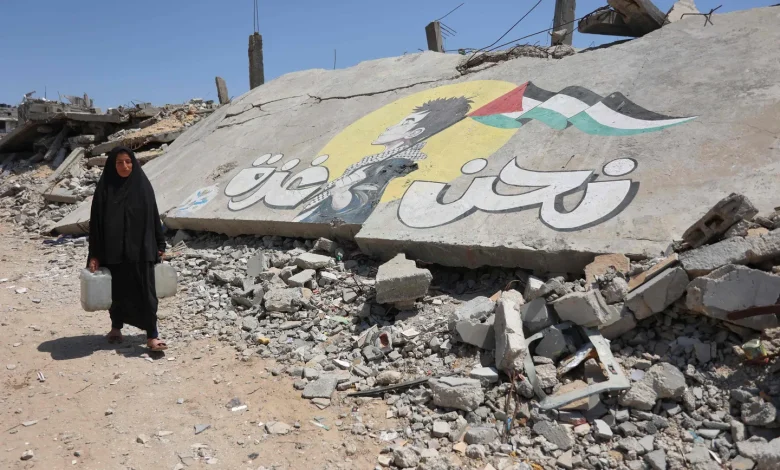
Reconstruction remains one of the most urgent yet uncertain aspects of the plan. With an estimated $71 billion needed to rebuild Gaza, proposals are being explored to manage logistics, aid flows and infrastructure projects.
Discussions have included partnerships with global companies to oversee supply chains and potentially develop new ports and trade zones. However, these ideas remain largely at the planning stage.
Without agreement on security, governance and access, large-scale rebuilding cannot begin, leaving Gaza’s population waiting as diplomatic efforts struggle to translate into real change.
For now, Gaza’s peace plan remains caught between ambition and reality. While talks continue and proposals evolve, the key test will be whether political agreements can be reached quickly enough to prevent momentum from fading and whether they can finally deliver tangible results for Palestinians on the ground.
🚨BREAKING: Watch The Video Clip Here ➤