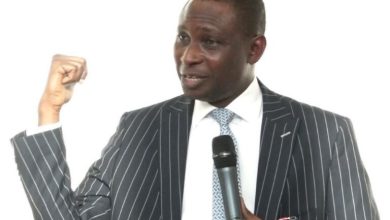
Chairman of the House Committee on Electoral Matters, Adebayo Balogun, has dismissed concerns over alleged “pitfalls” in the 2026 Electoral Act ahead of the 2027 general elections, insisting that Section 63 does not encourage ballot stuffing but instead safeguards valid votes from being invalidated due to administrative lapses by polling officials.
Speaking during an interview on ARISE NEWS on Tuesday, Balogun accused some former electoral officials of spreading “false information,” warning that “custodians of institutional reform are getting too partisan.”


Addressing the controversy surrounding rejected ballot papers, the lawmaker argued that votes should not be discarded solely because a presiding officer failed to stamp them, as long as they can be traced to the appropriate booklet and polling unit.
“It is unfortunate that people who are supposed to be custodians of our institutional reform are getting too partisan. For a former Resident Commissioner to give false information to the public is dangerous. The law says a ballot paper that does not meet the official mark prescribed by the Commission shall not be counted. This usually means it must be signed and stamped by the presiding officer. Fortunately, ballot papers are now personalized with unit codes. You cannot take a ballot paper from one unit and dump it in another. Subsection 2 says that where the returning officer is satisfied that a ballot paper—even without the official mark—is from the correct booklet used in that unit, they shall count it.
“The opposition has already benefited from this. It is misinformation to say this allows people to ‘stuff’ ballot boxes. If a presiding officer fails to stamp a paper because the ink dried up, should that invalidate a citizen’s vote,” he questioned.
On the issue of appointing the Chairman of the Independent National Electoral Commission (INEC), Balogun defended the existing constitutional framework, noting that while the President nominates the candidate, confirmation rests with the National Assembly.
“Give me a better option. How else would you appoint them? The President recommends, but the National Assembly—made up of all parties—must approve. If you aren’t comfortable with the person representing you, vote them out. That is democracy,” he said.
He also rejected proposals that the National Judicial Council should be responsible for recommending the INEC Chairman to ensure greater independence, questioning the perceived neutrality of such a body.
“What makes that body more independent? Even the NBA has issues with their own elections. This is a constitutional matter. It requires an amendment to the Constitution, not just one or two people saying something.”
Responding to fears about potential political influence over the electoral process, particularly by the ruling party, Balogun downplayed the significance of the INEC Chairman’s role, emphasizing that elections are decided at the grassroots level.
“People overemphasize the role of the Chairman. Elections are won and lost at the polling units. The results are recorded by ad-hoc staff, mostly youth corpers. Our greatest breakthrough is the BVAS. You can no longer vote by proxy. If the presiding officers at the unit level ruin an election, there is nothing the Chairman can do,” he maintained.
Addressing concerns over public distrust and rising political tension, the committee chairman stressed that his focus remains on facts rather than speculation.
“My job is to get the facts. What is charging the atmosphere is wrongful allegations,” he insisted.
Looking ahead to the 2027 elections, Balogun expressed confidence in the integrity of the process, stating that the current committee is committed to delivering credible outcomes.
“For the first time, we have a committee determined to ensure a process that is credible, transparent, and inclusive,” he said.
He further disclosed that he sponsored proposals aimed at introducing early voting for essential workers and media personnel, alongside amendments to Section 77 of the Electoral Act to strengthen party registration and candidate verification using the National Identification Number (NIN).
“I personally moved bills for early voting for essential workers and media, but other members killed it. We are trying our best. We also moved for Section 77, requiring NIN (National Identification Number) for party registration. You must prove you are a Nigerian before you can contest for President or Governor,” he stressed.
🚨BREAKING: Watch The Video Clip Here ➤