WASHINGTON – On the morning of April 23, a senior Iranian official wrote on social platform X that the country’s fighters were hiding in sea caves near the Strait of Hormuz, preparing to “devastate the aggressors.”
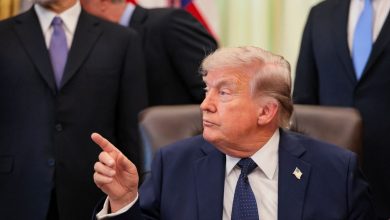
Eighteen minutes later, President Donald Trump posted on Truth Social: “I have ordered the United States Navy to shoot and kill any boat” that is “putting mines in the waters of the Strait of Hormuz.”
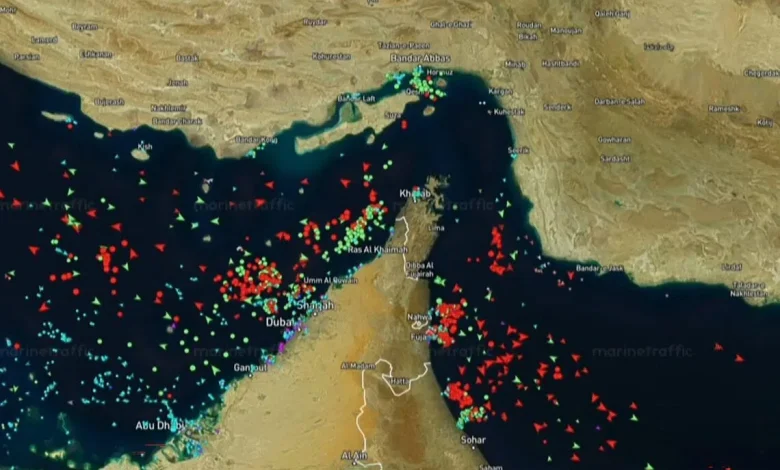
Mr Trump’s war on Iran, interrupted by a ceasefire that he extended indefinitely this week, has morphed from all-out bombardment to a volatile, costly standoff at the mouth of the Persian Gulf.
Neither side appears eager to return to the violence that ensnared much of the Middle East before the April 7 ceasefire, though both insist they are ready for it. And neither side is showing signs of capitulating to the other’s demands. The result is round after round of taunts, threats and maritime incidents, with many of the tensions playing out on social media even as the economic costs mount and Trump faces a political backlash at home.


Ms Suzanne Maloney, an Iran specialist and vice president at the Brookings Institution in Washington, said she had assumed that a diplomatic deal would resolve the standoff quickly, given the economic and strategic costs to the United States of the Strait of Hormuz’s staying closed. But she said she was now adjusting her expectations amid Iran’s determination to maintain control of the strait as leverage and the strategic quandary that Mr Trump has found himself in.
“He’s stuck with this, for as long as the strait remains closed,” Ms Maloney said. “The speed with which this became a quagmire for the United States has been, also, quite stunning.”
Mr Trump insisted on April 23 that he had “all the time in the World, but Iran doesn’t,” in the standoff over the strait. He posted a column by a hawkish commentator, Marc A. Thiessen, arguing that Mr Trump should give Iran 72 hours before he resumes combat and opens the Strait of Hormuz by force.
“If they don’t want to make a deal, then I’ll finish it up militarily,” Mr Trump told reporters at the White House on Thursday.
But in reality, Mr Trump faces an array of bad options, experts say. The US blockade on Iranian shipping in the strait – combined with Iran’s counter-blockade on other traffic – continues to squeeze global energy and commodity markets, risking more price inflation in the United States as Mr Trump’s Republican Party already faces a daunting midterm election season.
Iran appears determined to extract concessions from Mr Trump, like sanctions relief and a compromise on its nuclear program, before agreeing to any diplomatic solution over the impasse. Ms Maloney said that all signs pointed to Iran’s leaders continuing to believe that their tolerance for economic pain remains higher than that of Mr Trump.
Seeking a military solution could be even more painful for the United States. Airstrikes alone are unlikely to do enough damage to Iran’s military to prevent it from being able to fight back, said Mr Seth G. Jones, the defence and security department president at the Centre for Strategic and International Studies in Washington. Reopening the strait by force was possible, he said, but would involve the risk of large US warships getting sunk, and of “US Marines or Army soldiers seizing an island or shoreline and getting killed,” he said.
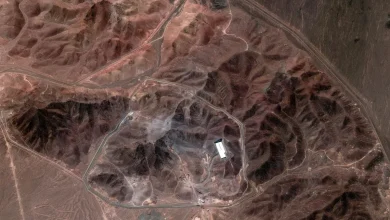
Mr Trump also still faces the quandary of how to deal with Iran’s 970 pounds of highly enriched uranium, which could be enough for a dozen nuclear bombs. Mr Trump insisted again on April 24 that he was determined to prevent Iran’s capability, warning that the alternative to US success in Iran could be “nuclear holocaust” in European cities within reach of Iranian missiles.
Iran faces hard choices, too. Its strikes on US bases and on Arab countries around the Persian Gulf were effective in getting Trump to declare a ceasefire. But Mr Jones said that achieving more by force would be difficult for Iran, especially given the blockade and the damage already done to its military.
“It’s kind of a game of chicken right now,” Mr Jones said. Both in Washington and Tehran, he added, military officials were likely telling political leaders that “the military instrument is not likely to be successful in getting to any kind of a permanent solution.”
Given the military impasse and the economic pain on both sides, a negotiated resolution appears to be the most logical way out of the crisis, Mr Jones and other analysts said. But the tensions in the Strait of Hormuz could escalate quickly, as both Iran and the United States try to show their resolve in the narrow waterway while also trying diplomacy.
“You have a situation that’s not in equilibrium,” said Mr Brian Katulis, a senior fellow at the Middle East Institute, referring to the contrast between the efforts at diplomacy and the “test of wills” at sea.
On April 22, Iran released a video showing its Revolutionary Guard intercepting two cargo ships near the strait, with balaclava-clad forces scaling one of the vessels on a ladder. The US military released a dramatic video of its own, showing Navy forces descending on ropes from helicopters onto a tanker it said was carrying oil from Iran in the Indian Ocean.
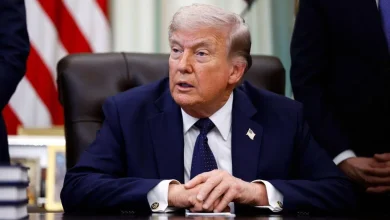
At the same time, Mr Trump has said he wants to give diplomacy a chance. Referring to his ceasefire extension this week, he told reporters at the White House on Thursday that Iran was having trouble negotiating because “they are very disorganised right now.”
“They want to make a deal,” Mr Trump said. “We thought we’d give them a little chance to get some of their turmoil resolved.” NYTIMES
🚨BREAKING: Watch The Video Clip Here ➤