In the End, the United States Must Acknowledge That Iran Is Inherently Bound to the Strait of Hormuz

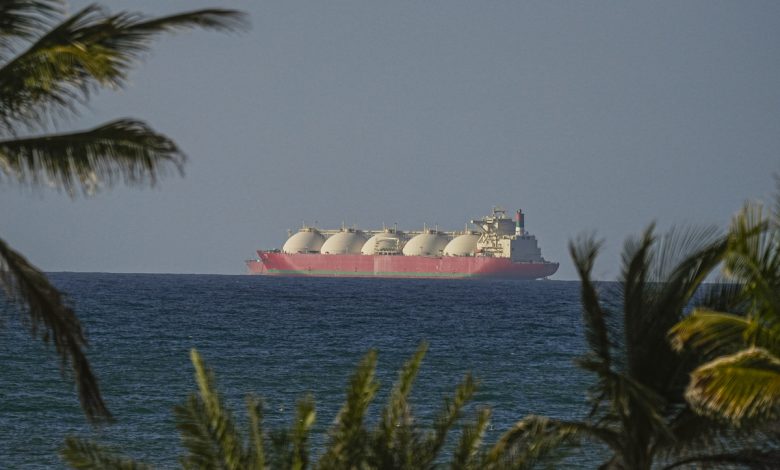
The geography of the Strait of Hormuz is a cruel mistress to the logic of conventional military might, a reality that the world is rediscovering with agonizing clarity in the spring of 2026. For decades, the narrative of Western naval hegemony suggested that the sheer weight of American carrier strike groups could keep the world’s most vital energy jugular open by fiat. Yet, as the sun sets over the rugged, jagged cliffs of the Musandam Peninsula and the Iranian littoral, a different truth emerges: Iran has transformed the twenty-one miles of water at the strait’s narrowest point into a geostrategy fortress that the United States cannot simply bomb into submission.
The recent, fragile reopening of the waterway for commercial vessels is not a victory for Washington’s “Operation Epic Fury,” nor is it a surrender by Tehran. Instead, it is a calculated tactical adjustment within a larger game of geoeconomic hostage-taking, where the Iranian leadership has successfully leveraged geography, asymmetric warfare, and the energy desperation of Asia to force a superpower to the negotiating table in Islamabad.
The strategic advantage Iran holds over the Strait of Hormuz is rooted in a unique synergy between topography and doctrine. Unlike the open waters of the Pacific or the Atlantic, the Persian Gulf is a confined maritime theater.

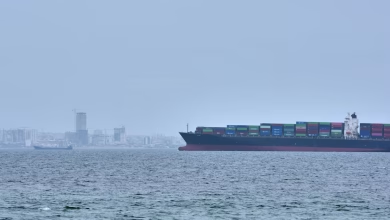
The primary shipping lanes, governed by a Traffic Separation Scheme, hug the Omani and Iranian coasts, forcing massive tankers into a predictable and vulnerable path. Iran’s northern shoreline is a natural rampart of mountains and hidden coves, providing the perfect sanctuary for what the Islamic Revolutionary Guard Corps (IRGC) calls its “Mosaic Defense.”
This decentralized command structure means that even if a decapitation strike were to paralyze Tehran, local units along the coast possess the autonomy and the hardware, thousands of sea mines, drone swarms, and mobile anti-ship ballistic missiles like the Khalij Fars, to continue the fight. This is why the 6,000 targets struck by US and Israeli forces since February 28 have failed to yield a “mission accomplished” moment. Every time a Tomahawk missile finds a fixed battery, two more mobile launchers vanish into the limestone caves of Larak or Qeshm Island.
READ: Trump says US will get Iran’s nuclear dust ‘in a much more unfriendly form’ if deal fails
For the United States, the military option to “force” the strait open is increasingly viewed by analysts as a form of strategic suicide. The term “Mutually Assured Devastation” has replaced the Cold War’s nuclear parity as the governing principle of the Gulf. If the US Navy were to attempt a full-scale clearance operation, Iran’s retaliatory playbook does not stop at the water’s edge. The IRGC has made it clear that any attempt to seize the strait would result in the systematic destruction of the region’s life-support systems. This includes the massive desalination plants in the UAE, Qatar, and Saudi Arabia, alongside critical energy hubs like the Abqaiq oil processing facility.
In a region where water is more precious than oil, the prospect of millions of people in desert cities losing access to drinking water within forty-eight hours creates a political cost that no Western government can sustain.
Consequently, the Trump administration has been forced into a paradoxical posture: maintaining a high-profile naval blockade of Iranian ports to save face, while simultaneously engaging in a marathon diplomatic scramble to avoid a kinetic escalation that would vaporize the global economy.
The current breakthrough, the announcement that the strait is “completely open” for commercial ships, must be viewed through this lens of stalemate. The reopening is not unconditional, it is tied directly to the ten-day ceasefire between Israel and Hezbollah in Lebanon. By linking the security of the world’s energy supply to the survival of its primary proxy in the Levant, Tehran has effectively expanded its “Strategic Depth” from the Mediterranean to the Indian Ocean. Iranian Foreign Minister Abbas Araghchi’s declaration that ships must follow “coordinated routes” under IRGC supervision is a masterpiece of grey-zone sovereignty.
It effectively institutionalizes a toll system and a security vetting process that challenges the very concept of “innocent passage” under international law. Reports of vessels paying upwards of two million dollars in “safe passage fees”, often settled in Chinese Yuan or cryptocurrency, suggest that Iran is successfully running a protection racket on a global scale, using the proceeds to fund the very reconstruction necessitated by American bombing.
The role of China and India in this drama cannot be overstated. As the primary consumers of the twenty million barrels of oil that transit the strait daily, Beijing and New Delhi have moved from being passive observers to active, albeit quiet, underwriters of the peace process. China, in particular, has utilized its “all-weather” partnership with Pakistan to facilitate the Islamabad Talks. Beijing is not a neutral mediator, it is a stakeholder that imports nearly 90% of Iranian oil and sees any permanent closure of the strait as a direct threat to its domestic stability.
By allowing Chinese-linked tankers to pass through the blockade while Western-linked vessels were turned back, Iran used “smart control” to drive a wedge between Washington and its Asian partners. This pressure eventually bore fruit when the US, despite its public rhetoric of “unconditional surrender,” began discussing the unfreezing of six billion dollars in Iranian assets held in Qatar.
The Islamabad Talks, held at the Serena Hotel and the Jinnah Convention Centre, represent the highest level of direct engagement between Washington and Tehran since 1979. The 21-hour marathon session between Vice President JD Vance and Iranian Parliament Speaker Mohammad Bagher Ghalibaf was a collision of two uncompromising worldviews. The US demand for the total handover of Iran’s enriched uranium, the so-called “nuclear dust”, has been met with an Iranian counter-demand for the total lifting of primary and secondary sanctions and the withdrawal of US combat forces from the region.
READ: Iran’s Qalibaf says US, Israel could not win through ‘lies’; Tehran to control Hormuz transit
While the White House vehemently denies that any deal has been struck regarding the six billion dollars in Qatar, the very fact that the money is a central pillar of the discussion indicates a significant retreat from the “maximum pressure” of early 2026. The funds, originally frozen in 2018 and trapped in a cycle of release and re-freezing, have become the litmus test for whether a broader “grand bargain” is possible.
Looking ahead, the question remains whether this opening of the strait is a permanent return to normalcy or a temporary lull in a century-defining conflict. The obstacles to a lasting peace are formidable. The US Navy continues to enforce a blockade on Iranian ports, a move that Ghalibaf warned would eventually lead to the strait being closed once again.
Furthermore, the 10-day ceasefire in Lebanon is a fragile foundation upon which to build global energy security. If Israel resumes its campaign against Hezbollah or if the US refuses to provide a verifiable path toward sanctions relief, the IRGC will likely return to its strategy of “controlled escalation.”
The risk of a naval incident, either through a miscalculation during a visit, board, search, and seizure (VBSS) operation or a rogue mine hit, remains high.
The reality of the 2026 crisis is that the Strait of Hormuz has been permanently altered. It is no longer an international waterway governed by the idealistic principles of the UN Convention on the Law of the Sea, it is a contested corridor where passage is a privilege granted by the coastal power, not a right exercised by the global community. Iran’s strategic advantage is not just in its missiles or its mines, but in its willingness to absorb pain and its recognition that in a multipolar world, the dependence of Asia is a more effective shield than any missile defense system.
As the second round of talks in Islamabad approaches, the world is watching to see if the Trump administration will accept a “managed Iran” as the price of stable oil prices, or if the pursuit of the “really bad thing”, a nuclear-armed Iran, will lead to the very devastation that the diplomacy was meant to prevent. For now, the ships are moving, but the shadow of the IRGC looms large over every tanker, a reminder that in the Strait of Hormuz, the keys to the world’s economy are held firmly in Tehran.
OPINION: The geostrategic and geoeconomics of Kharg Island
The views expressed in this article belong to the author and do not necessarily reflect the editorial policy of Middle East Monitor.
🚨BREAKING: Watch The Video Clip Here ➤