Iran has ‘high’ incentive to maintain ceasefire, US forces remain ‘postured’: US defense chief

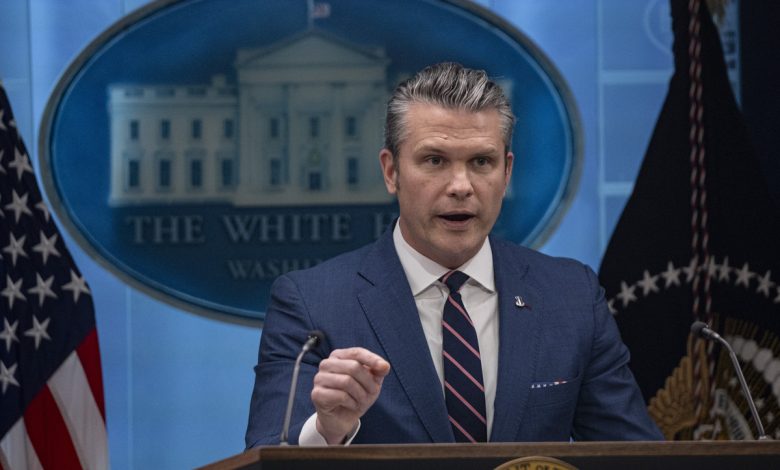
US Defense Secretary Pete Hegseth said Thursday that Iran’s “motivation” to maintain the ceasefire is “very high,” while warning that US forces remain “maximally postured” to resume war if Tehran rejects a deal, Anadolu reports.
“Our forces are maximally postured to restart combat operations, should this new Iranian regime choose poorly and not agree to a deal,” Hegseth said during a Pentagon briefing.
He urged Iran to “choose wisely,” warning its military leadership that Washington is closely “watching” their actions.


Hegseth said Iran’s command and control capabilities are “highly degraded,” limiting its ability to coordinate operations, but noted that its “motivation to want to stay in the ceasefire is very high.”
“They understand that a violation of that ceasefire means a commencement,” he continued.
“We are reloading with more power than ever before, and better intelligence, even more importantly, better intelligence than ever before,” said Hegseth. “As you expose yourself with your movement to our watchful eye, we are locked and loaded on your critical dual-use infrastructure, on your remaining power generation and on your energy industry.”
“We’d rather not have to do it, but we’re ready to go at the command of our president and at the push of a button,” he added.
READ: Iran and US deny reports of preliminary ceasefire extension agreement
Strait of Hormuz
Hegseth also said the US Navy controls traffic in and out of the Strait of Hormuz, enforcing a blockade with “less than 10%” of America’s naval power.
Separately, Joint Chiefs Chair Dan Caine said the blockade applies to all vessels heading to or from Iranian ports, regardless of nationality, but stressed it does not constitute a blockade of the Strait of Hormuz itself.
The remarks came as the US and Iran have been holding negotiations to extend a two-week ceasefire announced last week, which is set to expire on April 22.
Shipping through the Strait of Hormuz has been severely disrupted since the US-Israeli war against Iran began Feb. 28, and a US naval blockade announced Monday, after Washington said talks last weekend failed to yield a deal.
About 20% of global oil supply passes through the strait daily, and heightened insecurity has driven up oil prices as well as shipping and insurance costs.
READ: Iran supreme leader’s adviser threatens to sink US ships in Strait of Hormuz
🚨BREAKING: Watch The Video Clip Here ➤