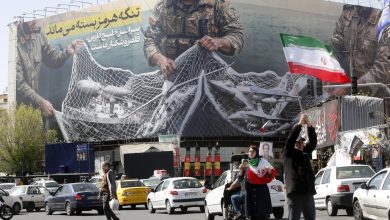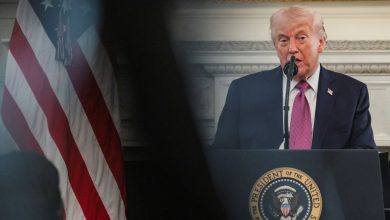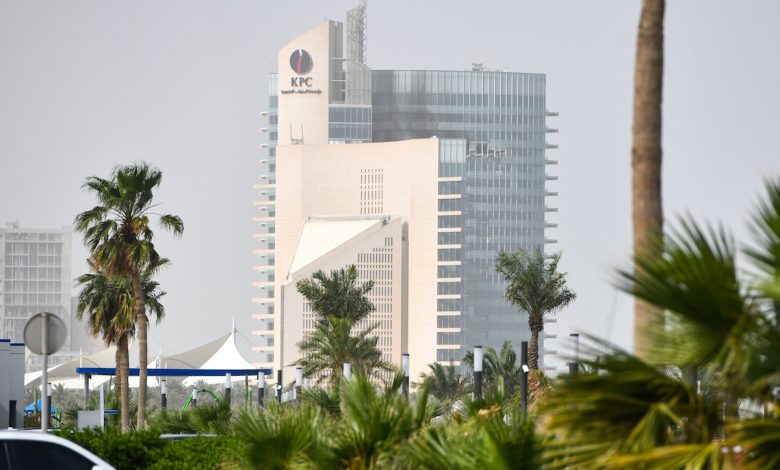
The joint United States and Israeli military attacks and Iran’s subsequent retaliation have exposed a structural vulnerability at the heart of the Gulf Cooperation Council (GCC). Despite their concerted efforts to strengthen ties with Washington – particularly with President Trump – Gulf states found themselves peripheral to decision making, yet central to the consequences.
83% of Iran’s retaliatory missile and drone strikes during the war were sent towards GCC states, with the United Arab Emirates (UAE) receiving the most attacks of any country, including Israel. Gulf states were largely able to defend themselves, often using American systems. Yet the US military bases, which provided the rationale for these attacks, ultimately proved a strategic liability rather than an asset.
Paradoxically, this moment of shared vulnerability has also brought GCC states closer together. Faced with a shared conundrum, there is a growing recognition across the bloc that the current strategic framework is not sustainable.


In other words, the Iran war has been the perfect catalyst for a rethink of GCC foreign policy.
It can continue along its current trajectory, characterised by internal tensions and fragmented alignments, or it can pursue a more cohesive strategic posture.
I spend much of my time in the region, having lived in UAE for 12 years and in Saudi Arabia for six years and helped Rothschild to open offices in Abu Dhabi and Qatar. So, I am a passionate advocate of the Gulf states and want to see the region flourish, whilst being realistic about the challenges it faces.
Without fresh thinking, there is a danger that the region will become entangled in rival alliances: Saudi Arabia making common ground with Turkey and Pakistan; Oman and Qatar seeking a reproachment with Iran; UAE and Bahrain gravitating towards Israel.
An unconventional, but compelling, alternative would be to adopt a doctrine of strategic neutrality, akin to that pursued by Switzerland or Singapore.
A Swiss Style of Neutrality
The logic is straightforward. The Gulf sits at the intersection of global energy flows, capital markets, and trade routes linking East and West. By positioning itself as a neutral hub, open to investment from all, politically aligned with none, the GCC could go some way to regaining its desired reputation as a safe and stable home for investment in a tough region. The Gulf States are instinctive traders; the region needs to return to its roots.
The model has a proven track record. Switzerland, through a long-standing doctrine of neutrality, now manages an estimated quarter of the world’s offshore wealth. Singapore, by maintaining strategic balance in Asia, has built a financial system overseeing more than $4 trillion in assets. Both demonstrate that neutrality attracts capital at scale.
This would, however, require a fundamental rethinking of existing security arrangements. At present, the Gulf’s defence architecture is deeply integrated with external powers, particularly the United States.
This integration has historically been underpinned by an implicit transactional bargain: Gulf foreign direct investment flows while hosting US military outposts in exchange for security guarantees.
However, the US under Trump has proven to be an unreliable ally. Once thought of as transactional, increasingly he’s viewed as an extortioner. The existence of foreign bases not only failed to prevent Iranian attacks but increased the likelihood of them. In such a scenario, continuing to deepen military integration may entrench the very vulnerabilities it is intended to mitigate.
A shift towards neutrality would recalibrate the Gulf’s economic relationships. Engaging with the United States, Europe, China and others on purely economic terms would enhance resilience and bargaining power. The GCC’s priority is the flow of their petrodollars and for that they need friends everywhere, not enemies.
The current crisis may provide the catalyst required to accelerate this shift. It has exposed the limitations of existing arrangements while simultaneously creating the conditions for greater cohesion within the GCC. Moments of disruption often create space for structural change; this may be one such moment.
A new security framework
Of course, even if the GCC were to embrace a neutral stance they could not leave themselves vulnerable. They would have to pursue a series of non-aggression pacts with key regional powers including Iran, Turkey, Israel, and Egypt.
Inevitably, this would require difficult trade-offs. The UAE and Bahrain would need to exit from the Abraham Accords. Saudi Arabia’s bilateral defence partnerships with Pakistan and Turkey would need to be given up.
While that would be politically complex, many of these arrangements would become less central in the context of a neutral GCC, helping to reduce their exposure to proxy conflict and regional rivalries. In time, this could even ladder up to a collective security arrangement within the GCC itself; the beginning of a NATO-style Article 5 mechanism.
The argument, therefore, is not that neutrality is without risk, but that the status quo carries greater uncertainty and potentially even the breakup of the GCC. Continued reliance on external security architectures, combined with internal fragmentation, leaves the GCC vulnerable to forces beyond its control.
A coordinated move towards strategic neutrality would represent a decisive assertion of agency. It would reposition the Gulf not as a peripheral actor in great power competition but as an indispensable intermediary; a hub through which global capital, trade, and diplomacy flow.
In a multipolar world, those who can engage with all sides while aligning with none will command disproportionate influence. The GCC has the capital, geography, and historical precedent to do exactly that.
The views expressed in this article belong to the author and do not necessarily reflect the editorial policy of Middle East Monitor.
🚨BREAKING: Watch The Video Clip Here ➤