Rubio on White House shooting: 'A lot of leadership' and warns Iran 'seeks to dominate the region'

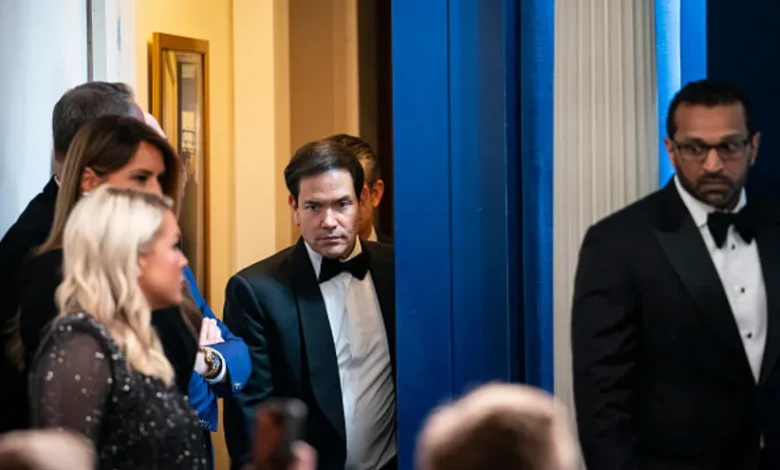
US Secretary of State Marco Rubio praised US President Donald Trump’s leadership and transparency during the shooting at the White House Correspondents’ Dinner, as he also addressed ongoing tensions with Iran and conflict involving Hezbollah in an interview with Fox News Channel’s Trey Yingst on Monday.
Rubio called the shooting an “unfortunate situation” that an individual could disrupt the important event, and said, “That’s kind of the world we live in right now.”
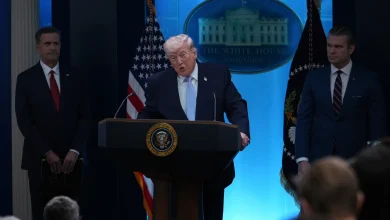
When asked what it was like to rush back to the White House he said, “I think the President’s decision to return to the White House, release the video, and then address the American people in a press conference…really showed a lot of leadership by the President, and I think calmed the nation down, and I think has allowed us to pivot towards the investigation and move on with the work of the country.”
Rubio also said the White House Correspondents’ Dinner was postponed following the incident due to security considerations and the logistics of clearing and rescreening attendees.


He also addressed the ceasefire with Iran, saying it remains in place but noting continued concerns over threats and regional instability.
When asked what he believed to be the main obstacle to reaching an agreement with the Iranian government, he replied, “Well, other than the fact that the country’s run by radical Shia clerics – that’s a pretty big impediment.”
He said Iran’s leadership is internally divided between political officials and hardline factions.
“They’re deeply fractured internally,” he commented
Rubio further explained, “One of the impediments here is that our negotiators aren’t just negotiating with Iranians. Those Iranians then have to negotiate with other Iranians in order to figure out what they can agree to, what they can offer, what they’re willing to do, even who they’re willing to meet with.”
When discussing the topic of the Strait of Hormuz, Rubio said that while Iran has referenced opening the Strait in talks, the US would reject any arrangement that gives Tehran control over passage or allows it to impose fees or conditions.
He stressed that the strait is an international waterway and warned that allowing Iran to regulate access or establish a toll system would set a global precedent that other countries could follow, potentially undermining international maritime rules.
Rubio asserted that the nuclear issue is the central reason for the current crisis and described Iran as seeking to expand its regional influence through groups such as Hezbollah, Hamas, and Iraqi militias. He warned that a nuclear-armed Iran would significantly increase the regional threat.
Rubio: Iran aims to expand revolutionary influence across region
“If Iran was just a radical country run by radical people but – it would still be a problem, but they are revolutionary. In essence, they seek to expand and export their revolution, not just what they do in Iran.” He continued, “They don’t just seek to dominate Iran; they seek to dominate the region. And imagine that with a nuclear weapon.”
Rubio went further to stress the point, “Imagine if those same people had access to a nuclear weapon. They would hold the whole region hostage. We wouldn’t be able to do anything about Hezbollah, we wouldn’t be able to do anything about Hamas, we wouldn’t be able to do anything about the Shia militias in Iraq, because they’d be sitting there with a nuclear weapon saying we are untouchable.”
On Lebanon, Rubio said Israel’s military activity is focused on Hezbollah rather than the Lebanese state and said efforts are underway to strengthen the Lebanese Armed Forces.
Rubio said both Israel and Lebanon ultimately agree that the goal is for the Lebanese Armed Forces to be capable of dismantling Hezbollah within Lebanon.
He said the US is working toward a system in which vetted Lebanese military units are trained and equipped to take action against Hezbollah, with the aim of preventing the need for Israeli operations inside Lebanese territory.
“I think what I have perceived from this – and it’s been very successful – is both the Lebanese and the Israelis seek peace. They have no problem with one another,”Rubio said.
Rubio explained that Israel does not have territorial claims in Lebanon and that its conflict is with Hezbollah, not the Lebanese state. He said Lebanese officials have also acknowledged Hezbollah as a domestic problem.
Rubio added that ceasefire efforts focus on maintaining calm while allowing Israel to carry out defensive actions in response to imminent or ongoing threats from Hezbollah, which he said continues to seek to disrupt the truce.
When asked if he saw a scenario where Lebanon would join the Abraham Accords, Rubio replied that “we’re not there yet.”
In the case of Gaza, he said any ceasefire agreement depends on Hamas agreeing to disarm and demilitarize, which he admitted has not yet occurred. He noted that there have been some “promising signs” over the weekend and said Egypt and Turkey have been involved in the process.
Rubio declined to say whether the Trump administration would support Israel resuming military operations in Gaza if Hamas refuses to disarm. He said he would not speculate on hypothetical scenarios and stressed that the preferred outcome is Hamas demilitarization and the establishment of a Palestinian security force, backed by an international force, to secure Gaza.
Rubio also discussed Cuba, saying it is a failing state and a location used by US adversaries, including Russia and China, for regional activity near the United States.
On China, he said, intellectual property theft remains an ongoing issue affecting both economic and national security interests.
🚨BREAKING: Watch The Video Clip Here ➤