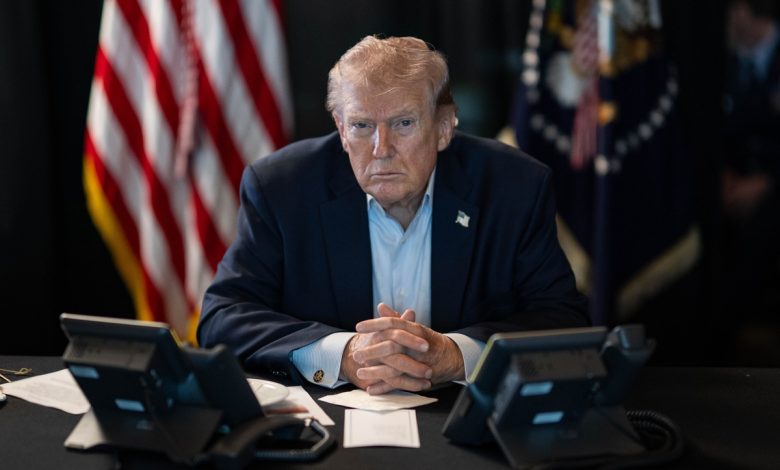
There is a delicious irony at the heart of Donald Trump’s presidency. In his relentless pursuit of dominance, he has done something no opposition movement, no editorial board, and no diplomatic summit could have engineered on its own. He has minted heroes. Not reluctant ones, not accidental ones, but leaders of genuine moral stature who rose precisely because the moment demanded it. Trump created the vacuum, and courageous leaders rushed to fill it.
Two figures stand out above the rest: Spanish Prime Minister Pedro Sánchez and Canadian Prime Minister Mark Carney. Different in style, different in circumstance, yet united by the same refusal to perform submission while calling it diplomacy. Trump set the stage. They chose not to exit quietly into the wings.
The Art of the Slow Roast

When Pedro Sánchez chose his words carefully and declared that Spain would not “applaud those who set the world on fire just because they then show up with a bucket,” he did something that most Western leaders have been institutionally incapable of doing.
He exposed the myth of the ‘indispensable man,’ stripping away Trump’s favorite roles as the reluctant savior and master negotiator.
The genius of the line lies in its architecture. In a single sentence, Sánchez identified Trump not as a disruptor to be managed, but as the cause of the crisis itself. The imagery is devastating in its simplicity: the arsonist who arrives with the fire truck. There is no countering a metaphor that strikes with such clarity; it is immune to political spin. It effectively dismantles the ‘savior’ narrative Trump has mastered: that strategic pattern of escalation followed by calculated de-escalation, all framed under the guise of expert diplomacy.
READ: Former US official: Iran war is direct extension of ‘Greater Israel’ project
This was not diplomatic language. It was the antithesis of, which was precisely why it worked. While other European capitals were busy drafting polished variations of “we value our constructive partnership,” Spain was speaking in images. Moral clarity, wielded with Mediterranean precision, is not a style choice. It is a strategic weapon. It sets the agenda. It forces opponents to rebut substance rather than hide behind diplomatic protocols. It gives the country and allies something to rally around. Sánchez did not merely criticize Trump; he reframed him permanently in the minds of a global audience hungry for someone to articulate a position they had been dreaming of for decades. The contrast with Britain’s approach is instructive and not a little painful. The eternal invocation of the “special relationship” has, in this era, become an act of narrative surrender. Politeness without principle doesn’t preserve influence; it simply gifts the opponent the pen with which to write the story.
If You’re Not at the Table, You’re on the Menu
If Sánchez landed the rhetorical blow, Mark Carney delivered the strategic manifesto. Standing before a global audience in a world that Trump has made newly dangerous and newly honest, Canada’s Prime Minister cut through the comfortable mythology of the post-war international order with the directness of someone who has spent a career understanding how power actually flows.
“If we’re not at the table,” Carney said, “we’re on the menu.”
Ten words. Entire foreign policy doctrines have required volumes to say less. The line captures everything: the vulnerability of middle powers, the brutality of great-power negotiation, and the one available remedy, collective action. What Carney was articulating was not a grievance; it was a diagnosis, followed immediately by a prescription.
His broader argument deserves to be heard in full, because it reframes not just this moment but the entire architecture of the global order we thought we were living in.
Carney contended that the established global order was largely a myth. It was a system where the powerful claimed exemptions at will, trade regulations were applied inconsistently, and the weight of international law shifted depending on the stature of the accused.
Middle powers accepted this because the fiction was useful: open sea lanes, a stable financial system, collective security. So they placed the sign in the window. They participated in the rituals.
READ: Report reveals scale of damage to US bases in Gulf after Iranian strikes
“That bargain is now broken. We are in a rupture, not a transition,” Carney declared. Economic integration, the very mechanism that was supposed to create mutual benefit, has been turned into a weapon. Tariffs as leverage and financial infrastructure as coercion. “Supply chains are vulnerable to exploitation. When integration becomes the source of your subordination, you cannot pretend otherwise and call it a strategy,” Carney bristled.
The choice Carney laid out is binary and clarifying: middle powers can continue competing with each other for the favor of hegemons, racing to the bottom in a contest of accommodation, or they can combine. Create a third path. Wield together the power of legitimacy, integrity, and rules that remain potent if enough people choose to use them.
The Unintended Consequence
Trump’s great miscalculation is that dominance performs differently on the world stage than it does in a boardroom. When you demand gratitude, you produce resentment. When you threaten everyone simultaneously, you build the very coalitions you sought to prevent.
When you make the old order’s fiction no longer useful, you force its participants to imagine something new.
Sánchez and Carney did not audition for the roles they now inhabit. The moment demanded a backbone, and they provided it.
Trump provided the platform, thinking it a monument to himself, only to see it transformed into an altar of resistance. The noise of the present will fade, but history will remember those who used the enemy’s own stage to speak the truth.
OPINION: What a president, a movie star, a congressman, and a cell phone all dared to say
The views expressed in this article belong to the author and do not necessarily reflect the editorial policy of Middle East Monitor.
🚨BREAKING: Watch The Video Clip Here ➤