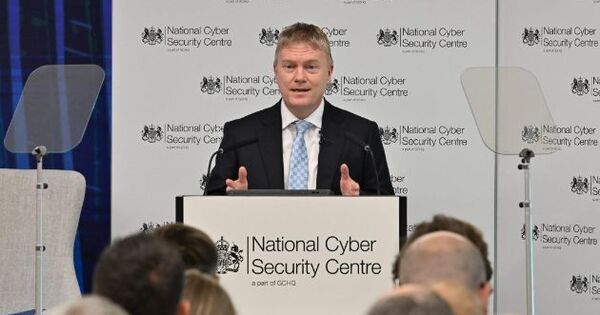
LONDON, U.K.: Urging tech firms to help build defenses powered by artificial intelligence, the head of the country’s cybersecurity agency warned on April 22 that Britain should brace for a rise in cyberattacks linked to hostile states.
Richard Horne, head of the National Cyber Security Center, said his team still deals with about four major cyber incidents each week. He added that the most serious attacks are now more often linked to governments rather than just criminal groups. The agency is part of GCHQ.
He explained that crimes such as ransomware remain the most common threat to organizations. But many of the most dangerous attacks now come, directly or indirectly, from countries such as China, Iran, and Russia, and are aimed at the UK and Europe.
Horne also said the world is going through a major geopolitical shift. Britain’s domestic intelligence agency, MI5, said it had stopped more than 20 Iran-linked plots since 2022, some targeting people in the UK.


He warned that if the UK gets close to or enters a conflict, it could face large-scale cyberattacks from activist hackers. These attacks could disrupt systems as much as ransomware, but without any option to pay to fix the damage.
Mathieu Cousin from AXA XL said cyberattacks are also likely to increase because of tensions linked to the U.S.-Israeli conflict with Iran. He noted that when political tensions rise, cyber activity usually increases, with Iran-linked groups using hacking as a means of responding.
Horne added that advances in artificial intelligence will likely make cyberattacks faster and more effective, though the same technology can also help improve defenses.
At the same event, Dan Jarvis urged major AI companies to work with the government to build stronger cyber defenses. He also encouraged businesses to join a voluntary Cyber Resilience Pledge and announced £90 million in extra funding over three years to improve cybersecurity, especially for small and medium-sized businesses.
🚨BREAKING: Watch The Video Clip Here ➤