The Nigeria Democratic Congress has zoned its presidential ticket to the South and cleared the path for Peter Obi. The APC says it is unbothered. The truth, as always in Nigerian politics, sits somewhere between confidence and concern. JONATHAN NDA-ISAIAH writes
Two things happened in Abuja last week that, taken together, tell you almost everything you need to know about the state of Nigerian opposition politics heading into 2027.


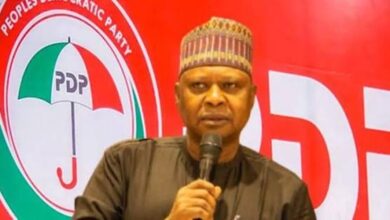
The first was the Nigeria Democratic Congress’s maiden National Convention, a well-attended, symbolically charged gathering at which the party unanimously zoned its presidential ticket to Southern Nigeria, effectively positioning former Anambra State Governor Peter Obi as its likely candidate, drew the public backing of former Kano Governor Rabiu Kwankwaso, and declared itself the vehicle through which Nigeria would be rescued from poverty, insecurity, and poor governance.
The second was the ruling All Progressives Congress’s reaction. National Chairman Professor Nentawe Yilwatda, armed with statistics,31 governors, 400 legislators, and 600 local government chairmen, asked rhetorically why the APC should be afraid of a party that had won zero by-elections. Imo State Governor Hope Uzodinma, equally unimpressed, asked where the NDC’s head office was.
Both reactions were revealing. The NDC’s convention was full of energy and short on electoral evidence. The APC’s dismissal was full of institutional muscle. Between these two postures lies the actual story of what 2027 may look like, and it is considerably more complicated than either side is currently prepared to admit.
The NDC secured Independent National Electoral Commission (INEC ) registration in February this year, after what its national leader and former Bayelsa Governor, Seriake Dickson, described as years of legal and administrative obstacles. That registration is real and, according to Dickson, uncontested in court,a foundational prerequisite that distinguishes the NDC from the many political movements that have combusted before reaching the starting line.
The convention itself was substantive enough to produce a unanimous zoning resolution, a structured leadership framework, and a clear directional statement. The motion to zone the presidency to the South was introduced by a sitting member of the House of Representatives, lending it some institutional weight beyond mere party rhetoric.
Peter Obi’s presence gives the party its most powerful asset: a candidate who, in 2023, mobilised millions of voters across ethnic and regional lines. Over six million votes. First-place finishes in Lagos and the FCT. Eleven states carried outright. That is not a credential that can be manufactured, borrowed, or dismissed. It is electoral evidence of unusual reach.
Kwankwaso’s endorsement of the zoning arrangement adds a northern dimension that the NDC will need to be competitive nationally. The Kwankwasiya movement’s discipline and mobilisation capacity in Kano were convincingly demonstrated in 2023. If that relationship is rebuilt on durable foundations, the NDC possesses a cross-regional coalition architecture that most opposition parties in Nigerian history have failed to construct.
Obi himself framed the NDC move in terms designed to pre-empt the accusation of opportunism. “We are not changing political platforms for transactional reasons,” he said. “We are making a principled decision to find a platform that allows us to build a new Nigeria that is possible.”
It is a carefully constructed argument. Whether it holds under scrutiny is another matter.
The APC’s dismissal of the NDC may be politically motivated, but it is not analytically wrong on its central point. Institutional presence is not everything in Nigerian politics, but the absence of it is fatal.
The NDC has won no elections. Not a single by-election seat has been held since its registration. Yilwatda’s point that performance “is not on TV, it is not on radio; it is on the field during elections” is correct, and the NDC’s field record is currently blank.
More critically, the NDC faces the same structural problem that destroyed the Labour Party’s 2023 presidential ambitions despite Obi’s extraordinary personal vote. The LP had a candidate with mass appeal but a party infrastructure too thin to protect votes at the polling unit level. Ward-level agents, result-sheet monitoring, and legal response capacity are the unglamorous determinants of Nigerian elections, and they cost money, time, and organisational depth that the NDC, as a newly registered party, has not yet had the opportunity to build.
A convention, however well-attended, does not answer the ward-level structural question. The NDC’s national chairman, Senator Moses Cleopas, said the party was “building a movement for governance, not assembling a crowd for elections.” That distinction is admirable as a philosophy. It remains to be demonstrated as a practice.
There is also the question of the Obidient coalition’s durability. That movement was built around a person and a moment, a rare convergence of candidate charisma, generational frustration, and social media energy that produced extraordinary results in 2023. Movements of that nature are notoriously difficult to reconstitute. The emotional peak has passed. The disappointment of defeat has dispersed some of the coalition’s energy. Rebuilding it requires not just a new party platform but evidence of organisational learning that translates into visible ward-level structures before election day.
The APC’s institutional dominance is real and should not be minimised. Thirty-one governors. Over four hundred legislators. Six hundred local government chairmen. A nationwide Renewed Hope Ambassadors network structured down to the ward and polling unit level, with a dedicated digital platform, sixteen functional directorates, and a coordinated message discipline framework already operational eighteen months before the election.
This is not the infrastructure of a party expecting a competitive election. It is the infrastructure of a party determined to make the result non-competitive, and it is being built with the seriousness and resourcing that reflect genuine political intent.
The APC has also demonstrated, through the Southeast engagement strategy and the systematic absorption of formerly opposition governors, that it understands the electoral map and is actively reshaping it. The Enugu delegation’s appearance at Aso Villa to pledge support for 2027 was one visible data point in a broader pattern of political realignment that has seen the ruling party significantly expand its territorial footprint since 2023.
Yilwatda’s dismissal of the NDC and ADC as threats fighting each other rather than threatening the APC contains an important analytical insight. The fragmentation of the opposition across multiple platforms -NDC, Labour Party, PDP, ADC is itself a structural advantage for the incumbent. A divided opposition in a first-past-the-post system does not add up to a united challenge. It produces vote splitting that benefits the party with the most consolidated base, which is currently, unambiguously, the APC.