0
The Peoples Democratic Party (PDP) has commenced its nationwide screening of aspirants for the 2027 general elections, waiving the screening requirement for former President Goodluck Jonathan.
This is even as the party screened 12 governorship aspirants ahead of its primaries.
The decision to grant Jonathan a waiver was disclosed on Tuesday in Abuja by Babangida Aliyu, a former governor of Niger State and member of the PDP screening committee, who said the party considered Jonathan’s political record sufficient to exempt him from the standard vetting process.
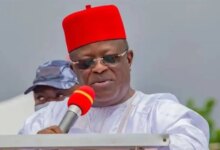
Aliyu explained that Jonathan’s political progression—from deputy governor to governor, vice president and eventually president—formed the basis of the waiver, noting that the party saw no need for further screening.
“As you know, the party had already given a presidential aspirant the waiver. Like I said in the beginning, he was deputy governor, became governor, became vice president, became president, so we didn’t see anything that needed screening.
“And therefore, the party had given him a waiver to come and start following. In other words, he has been declared and cleared as a candidate of the PDP for the presidential election, and that is President Jonathan.
He added that the waiver also covered a former deputy governor and ambassador, as well as the party’s secretary, Tawfik Arakwaja, who, according to him, was engaged in ensuring smooth coordination of the exercise in Oyo State.
“The other waiver is also for the former deputy governor and ambassador, and the secretary of the party, Tawfik Arakwaja, who, for many reasons, has to be in Ibadan or in Oyo State to ensure that everything has gone, so we also declared him as being given a waiver by the party.
Aliyu said the screening exercise was ongoing and would continue across the country, adding that candidates from Taraba, Adamawa, Kano, Akwa Ibom and Delta had already appeared before the committee.
He further said the process would be sustained within the approved timetable, expressing confidence in the party’s preparedness for the elections.
“So our committee is on. Anytime, the other people within the screening period will continue the screening exercise and pass people.
We are very happy that even those who have been attempting to kill the party cannot succeed, and the party will contest this election by the grace of God and by the constitution of Nigeria.
The PDP screening and appeal panels were constituted following directives of the National Executive Committee (NEC) at its 104th meeting and the Interim National Working Committee (iNWC), in line with the party’s timetable for the 2027 general elections.
Under the arrangement, the committee is expected to screen 2,122 House of Assembly aspirants, 748 House of Representatives aspirants, 198 senatorial aspirants, 112 governorship aspirants and one presidential aspirant nationwide, beginning Tuesday, May 19, 2026, at 10:00 a.m.
Senator Joel Ikenya was among the 12 aspirants screened on Tuesday. Others are Benedict Etanabene, Sherif Abdullahi, Ibrahim Abdullahi Manga and eight others.
Senator Joel Ikenya, a former legislator at both state and federal levels and former Minister of Labour under the Goodluck Jonathan administration, is seeking the Taraba State governorship ticket.
Ikenya said his ambition was driven by the need to address poverty through agricultural development and improved healthcare delivery, noting that Taraba’s agrarian nature required focused leadership.
He also stressed that insecurity in the country required collective action between the government and citizens, saying no single institution could tackle it alone.
“Security is not an individual thing; it’s a question of both the community and the people who are in government and people who are not in government working together to see our country secure, our state secure, and enable people to go to their farms and come back.
Enable people to go and do business and come back, and nobody will be afraid of doing business.
Delta State governorship aspirant, Benedict Etanabene, after his screening, said he was proposing a governance model that would involve government directly in job creation, wealth distribution and infrastructure development, with stronger emphasis on grassroots participation.
He said development must begin from the wards, arguing that local councils should have structured funding mechanisms tied to accountability and auditing.
“So what I’m offering the people of Delta is a situation where government will certainly be involved in creating jobs, not leaving it for the private sector, and putting wealth to the people and developing infrastructures collectively. For example, I believe that all the councillors in Delta are mainly governors of their own. So development must start from the various wards, meaning that all councillors will be entitled to a budget in the states, domiciled in the local government account, but when they finish, they will audit the account and get reimbursement from it.
In Yobe State, governorship aspirant Sharif Abdullahi identified insecurity as a major national challenge but declined to disclose operational details of his strategy, describing it as a sensitive matter.
He said insecurity remained widespread and stressed that the federal government bears primary responsibility for addressing it, while assuring that his approach would build on existing efforts.
He further noted that despite political control by the All Progressives Congress in the state, some progress had been made in security management and representation, expressing optimism about future improvements.
The Deputy National Publicity Secretary of the PDP and governorship aspirant in Kebbi State, Ibrahim Abdullahi Manga, also said insecurity would be his top priority if elected.
He described Kebbi as one of the country’s most affected states, saying the worsening security situation had significantly impacted the lives and livelihoods of residents.
Manga also linked insecurity to economic hardship and unemployment, blaming what he described as policy failures of the current administration, and argued that economic recovery would follow security restoration.
On the issue of Almajiri education, he called for a return to the intervention model introduced under former President Goodluck Jonathan in 2012, in which he said educational opportunities were provided for vulnerable children across northern Nigeria.
He said improved access to education and skills acquisition remained essential for national competitiveness and youth integration into the labour market.