Access to Clean Energy Strengthens Women’s Empowerment in Africa — Yennco CEO, Dr. Nwafor

0
Charles Onyekamuo
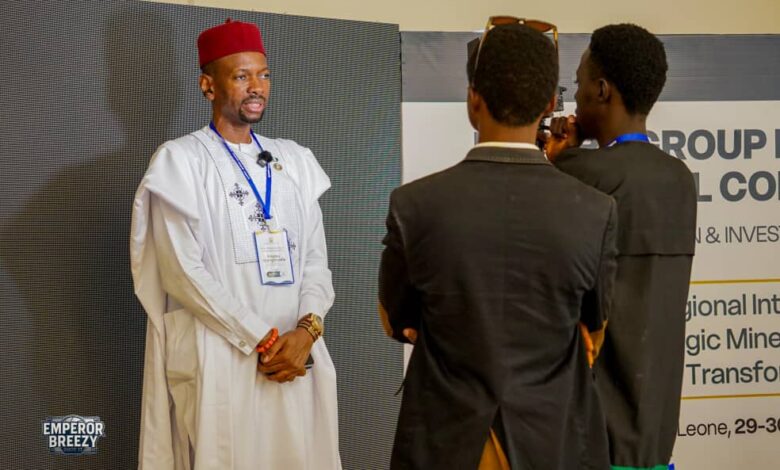
Dr. Onyeka Nwafor, the Chief Executive Officer (CEO) of Yennco World Trade Limited and a delegate to the ECOWAS Presidential Initiative on Climate Change, Renewable Energy and Food Security (Pi-CREF), says increased access to clean energy has significantly enhanced women’s economic empowerment and health care delivery across Africa.
Dr. Nwafor made the assertion during a recent launch of the 2026 ECOWAS LPG Programme cum high-level dialogue on clean cooking, gender equality, and child protection held in Freetown, Sierra Leone.

He told newsmen shortly after the event, that the transition to solar power, clean cooking solutions, and renewable energy sources was already transforming lives across the West African sub region.
“Today, the adoption of clean energy has significantly improved healthcare outcomes for women and children by reducing smoke inhalation, lowering respiratory illnesses, and enhancing maternal and child health,” he said.
He further explained that access to clean energy has boosted women’s economic empowerment by supporting businesses such as hair salons, tailoring and fashion enterprises, agro-processing ventures, and phone charging and repair services.
He said there was an urgent need for stronger inclusion of African women in the continent’s transition to clean energy, stressing that such participation would undoubtedly improve living standards and economic opportunities.
The First Lady of Sierra Leone, Mrs. Fatima Maada Bio, had in her address described limited access to clean cooking solutions as “not just an environmental issue, but a national emergency and public health crisis.”
She said that Sierra Leone’s national school feeding programme, which serves more than 600,000 children, had previously relied heavily on biomass fuel, adding that the event marked the commencement of a pilot phase aimed at expanding access to Liquefied Petroleum Gas (LPG) across Sierra Leone.
She reiterated that the goal of the initiative was to ensure that schools and households nation wide transit to cleaner cooking systems with a view to protecting women, children,teachers, and indeed everyone from harmful emissions.
Mrs Bio expressed gratitude to regional partners and civil society organizations for support and commitment to the initiative.
Sierra Leonian President , Julius Maada Bio had announced the distribution of 10,000 clean cooking gas canisters to households as part of the initiative.
President Bio said at the event that what women actually lacked were not solutions but champions.
He called on the private sector to invest more in clean energy initiatives and urged that women should be empowered not merely as beneficiaries, but as entrepreneurs and leaders across the clean energy value chain.
It is estimated he said that more than 9.6 million people still lack access to clean cooking solutions globally, while toxic smoke from biomass and charcoal is linked to an estimated 3.7 million deaths annually, most of them involving women and children.
According to Cyril Arnold Grant, Sierra Leone’s Minister of Energy, who also spoke ,only 1.5 per cent of households in the country currently use clean cooking solutions, while 72 per cent depend on firewood and 22 per cent rely on charcoal.
The dialogue attracted several African First Ladies and key stakeholders in the energy sector, including Kenya’s First Lady, Rachel Ruto, and Ghana’s former Second Lady, Samira Bawumia, who serves as Global Ambassador for the Clean Cooking Alliance.
Mrs. Ruto stressed that Africa’s clean cooking movement must ensure that “no woman cooks in toxic smoke and no forest disappears due to dependence on charcoal and firewood.”
She also emphasised the importance of involving women as critical stakeholders in the energy transition process, noting that their participation would help shape solutions that reflect local realities and community needs.
Chief Executive Officer of the Clean Cooking Alliance, Dymphna van der Lans, stated that African First Ladies possess a unique capacity to drive conversations and partnerships that promote clean cooking, gender equity, and public health.
Similarly, the CEO of Sustainable Energy for All, Damilola Ogunbiyi, observed that empowering women within the clean energy sector could significantly improve energy access, reduce emissions, and strengthen community resilience.
The programme was supported by the Economic Community of West African States (ECOWAS), the Clean Cooking Alliance, and the Presidential Initiative on Climate Change, Renewable Energy and Food Security (Pi-CREF).