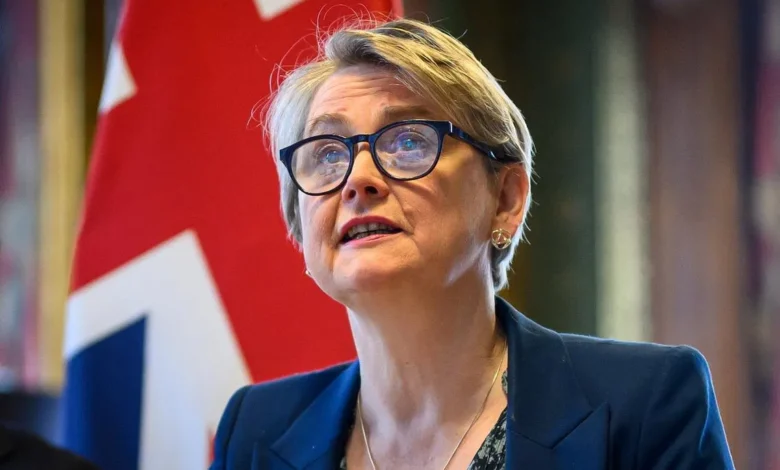
LONDON – British foreign minister Yvette Cooper will travel to China on June 1, and then onwards to India later in the week, with the visits to focus on global issues from the Strait of Hormuz and the Russia-Ukraine war to the recent Ebola outbreak.
Ms Cooper will meet her Chinese counterpart Wang Yi and Chinese Vice-President Han Zheng on June 2, before travelling to the southern tech hub of Shenzhen for a programme focussed on science and technology a day later, the government said.
The plans, announced on May 31, come after Reuters reported in April on the visit, citing three sources.
Prime Minister Keir Starmer and Chinese leader Xi Jinping hailed a reset in ties during the British leader’s visit to China in January, pledging greater cooperation on trade, investment and technology to the mutual benefit of both countries.


Mr Starmer, who is battling some of the worst popularity ratings of any leader at home, was the first British prime minister to visit China in eight years, with his centre-left Labour government making improving relations with China a priority.
Ms Cooper’s travel to China and India – the world’s second-largest and sixth-largest economies – comes at a time of heightened geopolitical tensions, soaring oil prices following the U.S.-Israeli war on Iran, and as Britain struggles with sluggish economic growth.
She is expected to be in India on June 4 where she is due to meet External Affairs Minister S. Jaishankar as well as entrepreneurs, academics and government partners who are delivering on the UK-India Vision 2035 initiative.
The two countries signed a free trade deal in 2025 that was aimed at boosting bilateral trade and improving market access across sectors.
But India’s trade secretary Rajesh Agrawal said in April that its implementation had hit a hurdle over London’s new steel import curbs.
The British government said Ms Cooper’s upcoming engagements “with these two major powers are expected to be focused on tackling the most significant global challenges”. REUTERS