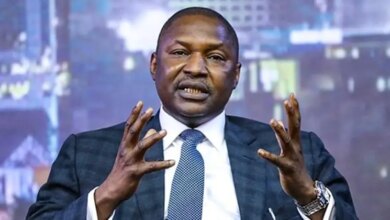
Nigeria requires approximately $3tn in infrastructure investment over the next 30 years, translating to about $100bn annually, to close its vast infrastructure deficit and unlock sustainable economic growth, Deputy Governor of the Central Bank of Nigeria (CBN), Malam Lamido Yuguda, has said.
Yuguda warned that with debt servicing consuming more than 90 per cent of government revenue and the federal budget remaining below $35bn annually, the country cannot rely solely on public spending.
He, therefore advocated a more robust adoption of Public-Private Partnerships (PPPs) as a strategic mechanism for mobilising long-term private capital, accelerating infrastructure delivery and deepening Nigeria’s financial markets.
Speaking at the 14th Fellowship Inaugural Lecture of the Capital Market Academics of Nigeria (CMAN) themed, “Leveraging Infrastructure PPPs for Economic Growth and Financial Deepening in Nigeria: Lessons, Challenges and Pathways Forward,” Yuguda said Nigeria possesses significant structural advantages, including a large youthful population, abundant natural resources and a highly entrepreneurial culture.


According to him, despite these strengths, the nation’s economic potential continues to be constrained by chronic infrastructure deficits across critical sectors such as transportation, energy, housing, logistics and digital connectivity.
“The financing gap cannot be resolved through incremental budget increases or additional sovereign borrowing alone,” Yuguda said. “Nigeria must create frameworks that attract long-term institutional capital and private sector participation if it is to meet its infrastructure aspirations.”
The former Director-General of the Securities and Exchange Commission (SEC) identified several obstacles hindering the effectiveness of PPP implementation in Nigeria.
Among them are policy inconsistency and regulatory uncertainty, inadequate project preparation capacity, weak dispute resolution mechanisms, poor revenue credibility and cost-recovery frameworks, as well as regulatory barriers limiting institutional investment in infrastructure projects.
He noted that long-term investors require predictable policies regarding tariffs, concessions and contractual obligations, warning that frequent policy reversals raise investment risks and discourage both domestic and foreign institutional investors.
Yuguda further observed that many infrastructure projects fail to attract financing because they are not adequately prepared before being brought to market.
He pointed to deficiencies in feasibility studies, demand forecasting, risk allocation frameworks and legal structuring, describing them as major impediments to attracting private investment.
According to him, uncertainty surrounding contract enforcement and dispute resolution often leads investors to demand higher risk premiums or withdraw from projects entirely.
He also highlighted the challenge of weak revenue models, noting that non-market pricing mechanisms and poor collection systems undermine the predictable cash flows required to structure infrastructure bonds, asset-backed securities and other long-term financing instruments.
The CBN Deputy Governor identified regulatory and capacity constraints within Nigeria’s pension and insurance industries as another significant challenge.
He stated that existing investment guidelines for pension fund administrators (PFAs) and insurance companies do not adequately support direct or indirect infrastructure investments, while many institutional investors lack the technical expertise required to evaluate infrastructure assets with investment horizons of 20 to 30 years.
“Creating financial instruments alone will not solve the problem,” he said. “There must also be capacity building among institutional investors to understand and assess infrastructure opportunities.”
To address these challenges, Yuguda proposed a series of policy reforms aimed at improving the bankability of infrastructure projects and attracting greater private sector participation.
Among his recommendations were making bankability the primary criterion for PPP approval, mandating comprehensive feasibility studies and enforceable revenue models, and requiring Public Sector Comparator (PSC) assessments for all concessions valued above ₦10bn.
He also called for increased issuance of infrastructure bonds and Sukuk linked to PPP assets, the development of credit-enhanced investment instruments, and greater support for infrastructure funds and pooled investment vehicles.
Other recommendations included aligning tariffs with cost recovery and long-term sustainability, introducing annuity and availability-payment models where appropriate, and creating indirect channels that would enable pension funds and insurance firms to participate more actively in infrastructure financing.
Yuguda stressed the need for stronger regulatory coordination to align investment mandates with Nigeria’s infrastructure financing requirements.
Earlier, President of the Capital Market Academics of Nigeria, Professor Uche Uwaleke, described the lecture as timely and strategic, noting that infrastructure remains one of the most significant constraints to Nigeria’s productivity, competitiveness and inclusive economic growth.
He commended the Federal Government’s renewed commitment to infrastructure development, citing projects such as the Lagos-Calabar Coastal Highway and other strategic transportation corridors as evidence of efforts to drive economic integration and long-term competitiveness.
However, Uwaleke maintained that government resources alone would be insufficient to address the country’s infrastructure challenges.
“The scale of Nigeria’s infrastructure financing needs far exceeds what public revenues can sustainably provide. This reality makes Public-Private Partnerships not simply desirable, but absolutely necessary,” he said.
The professor noted that Nigeria’s persistent power deficit continues to undermine industrial productivity and increase operating costs for businesses, adding that stronger collaboration between the public and private sectors would be essential for addressing the challenge.
He urged academics, policymakers, regulators and industry practitioners to move beyond theoretical discussions and actively contribute to designing frameworks capable of mobilising long-term capital for national development.
Also speaking, Dr Suleyman Ndanusa, former DG and Chairman of SEC, praised Yuguda’s contributions to financial sector development and described the topic of infrastructure financing through PPPs as critical to Nigeria’s development agenda.
What do you think about this?
Drop your opinion in the comment section.
FOLLOW US & Share this with someone who needs to see this.