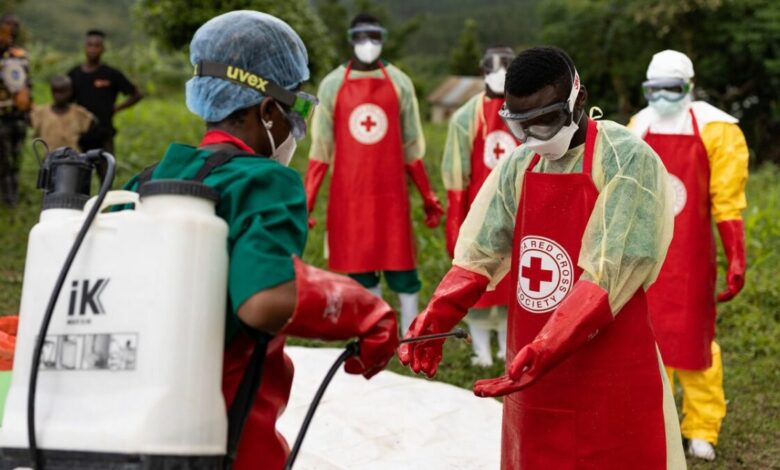
The Nigeria Centre for Disease Control and Prevention (NCDC) has placed the Federal Capital Territory (FCT), Lagos, and eight other states on high risk alert following an escalating outbreak of Bundibugyo Ebola Virus Disease (EVD) in the Democratic Republic of Congo (DRC) and Uganda.
In a public health advisory issued to all 36 states and the FCT on Thursday, NCDC warned that Nigeria faces a high risk of importation of the virus due to ongoing regional transmission, increased cross-border movement, international travel, porous land borders, and major transport hubs.


The high-risk states identified include Lagos, FCT, Rivers, Kano, Enugu, Borno, Akwa Ibom, Cross River, Taraba, and Adamawa while moderate risk states include Ogun, Nasarawa, Kaduna, Plateau, Kogi, Niger, Jigawa, Katsina, Bauchi, Ebonyi, Abia and Bayelsa.
NCDC said the classification is subject to change depending on how the outbreak evolves.
The advisory comes after the World Health Organisation (WHO) declared the outbreak a Public Health Emergency of International Concern (PHEIC), citing its severity and cross-border threat.
NCDC said Nigeria currently has no confirmed case of the disease. However, it stressed that preparedness must be intensified nationwide before any suspected case is detected.
The ongoing outbreak has recorded 1,077 suspected cases and 247 deaths in the DRC and Uganda, with a case fatality rate of 24.6 per cent, mostly affecting people aged 14 to 45 years.
The agency warned that there are no approved vaccines or specific treatments for the Bundibugyo strain of Ebola, making prevention and early containment the only effective tools.
Unlike the Zaire strain of Ebola, existing vaccines and monoclonal antibody treatments are not effective against the Bundibugyo variant, NCDC clarified.
It noted that control measures must rely on early detection, isolation, contact tracing, infection prevention and control (IPC), safe burials, and strong surveillance systems.
NCDC reiterated that Ebola is not airborne. It spreads through direct contact with body fluids of infected persons, contaminated materials, or infected animals.
Early symptoms include fever, fatigue, headache, muscle pain, vomiting, diarrhoea, rash, unexplained bleeding, and signs of shock.
The agency warned health workers not to wait for bleeding symptoms before suspecting Ebola in patients with compatible symptoms and relevant travel history.
It confirmed that its National Emergency Operations Centre (EOC) has been activated and is currently in alert mode, coordinating preparedness efforts with federal and state governments.
NCDC has instructed states to ensure immediate readiness across both public and private health facilities.
State governments have been directed to submit readiness reports within 72 hours and immediately notify the NCDC of any suspected cases or unusual fever clusters.
The Director General of NCDC, Dr. Jide Idns, urged states to act swiftly, warning that preparedness must come before any confirmed case.
He noted that Nigeria’s previous success in containing Ebola outbreaks was achieved through early detection, rapid coordination, strict infection control, and public cooperation.
“The window for preparedness is before the first suspected case is reported,” he said, urging states and local governments to treat the advisory as an urgent call to action.
The agency reaffirmed its commitment to supporting states in strengthening surveillance systems, protecting health workers, and preventing any potential importation or spread of the disease.