
No Hunger Initiatives (NHI), also known as No Hunger Food Bank (NHFB), has strengthened its commitment to tackling hunger and malnutrition through the successful implementation of the Vertical Backyard Farming for Family Nutrition Needs (Vert2FAMNN) project at the Internally Displaced Persons (IDPs) community in Karimajigi, Abuja.
The nutrition-focused nonprofit organisation, which has been operating since 2019, is dedicated to eradicating hunger, malnutrition, and micronutrient deficiencies among vulnerable populations across Nigeria. Through its core pillars of food banking, empowerment, and policy support, NHFB continues to transform food waste into sustainable food security solutions while empowering communities to become self-reliant.
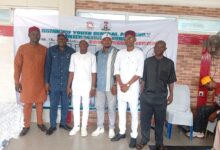

The latest intervention, delivered on April 25, 2026, was supported by the Australian Government through the Australian High Commission in Nigeria. The project directly benefited 500 displaced female-headed households and is expected to impact about 2,000 indirect beneficiaries through shared harvests, knowledge transfer, and improved household nutrition practices.
The Vert2FAMNN initiative falls under NHFB’s empowerment pillar and is designed to equip vulnerable families with practical tools, training, and skills needed to achieve long-term food security. Through climate-smart and space-efficient vertical farming systems, beneficiaries in the Karon-Majigi IDPs community can now cultivate nutritious food within limited spaces, thereby reducing dependence on external food assistance.
Speaking during the programme, the Chief Executive Officer of No Hunger Initiatives, Prof. Gbadebo Odularu, stressed the importance of sustainability in the organisation’s interventions.
“No Hunger Food Bank is not just about feeding the vulnerable. It is about empowering them so they can become self-sufficient, restore dignity, and build better futures for their families. Sustainability remains at the heart of everything we do, and this project reflects exactly that vision,” he said.
Prof. Odularu also appreciated the Australian High Commission, Nigeria, for supporting the initiative.
“We are sincerely grateful to the Australian High Commission, Nigeria, for standing with us in this transformative intervention. Your support is helping vulnerable families move from dependency to dignity through practical, sustainable solutions,” he added.
As part of the project, beneficiaries received intensive training on sustainable farming techniques, nutrition education, mentoring support, and farming tools carefully selected for ease of use and long-term sustainability. Items distributed included locally fabricated vertical planters, watering cans, planting pots, gardening gloves, trowels, and agricultural seeds and seedlings such as amaranthus, fluted pumpkin, chilli pepper, Scotch bonnet pepper, okra, and tomato seedlings.
The intervention was further supported by 43 volunteers, popularly known as No Hunger Champions, whose dedication ensured the successful execution of the project despite heavy rainfall and cloudy weather conditions. Their efforts reflected the organisation’s enduring culture of compassion and service.
Community members have since embraced the initiative with enthusiasm, as women, youths, and camp leaders have formed support groups to manage the planters, share farming knowledge, and collectively improve food production within the camp. The growing sense of ownership is expected to enhance the long-term sustainability and impact of the intervention.