War rarely ends when one side declares victory. It ends when both sides conclude that continuing the conflict costs more than compromise. The current confrontation between the United States and Iran has now reached precisely that dangerous threshold. What began as a campaign of “maximum pressure” against Tehran is slowly turning into a test of endurance, political legitimacy, and strategic patience. Beneath the rhetoric of ceasefires, missile strikes, and diplomatic manoeuvring lies a deeper reality: the United States seeks a settlement on its own terms, while Iran insists that peace without justice is merely another form of surrender.
Diplomatic negotiations between the United States and Iran have hit a critical impasse, with both sides trading fire and accusations while attempting to manage a fragile, contested ceasefire.
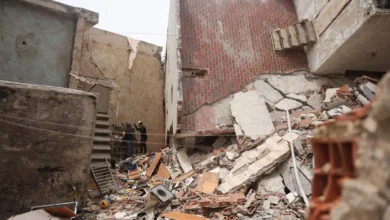
Despite a two-week ceasefire starting 8th April 2026, tensions have escalated in the Strait of Hormuz. The US Navy reported disabling Iranian flagged tankers attempting to breach a blockade. Concurrently, Iran claimed its Revolutionary Guard (IRGC) fired missiles at US destroyers, alleging they caused damage and forced a retreat, a claim downplayed by the US as a “trifle”.
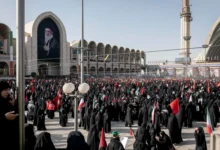

Iran has rejected a recent US proposal as a demand for “surrender,” demanding an end to sanctions, war reparations, and full control over the Strait of Hormuz.
An online, technological “meme war” has emerged, with AI-generated imagery depicting attacks on ships and mocking leaders, further poisoning the diplomatic atmosphere.
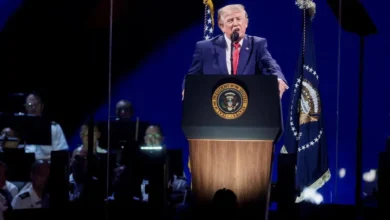
There are core issues and counter positions involved with both sides unwilling to yield grounds. Donald Trump has expressed that while talks are “going very well,” it is hardly the truth. Why else would he threaten “great damage” to Iran if a deal is not signed?
The US aims to permanently end the war, reopen the Strait of Hormuz, and roll back Iran’s nuclear program. This aim has no give-and-take in it. Trump’s my way or the highway would have worked if Iran were limping in pain and was hurt and/or damaged severely. Consequently, the situation remains “extremely fragile,” with expert warnings that the stalled negotiations could trigger a larger, direct military confrontation if a breakthrough is not achieved.
Iran stands firm resolutely and will only give in if the peace deal has clear prospects of justice and permanence in it. Iran will not any longer stand for a haphazard deal which allows the USA and its ally Israel to start surprise attacks again. Iran’s vigilance and agility is iron-clad.
Iran has set out its demand in no uncertain terms and has pledged its non-negotiable determination to stand by the conditions it has set. These include:
- Acceptance of Iran’s right to nuclear enrichment.
- Compensation for damages caused by U.S. and Israeli strikes.
- Binding international guarantees to prevent future attacks.
- Continued Iranian control over the Strait of Hormuz.
- Lifting of primary and secondary sanctions.
- Removal of U.S. military bases from regional nations
- Tehran is demanding the lifting of sanctions and is refusing to curb its missile program, citing a need for “mutual respect”.
Trump has multiple compulsions for why he must find a swift peace deal. The military conflict reached the 60-day limit allowed by US law, restricting Trump’s authority to continue action without Congressional approval, which is uncertain.
Despite initial claims that “80 percent of Iran’s missile launchers” were destroyed, the war has become a high-stakes, high-cost, and unpredictable conflict. The war may just be Trump’s “sinkhole.”
The conflict has resulted in a blockade of the Strait of Hormuz, causing significant disruption to global energy markets and bringing the US closer to a direct clash with Iranian forces, which Trump aims to avoid through a swift deal.
President Trump is pushing for a rapid conclusion to the 2026 Iran war -despite claims of positive negotiations—due to a combination of political pressure, military stagnation, and a desire to avoid a prolonged entanglement. While Trump has maintained that a deal is “very close” and that Iran is in a “weakened position”, several factors indicate a desire to end the conflict quickly.
Despite initial claims that “80 percent of Iran’s missile launchers” were destroyed, the war has become a high-stakes, high-cost, and unpredictable conflict. Reports suggest the war has yielded few clear gains for the USA.The administration faces pressure to show a quick victory ahead of other diplomatic events, such as meetings with China, and to avoid negative political repercussions in the US from a prolonged war.
Trump has dismissed Iran’s peace proposal calling them “totally unacceptable,” and rejecting a deal that does not meet US requirements. The USA refuses to even countenance a deal that allows Iran from acquiring a nuclear weapon, with threats to destroy any efforts at uranium enrichment.
The US is enforcing a siege on Iranian ports and demanding security in the region, aimed at stopping the Iranian blockade of the Strait of Hormuz.
Trump has heightened economic and domestic demands. He has implemented new tariffs of at least (10 percent) on most foreign goods to cut the trade deficit, with Chinese imports potentially facing a (60 percent) tariff. Promises include making tips tax-free, eliminating taxes on Social Security payments, and further reducing corporate taxes. Executive actions compel federal agencies to prioritize American-made products, closing loopholes in federal procurement.
Trump has been leaning on Beijing to use its influence to force Tehran into a deal with Washington. Tehran has reported that the U.S. has continued to demand more than just a ceasefire, aiming for total submission in the conflict. Tehran maintains a defiant stance, believing its military and economic resilience can withstand pressure from the United States, even as it engages in, and at times disrupts, negotiations to end the ongoing 2026 conflict.
Iranian officials, particularly within the Islamic Revolutionary Guard Corps (IRGC), believe that prolonged conflict strengthens their internal grip on power and regional influence, making them resistant to US threats.
While maintaining a hardline, Tehran is participating in negotiations, viewing a potential deal as a way to “win” by normalizing its status and ending the war, even if President Trump declares a victory.
Iran continues to utilize its navy to threaten the Strait of Hormuz, aiming to pressure global energy markets and the US into concessions while Washington seeks to break Iran’s nuclear and regional ambitions.
Iranian media and officials often frame the negotiations as forcing the US to accept their terms, viewing the continuation of their leadership as a success, regardless of the rhetorical, political, or economic costs. Trump frequently frames his approach as forcing Iran to the table, and often declares any movement toward negotiations or partial concessions by Iran as a victory for his “maximum pressure” campaign. It is a bitter pill to swallow for Trump to settle on Iran’s terms, but the logic of war plus the gathering storms in US politics as the midterms loom large leave him with no real alternative but to negotiate.
It may seem the US sanctions are the main hurdle to a deal. Not really. Of course, it is the irreducible minimum for Tehran.
The real obstacle to peace is therefore not merely sanctions, uranium enrichment, or the Strait of Hormuz. It is the refusal of both powers to recognize that durable peace cannot be built on humiliation.
History repeatedly shows that imposed settlements breed future wars. If Washington seeks surrender while Tehran seeks dignity, negotiations may continue endlessly while the region moves closer to catastrophe.
Peace will only become possible when power gives way to realism, and realism finally makes room for justice.
The views expressed in this article belong to the author and do not necessarily reflect the editorial policy of Middle East Monitor.