Meet Mahmud Sadis Buba: Nigerian politician claimed he was 30 until leaked documents revealed he was actually 16

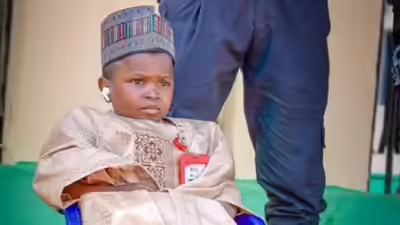
Mahmud Sadis Buba, a little-known political aspirant from Nigeria’s Kaduna State, suddenly became one of the most talked-about figures on African social media after a controversy over his age exploded online. Buba had presented himself as a 30-year-old politician seeking a seat in Nigeria’s House of Representatives under the ruling All Progressives Congress (APC). He also claimed to have dwarfism, explaining that his condition made him appear much younger than his real age. The story took a dramatic turn after leaked documents, including an alleged passport and school records, surfaced online suggesting he was actually just 16 years old, triggering national outrage and political embarrassment.
Who is Mahmud Sadis Buba?
Mahmud Sadis Buba is from Sabon Gari in Zaria, Kaduna State, northern Nigeria. Before entering politics, local reports claimed he worked as a driver and later became involved in grassroots political mobilisation within the APC. Supporters often referred to him with nicknames such as ‘The Wonder of Zaria’ and ‘Al Ajabin Zazzau’, titles that reflected the fascination surrounding his appearance, confidence and political ambitions despite his young-looking features. Buba reportedly sought to represent the Sabon Gari Federal Constituency in Nigeria’s House of Representatives ahead of the 2027 elections.
How the controversy began
The controversy began after videos from an APC screening exercise circulated widely on social media platforms including X, TikTok, Facebook and Instagram. In the videos, Buba confidently introduced himself as a 30-year-old politician ready to serve his constituency. Many viewers immediately questioned his age because he appeared much younger. In response, Buba reportedly explained that he had dwarfism, which affected his physical appearance and height.At first, many Nigerians praised him online. Some described him as inspirational, while others viewed him as an example of disability representation in Nigerian politics. His confident public appearances and political ambition quickly turned him into a viral figure across the country.
The leaked documents that changed everything
The story escalated dramatically after several documents allegedly linked to Buba began circulating online. Reports claimed the leaks included an international passport, a birth certificate, a National Identification Number slip and school-related records. The documents reportedly showed that Buba was born in 2010, not 1995 as he had publicly claimed. If accurate, that would mean he was around 15 or 16 years old during the APC screening process.The revelation immediately triggered widespread criticism because Nigerian law requires candidates seeking election to the House of Representatives to be at least 25 years old. Many Nigerians questioned how such a major discrepancy could have gone unnoticed during the party’s screening process.
The dwarfism claim
One of the most discussed aspects of the controversy was Buba’s claim that dwarfism explained why he looked significantly younger than his stated age. According to local media reports, he said the condition ran in his family and had been inherited from his grandfather. He also reportedly spoke about facing discrimination and mockery because of his appearance while growing up.For a brief period before the document leak, many Nigerians saw him as a symbol of determination and inclusion. However, after the age controversy erupted, the dwarfism claim became part of the wider public debate surrounding his identity and credibility.
Teacher and family claims intensified the scandal
The controversy deepened further after a man identifying himself as Buba’s former teacher publicly claimed he had taught him in junior secondary school and insisted that Buba was only 16 years old. Some reports also claimed that a family member released documents identifying him as a younger sibling born in 2010. These claims added fuel to the scandal and intensified pressure on the APC leadership.As the story spread, social media users continued digging into Buba’s background, turning the controversy into one of Nigeria’s most viral political discussions of the year.
APC response and withdrawal
Initially, some APC supporters dismissed the controversy as political propaganda designed to damage Buba’s reputation. However, as the leaked documents continued circulating online, scrutiny intensified. Buba was eventually disqualified from the race over the age controversy and later withdrew his candidacy through a formal letter addressed to party leaders.According to reports, he said the decision followed consultations with family members, political associates and party stakeholders. He also reportedly endorsed another APC candidate for the constituency seat.
Why the story went viral internationally
The Mahmud Sadis Buba controversy quickly spread beyond Nigeria because it touched on several issues at once, including youth participation in politics, disability representation, political vetting failures and the power of social media investigations. Many users were stunned that someone allegedly underage could progress so far within a major political party before questions about his age emerged publicly.The story also became a meme across African social media, with users debating whether the controversy reflected deeper weaknesses in Nigeria’s political screening systems.
Questions that still remain unanswered
Despite the widespread attention, several details remain unclear. There has been no public court ruling confirming whether all leaked documents were authentic or whether Buba intentionally falsified his age. There is also no publicly released medical documentation confirming his dwarfism claim.Most reporting surrounding the controversy has relied on leaked records, local media coverage and social media discussions rather than official government investigations. Even so, the controversy transformed Mahmud Sadis Buba from an unknown local political aspirant into one of the most talked-about figures in Nigeria’s political conversation.