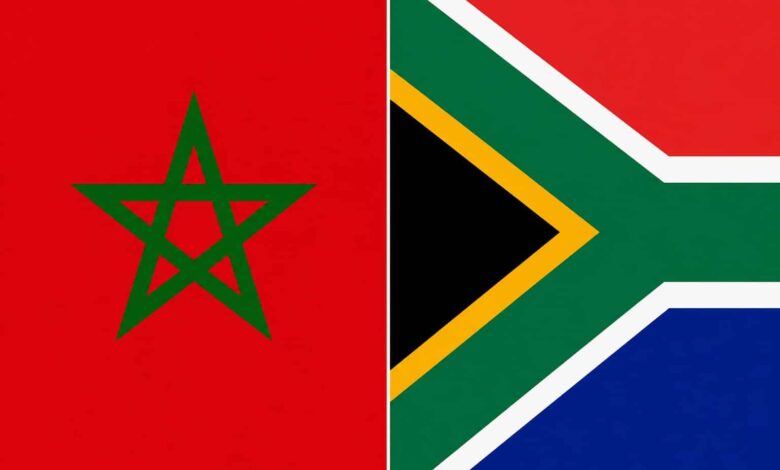
Morocco has displaced South Africa as Africa’s leading industrial economy as South Africa grapples with a worsening wave of xenophobic violence involving the killing of foreign nationals by vigilante groups.
The African Development Bank (AfDB) revealed that Morocco had climbed to the top of the continent’s industrial rankings through sustained investment in manufacturing, export diversification and long-term industrial policy.
South Africa, meanwhile, has been convulsed by xenophobic violence that, according to a separate analysis, killed many people for years and displaced around 40,000 foreign nationals, yet left unemployment and service delivery no better afterwards.
As Morocco cements its reputation as a manufacturing and export hub linking Europe, Africa and the Middle East, South Africa finds itself consumed by a crisis of its own making, one that is believed to have be the result of governance failures and structural inequality that successive governments have failed to address.
Read Related News Updates
Xenophobia fears rise in South Africa as viral videos show attacks on African migrants
UN reacts to South Africa’s xenophobic tensions, urges end to violence
Two Nigerians killed in South Africa as xenophobic tensions rise
Morocco coach backs CAF decision, Senegal heads to CAS
Reports showed that in April and May 2026, a citizen-led movement called March and March organised demonstrations against undocumented migrants in Pretoria, Johannesburg and Durban. The protests turned violent and, in some cases, fatal. Human Rights Watch documented the unrest and found that police responses were inadequate or absent.
The violence is not new. South Africa has experienced recurring waves of xenophobic attacks since 2008, with significant outbreaks in 2015, 2019 and again between 2021 and 2022 — driven partly by vigilante groups such as Operation Dudula, whose name translates roughly from Zulu as “force out.”
The South Gauteng High Court in November 2025 banned Operation Dudula supporters from blocking migrants at healthcare facilities. March and March faces no such restrictions.
Human Rights Watch has not independently confirmed any deaths at the latest protests. But one credible source described an incident right before the demonstrations: police beat and tortured a Malawian man who did not have his papers, stuffed him in a car trunk, and left him there. He died from his injuries.
On 27 April, UN Secretary-General António Guterres said he was worried about the attacks. The African Commission on Human and Peoples’ Rights urged the government to investigate, hold people accountable, and make sure migrants can get justice and protection.
There seems to be blame on the wrong people, that foreign nationals are responsible for South Africa’s unemployment, poor services and crime. Research consistently disproves this. South African Social Security Agency data for 2024 showed that fewer than 0.5 per cent of Child Support Grant recipients were refugee or permanent resident children combined — flatly contradicting claims of widespread migrant dependency on state grants.
The arrest in March 2026 of the national health department’s director general over alleged fraud linked to funds meant for HIV, tuberculosis and malaria programmes pointed to where the real pressure on public services comes from.
“Corruption and underfunding, not migration, are draining the system,” one analysis concluded.
Mpho Makhubela of the Consortium for Refugees and Migrants in South Africa put it plainly.
“Vigilante groups feed off the country’s frustrations and socioeconomic rights regression, unemployment, [and] lack of efforts to address the equity gaps that we have as a country. The reality is that the country has been faced with the enormous task of addressing the legacies of apartheid.”
Sources showed that South Africa’s unemployment crisis is a consequence of weak education outcomes, low investment, energy instability and the enduring inequalities of the apartheid era.
Post-apartheid governments have presided over systemic corruption, a failed industrial policy, electricity grid collapse and a jobs crisis that predates and will outlast any wave of immigration.
Therefore, blaming migrants changes nothing; it did not after 2008, and there is little reason to think it will now.
Against this backdrop, the AfDB’s industrialisation findings carry an uncomfortable message for Pretoria. Morocco’s rise was no accident. The bank attributed it to deliberate policy — industrial upgrading, export diversification and consistent long-term planning.
The report also laid bare one of Africa’s structural weaknesses: intra-African trade amounts to just 14.4 per cent of total trade, a reflection of fragmented supply chains and weak integration across the continent.
Ousmane Fall, speaking at the index launch, described the report as both a “diagnosis and roadmap” for Africa’s industrial future, one that would depend on reliable energy, stronger infrastructure, technical skills, financing and deeper regional integration under the African Continental Free Trade Area.
South Africa’s constitution protects the rights, dignity, and equality of everyone in the country, not just citizens. It is also signed up to international agreements that require it to protect all people from discriminatory violence. How the government responds, whether it upholds those commitments or lets vigilante groups act without consequences, will say a lot about where the country is headed.
For More News Details, Visit New Daily Prime.