Nestlé Nigeria Rallies Government, Health Experts, Industry Leaders On Nutrition, Sustainable Food Systems


0
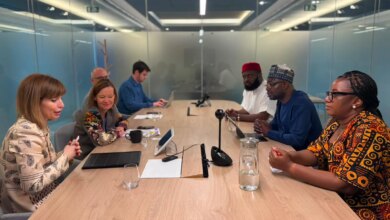
Victoria Uwadoka, Corporate Communications, Public Affairs and Sustainability Lead at Nestlé Nigeria,(left); Patricia Ekaba, Head of Corporate Communications, Public Affairs and Sustainability for Central and West Africa,(middle); Mrs Folashade Bada Ambrose-Medebem, Honourable Commissioner, Commerce, Cooperatives, Trade and Investment, Lagos State; Wassim Elhusseini, Managing Director and CEO of Nestlé Nigeria PLC, at the Nestle for Good Summit held in Lagos, recently
Nestlé Nigeria has intensified calls for stronger collaboration among government, healthcare professionals, development partners, academia, and the private sector to tackle Nigeria’s growing nutrition and food system challenges, as it convened stakeholders at the Nestlé for Good Summit 2026 in Lagos.

The summit, which attracted policymakers, civil society organisations, industry leaders, and media practitioners, focused on practical and scalable solutions aimed at improving nutrition outcomes, strengthening livelihoods, and building more sustainable food systems across the country.
Held against the backdrop of rising concerns over food insecurity, malnutrition, public health pressures, and sustainability challenges, the summit provided a platform for cross-sector dialogue on how partnerships can drive measurable impact across communities.
Among top government officials present at the event were the Lagos State Commissioner for Commerce, Cooperatives, Trade and Investment, Mrs Folashade Bada Ambrose-Medebem, and the Commissioner for Health, Prof. Akin Abayomi, alongside representatives of development institutions and public health organisations.
Discussions at the summit centred on improving nutrition across different stages of life, strengthening local food systems, enhancing livelihoods, and fostering environmental sustainability.
Managing Director and Chief Executive Officer of Nestlé Nigeria, Wassim Elhusseini, said the initiative reflects the company’s commitment to creating shared value while supporting broader development goals.
According to him, ensuring access to nutritious food at scale requires resilient systems that cut across sourcing, manufacturing, distribution, environmental sustainability, and community development.
“At Nestlé, we are guided by a simple but powerful purpose: to unlock the power of food to enhance quality of life for everyone, today and for generations to come,” Elhusseini said.
He explained that the “Nestlé for Good” platform represents a more connected approach to the company’s interventions in nutrition, thriving communities, and environmental sustainability.
The Lagos State Commissioner for Commerce, Cooperatives, Trade and Investment, Mrs. Folashade Bada Ambrose-Medebem, stressed that conversations around nutrition extend beyond food alone and are directly linked to economic productivity, healthcare outcomes, and national development.
“The conversations we are having today are not only about food. They are about human capital, productivity, public health, economic growth, and ultimately, the future of our society,” she said.
She further emphasised the need for sustained collaboration between governments, businesses, development agencies, and communities to address nutrition challenges at scale.
Also speaking, Victoria Uwadoka, Corporate Communications, Public Affairs and Sustainability Lead at Nestlé Nigeria, noted that the summit was designed to demonstrate how the company’s investments, products, sourcing networks, and partnerships collectively contribute to healthier lives and resilient communities.
According to her, the initiative goes beyond showcasing isolated projects and instead highlights integrated solutions capable of delivering long-term impact.
Patricia Ekaba, Head of Corporate Communications, Public Affairs and Sustainability for Central and West Africa, said sustainable development can only be achieved through long-term thinking and system-based interventions.
“Sustainable progress requires looking beyond short-term interventions. Business growth and social progress are interconnected, and lasting impact comes from creating value for both the business and the communities it serves,” she said.
A major highlight of the summit was an impact showcase featuring stories from beneficiaries of Nestlé’s programmes in women empowerment, youth capability development, dairy development, and environmental sustainability.
Participants were exposed to practical examples of how targeted interventions across the value chain are helping to improve livelihoods, promote sustainable practices, and strengthen local communities.
The event also offered stakeholders the opportunity to engage directly with Nestlé’s products and sustainability initiatives, demonstrating how nutrition, livelihoods, and environmental responsibility intersect within the broader food ecosystem.
Industry observers said the summit reflects the growing recognition that addressing Nigeria’s nutrition and food security challenges requires coordinated action from both the public and private sectors.
With Nigeria facing increasing pressure from inflation, food supply disruptions, and healthcare challenges, experts at the summit stressed that long-term investments in nutrition and sustainable food systems would play a critical role in improving national productivity and quality of life.
The Nestlé for Good Summit 2026 is expected to deepen stakeholder engagement and strengthen partnerships aimed at translating dialogue into practical outcomes capable of delivering measurable social and economic impact across the country.