Reflections On Governance, Leadership, Reform Across 1,095 Days Of President Tinubu’s Administration

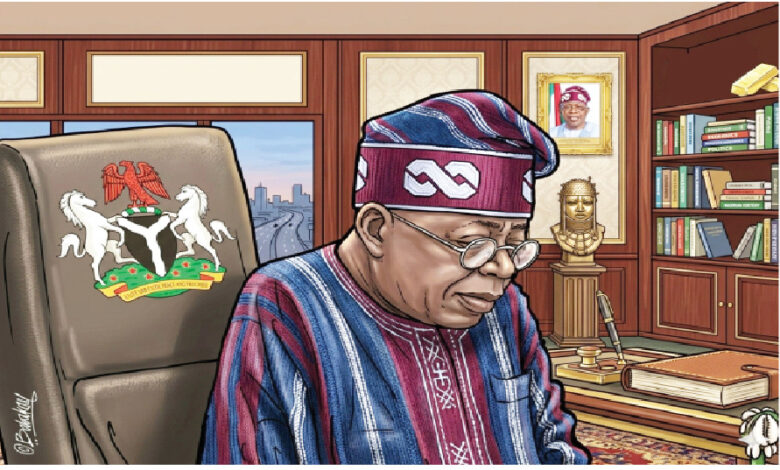
My work, One Thousand and Ninety-Five Days was born from witnessing Nigerian history close up- not from the sidelines, but within proximity to power over the past three decades. The pages are therefore, more than just a collection of opinion essays written over three defining years in Nigeria’s national life.
For a period of one thousand and ninety-five days, Nigerians have debated policies, questioned outcomes, endured sacrifices, resisted changes, embraced possibilities, and watched a government attempt to fundamentally recalibrate the direction of the Nigerian state. At the centre of this national recalibration stands a man has never been afraid of tinkering with issues and situations for better outcomes.


President Bola Ahmed Tinubu — the Reformer-in-Chief — is who I call the architect of democratic survival and political reinvention, and a man I have since come to regard as the Houdini of political and economic survival, perpetually emerging from orchestrated scenarios that were designed to politically drown, constrain, and ultimately asphyxiate him.
Many have experienced Bola Ahmed Tinubu at the peak of political power — in Alausa or Aso Rock. I have known Asiwaju for twenty-eight years, long before and in between power: in the trenches of opposition politics, through the difficult years of political reorganisation and coalition building after office, and still with him now again amid the turbulence of economic reform and national rebirth.
Long before Aso Rock, before the presidential paraphernalia and the immense machinery of federal power, I worked closely beside him during years when the klieg lights were off, when there were no state instruments to command, no ceremonial grandeur to rely upon, and no guarantees that the opposition journey would culminate in national victory.
Those years remain critical to understanding the man now presiding over the affairs of Africa’s largest democracy.
Because leadership reveals itself most truthfully before power arrives.
I had the rare privilege of watching him build political structures from ashes. I watched him organise men and ideas with unusual patience and strategic clarity. I watched him pacify the aggrieved, manage divergent ambitions, absorb betrayals, nurture talent, and steadily construct one of the most formidable political coalitions in Nigeria’s democratic history.
I observed a man deeply fascinated by process and profoundly impressed by systems — working systems: how they function, why they fail, and how they can be recalibrated to produce different outcomes.
But beyond systems, I encountered a teacher of politics and power; a mentor to generations of ambitious young men and women; a patient student of history, Pan-African thought, political economy, and the lives of transformative statesmen who shaped nations through vision, structure, and discipline.
He possessed an uncanny ability to identify talent long before public recognition arrived, nurturing competence, rewarding loyalty, encouraging intellectual independence, and assembling networks of capable people across regions, professions, and generations. In many ways, he became a political clearinghouse for aspiration — a patron of the gifted, the daring, and the upwardly mobile.
I also saw a grassroots mobiliser of uncommon instinct, with an almost unmatched understanding of political organisation: how movements are built, how coalitions are sustained, how constituencies are managed, and how power ultimately flows from people, structure, and persuasion rather than mere rhetoric.
Yet behind the politician stood something more complex — an entrepreneur with a strategist’s mind, a technocrat comfortable with fiscal questions and institutional architecture, and an economic savant constantly interrogating how policy, capital, productivity, and governance intersect to shape national prosperity.
Even outside office, he possessed a relentless instinct for political re-engineering and institutional organisation. He approached politics not merely as a contest for power, but as a platform for the cross-fertilisation of ideas, competencies, regional interests, and national aspirations. To Asiwaju, politics was never simply about ambition or office; it was a vehicle for structural change, institutional continuity, and long-term statecraft.
What distinguished him was his capacity to merge political pragmatism with strategic vision. He understood that power, in its purest and unvarnished essence was to serve the people and enhance their lives. For power to be meaningful, it had to translate into governance architecture, economic direction, and institutional reform.
Politics, in his worldview, was ultimately an instrument for reorganising society, redistributing opportunity, and repositioning the state toward productivity, stability, and national competitiveness.
Today, I simply watch him apply the same disposition to the infinitely more complicated machinery of the Nigerian state. To govern Nigeria is to govern complexity itself. A nation of immense promise and immense contradiction. A country rich in talent and resources, yet burdened for decades by structural inefficiencies, policy inconsistencies, infrastructural deficits, institutional leakages, and economic distortions accumulated over generations.
The tragedy of many nations is not ignorance of their problems. It is the repeated postponement of difficult solutions. For years, successive administrations recognised the unsustainability of many aspects of Nigeria’s economic architecture. Fuel subsidies had become fiscally dangerous. Multiple exchange rates incentivised arbitrage over productivity.
Revenue leakages weakened state capacity. Public expenditure burdens expanded while productive growth struggled to keep pace. The political class understood many of these realities, yet the difficult decision to confront these head on, were repeatedly deferred because reform is not politically expedient and often carries immediate electoral reprisals. But Tinubu proved unusually willing to confront those deferred realities.