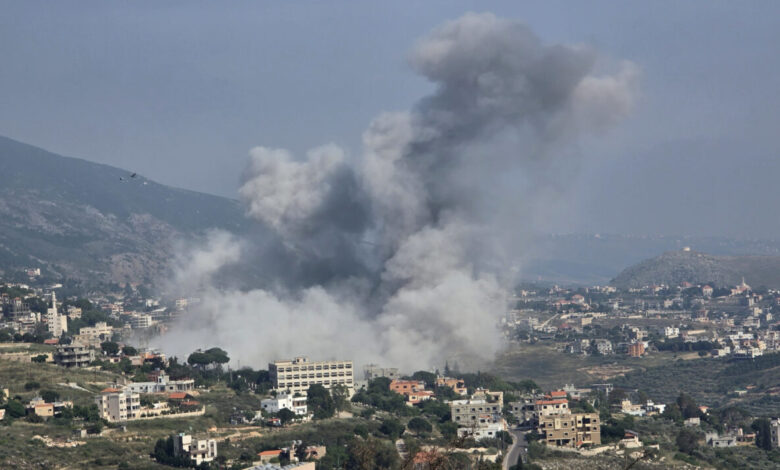
On 16th April, the United States announced a cessation of hostilities between Israel and Lebanon. Extensions followed. Frameworks were negotiated. International mediators declared progress. But the ceasefire was never real. It was announced on the day it ceased to be true. For six weeks, the south has been struck continuously. Evacuation orders have intensified, not declined. On 26th May 2026, the Israeli military declared all areas south of Lebanon’s Zahrani River, roughly 25 miles from the border, as “combat zones” and ordered mass evacuation. This is not an enforcement failure. This is the framework itself being false from inception.
The 16th April ceasefire assigned the Lebanese government three concrete obligations. Prevent Hezbollah from attacking Israel. Disarm all non-state armed groups. Extend state authority over Lebanese territory. None of these premises have been tested because the ceasefire itself never existed. What exists is continued warfare, relabeled as framework compliance.
The ceasefire that never was
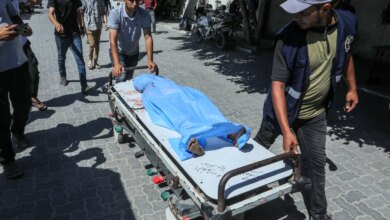
Between 16th April and 26th May 2026, Israeli military aircraft conducted 2,847 recorded strikes on Lebanese territory. According to the Lebanese Health Ministry, these strikes killed at least 3,151 people and wounded 9,571. The Israeli military issued evacuation warnings for at least 50 southern and eastern towns between 26th April and 26th May. On 26th May alone, ten weeks into the supposed ceasefire, the IDF declared all areas south of the Zahrani River combat zones and ordered residents to evacuate “immediately.”


This is not warfare interrupted by a ceasefire. This is a ceasefire announced while warfare continues at historical intensity.
One Al Jazeera correspondent reported from Beirut that the ceasefire “exists only in name.” The Israeli military maintained five divisions of invading troops in southern Lebanon throughout the period, demolished homes extensively, and issued daily evacuation orders that expanded in scope and urgency. The pattern is not negotiation. It is occupation with diplomatic cover.
The Lebanese government issued no formal objections. It filed no Security Council complaints about ceasefire violations. It did not mobilise the army. It accepted the framework’s falsehood as fait accompli. This silence is not weakness. It is the system functioning exactly as designed.
The state’s position: Passive acceptance
The Lebanese state could not dispute the ceasefire because it never controlled the territories the ceasefire supposedly governed. The south has been under de facto Israeli control since the 2024 ceasefire began. The 2026 ceasefire did not end this occupation. It merely renamed it. The Lebanese military announced “phase one” disarmament completion in January 2026 while Israel occupied the exact territory where disarmament was supposed to occur. This was not a statement of progress. It was a statement of irrelevance.
President Aoun and Prime Minister Salam faced a choice: acknowledge that the ceasefire was false, or announce compliance with a framework that no longer existed. They chose the latter. On 23rd May 2026, as evacuation orders intensified, the Lebanese government issued a statement expressing “hope” that the ceasefire would hold. This was not negotiating. This was pleading.
Meanwhile, Hezbollah has not launched major cross-border attacks since the ceasefire began. This is not compliance with the framework. It is calculation: Hezbollah is rebuilding in a region where the Israeli military is ostensibly restricted. The organisation continues to maintain military presence in southern Lebanon, controls security arrangements in nominally government-held areas, and presents itself as counterweight to Israeli occupation. The state has not enforced disarmament because the state does not control the space where disarmament could occur.
The ceasefire framework assumed Lebanese territorial sovereignty. Lebanon has no such thing in the south. The framework therefore was false from its announcement.
What structural impossibility actually looks like
The Lebanese confessional system does not produce states capable of exercising monopoly force. It produces states capable of distributing the appearance of force while others exercise actual power. When international frameworks assume the former and Lebanese politics delivers the latter, the result is not negotiation. It is the exposure of structural unreality.
Aoun and Salam cannot enforce disarmament in the south because they do not control the south. The Shia bloc in parliament will not support attempts to enforce disarmament because Hezbollah maintains popular legitimacy within the Shia community despite the destruction.
The Lebanese army is fractured by sect and lacks the capacity to conduct operations in hostile territory. The government therefore announces progress while nothing changes. This is not failure to implement. This is honest reflection of what the system can produce.
One senior Lebanese official, speaking on condition of anonymity, stated plainly: the government knows that “if they implement their policy, it will lead to military confrontation,” a confrontation the army cannot survive. The choice is not between disarmament and enforcement. The choice is between managed paralysis and state collapse. The government has chosen the former.
This is not incompetence. This is confessionalism functioning as intended.
The question that matters
The ceasefire will face a decision point when pretense becomes unsustainable. This may occur if Hezbollah launches significant cross-border attacks. It may occur if Israeli expansion continues north of the Zahrani River. It may occur if international pressure for actual enforcement becomes politically costly enough that the government cannot ignore it.
When that moment arrives, the state faces two possibilities. First: the government attempts enforcement, Hezbollah resists, the army fractures, Lebanon returns to internal conflict. Second: the ceasefire framework is quietly replaced by a permanent occupation arrangement where Israel maintains territorial control, the Lebanese government maintains nominal authority, and all parties claim victory while nothing changes.
The second option is more likely. It is already occurring. Israel occupies the south. The Lebanese government announces disarmament. Hezbollah rebuilds. All parties blame the other for ceasefire violations while continuing to act as if the ceasefire is real.
The result is not a framework for peace. It is a framework that exposes, with precision, why the Lebanese state cannot function as the international community requires, and why frameworks built on assumptions of Lebanese sovereignty are constructed on false premises.
The question is not whether Lebanon will disarm Hezbollah. The question is what happens when Washington accepts that Lebanon cannot, that the state does not, and that frameworks built on these false assumptions will not produce the outcomes they were designed to prevent.
The ceasefire exists in name only because the Lebanese state exists in name only in the territories the ceasefire supposedly governs. Until that structural reality is acknowledged, no framework will produce actual change.
The views expressed in this article belong to the author and do not necessarily reflect the editorial policy of Middle East Monitor.