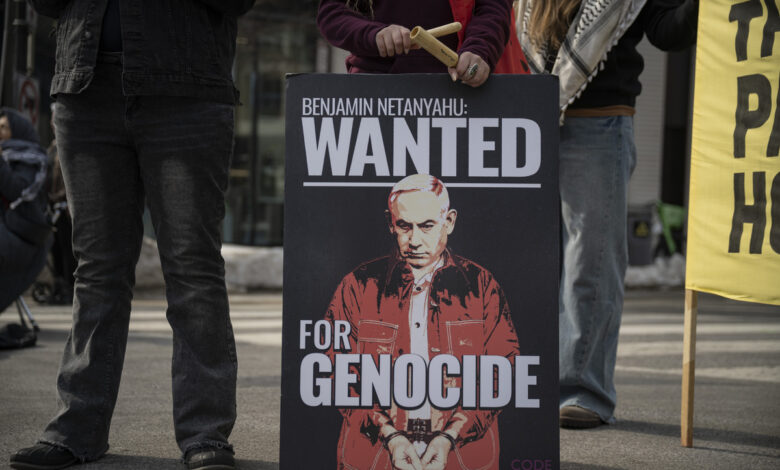
Benjamin Netanyahu has defeated nobody. Not one enemy. Not one objective. After Gaza, after Lebanon, after Syria, after Iran, after all the airstrikes and the assassinations and the pager operations and the ground incursions and the flag-waving declarations of historic triumph, he has defeated absolutely nobody.
Strip away the propaganda. Set aside the theatrical press conferences in which this man, indicted for bribery, fraud, and breach of trust, wraps himself in the flag of the Jewish people and declares himself the guardian of Western civilization.
What you are left with is a leader who expanded a war he could not win to survive a trial he cannot escape. A man who gambled his nation’s military strength, its economic stability, its regional relationships, and its international standing on the altar of his own personal survival.
This is the Netanyahu Doctrine. And it has produced a catastrophe of historic proportions.
The Strategist Who Lost Everything
In Israel itself, the verdict from across the political spectrum is damning. Opposition Leader Yair Lapid finally broke his silence after Netanyahu’s Iran adventure collapsed into a ceasefire Israel had no part in negotiating. “There has never been such a political disaster in all of our history,” Lapid declared. He accused the Prime Minister of leading Israel to what he called a “strategic collapse”, a disgraceful combination of arrogance, irresponsibility, negligent staff work, and lies sold to the Americans that damaged the trust between the two countries. The military, Lapid insisted, had done everything asked of it. Netanyahu had failed at everything else.
Netanyahu fancies himself as part of the lineage of David Ben-Gurion. Ben-Gurion built institutions. Netanyahu hollowed them out. Ben-Gurion mobilized a people. Netanyahu divided them to keep himself in power.
War as a Legal Defense Strategy
Benjamin Netanyahu is a criminal defendant. He faces three separate cases of bribery, fraud, and breach of trust, the first sitting Israeli prime minister in history to take the witness stand as an accused. His corruption trial has been delayed, postponed, extended, and manipulated at every turn. He demanded that the Shin Bet internal security agency issue a “security opinion” to justify the cancellation of court appearances. He used the Gaza war, the Lebanon war, the Iran war, each fresh conflagration arriving, conveniently, just as courts scheduled his testimony.
Israeli Knesset member Naama Lazimi put it without diplomatic wrapping: Netanyahu is “conditioning the future of Israel and our children on his trial.” Knesset member Gilad Kariv went further, accusing Netanyahu and his war-mongering circle of a willingness to play with the security of the state and the lives of Israeli captives still in Gaza, all to save one man from conviction.
War, for Netanyahu, is not a last resort. It is a scheduling tool.
The Chorus of Condemnation
Gideon Levy, the conscience of Haaretz and one of Israel’s most fearless journalists, has watched this unfold with mounting horror, producing precisely zero strategic gain. “What will we get by the end of the war?” Levy demanded in the summer of 2025. “You really think Israel is becoming a more secure place than two years ago? I don’t think so. Because you ignore the price.”
Professor John Mearsheimer of the University of Chicago, in January 2025, after the Gaza ceasefire agreement, delivered a blunt verdict: Israel has failed in Gaza. Netanyahu had not defeated Hamas. Palestinians were returning to their homes. The hostage-to-prisoner exchange ratio was lopsided and humiliating. “I see Netanyahu escalating at every turn,” Mearsheimer observed, noting that each escalation produced not victory but deeper entrenchment, deeper isolation, more serious damage.
Mearsheimer also spoke plainly about the strategic dimension: Israel had “done enormous damage to itself, not simply in terms of its reputation, but damaged its economy.” He predicted secular Israelis, the productive core of the high-tech economy, would leave in growing numbers. And on Iran, he delivered the most devastating assessment: Netanyahu had increased the chances that Iran would acquire nuclear weapons, not decreased them.
Max Blumenthal, editor of The Grayzone and the most penetrating chronicler of Israeli influence operations, has documented with relentless precision how Netanyahu’s war machine has colonized Washington’s political culture, manufacturing consent for conflicts that serve Israeli expansionism while bleeding American treasure and credibility.
Retired Colonel Lawrence Wilkerson, former Chief of Staff to Secretary of State Colin Powell, has been perhaps the most alarming voice in this chorus. Wilkerson warned that Netanyahu is driving Israel toward existential collapse. “Israel is going to disappear as a Jewish state in the Levant,” he said, describing a trajectory in which military overstretch, internal fracture, and strategic isolation converge. And he raised what he called the gravest possibility of all: a cornered Netanyahu reaching for Israel’s undeclared nuclear arsenal.
Former UN weapons inspector Scott Ritter, who has tracked Netanyahu’s behavior since the manufactured hysteria over Iraqi WMDs, in which Netanyahu himself played a starring role before the United States Congress, identifies a consistent and pathological pattern: exaggerating threats, mobilizing society through fear, and using war as a permanent instrument for managing both domestic politics and foreign affairs. Netanyahu, Ritter argues, represents not an aberration in Israeli politics but its culmination.
The Reckoning
Now the walls close in from every direction. His corruption trial continues, delayed, postponed, manipulated, but inexorable. The International Criminal Court has issued arrest warrants for him and his former Defense Minister on charges of war crimes and crimes against humanity. His own opposition calls him a strategic disaster. His own intelligence chiefs have refused to provide cover for his legal evasions.
Benjamin Netanyahu wanted to be Ben-Gurion. He wanted to leave the stage as the man who secured Israel’s future, vanquished its enemies, and inscribed his name among the founders of nations. Instead, he leaves behind a charnel house and a corruption dossier, a generation traumatized on both sides of every border his bombs have crossed, and a region more volatile and more dangerous than at any point since 1973.
He defeated nobody. He built nothing. He leaves Israel lonelier than he found it.
History will not be kind to him. History, in fact, is already writing his epitaph; in the rubble of Gaza, in the testimony of his own generals, in the indictments that await him when the last war he can manufacture runs out of oxygen. The man who would be Ben-Gurion has become, instead, a cautionary tale for the ages: what happens when personal survival masquerades as statecraft, and vanity is mistaken for strategy.
The views expressed in this article belong to the author and do not necessarily reflect the editorial policy of Middle East Monitor.