In a move many didn’t see coming, President Bola Tinubu made an announcement that seemed unprecedented. He appointed a Special Adviser on Homeland Security, and it was left hanging with no further explanation. This gave room for different interpretations. What is homeland security? What does the president have in mind with this appointment? Regardless, I have a perspective on the appointment. The analysis in this article is speculative and should not be taken as fact. But it is worth careful thought. With President Bola Tinubu, there is always something to ponder, especially when a lot is at stake.

Politics and security
The worst disservice the president can do to the country is to play politics with security. Politics and security are not friends. They are perpetual enemies. Buhari may have played politics with security and is somewhat responsible for why we are where we are today, especially in the prosecution of the war against Boko Haram. Make no mistake, there were tangible gains, but it could have been better. This is in the past. We are in our present reality, and it is grim. This is why we must take the business of security seriously.
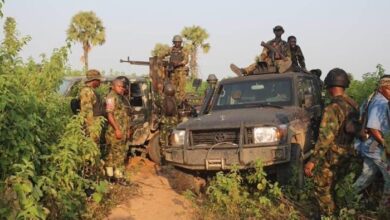
Homeland security is the bread and butter of internal security operations. The bread tastes better when buttered. It entails a lot, but I will take out one aspect: border security. This is the heartbeat of homeland security. It is our fence against the world. Once that fence is absent, broken, or breached, things will naturally fall apart. The security agencies will struggle with the unauthorised influx of people, arms, ideologies, and appurtenances. Recently, the public space was filled with the news that a Nigerian was the second-in-command of the Islamic State of Iraq and Syria (ISIS), and this stark reality indeed jolted many. But it was not surprising to me. It was stale news. The reason is simple: we didn’t take the issue of border security seriously.
In June, 2025, General Christopher Musa, as Chief of Defence Staff, raised the alarm about our porous borders. He was specific about our borders with the Niger Republic. He rated the Niger Republic border as the most “dangerous and vulnerable.” He warned that the embattled Sahel region makes “Nigeria an attractive target for terrorist groups like Boko Haram, ISWAP, and Lakurawa due to the perception of Nigeria’s wealth and its porous boundaries.”
The Sahel region is the hotbed of extremist groups and ideologies. Mali, Niger, Burkina Faso, Cameroon, and Chad share borders with Nigeria, and very porous ones at that. A good example is a house with windows without mosquito nets. The occupants of the house are always using insecticide to kill the mosquitoes, instead of installing nets to prevent the mosquitoes from gaining access into the house. This is our present setup.
Two Advisers
I am sensitive to issues in the security sector. Let’s not play politics with this appointment; even if we have a reason to, we should downplay it. We do not have the luxury of time. In asymmetric warfare, the only constant thing is the evolution of strategies to address threats as they present themselves. And what do I think about an adviser on homeland security? My first question is, what does the president want to achieve? Is it political or strategic? If it is strategic, it is a commitment to addressing the security challenges in the country. If it is political, it would be a disservice to the country.
There is no doubt that responsibilities would overlap with this new development. It might signal a regime of information warfare from two advisers towards one president. This is the worst thing that can happen to any president in the situation we have found ourselves in with the present security challenges in the country. The orientation of the two advisers is different, and this might play out in the advisories to the president. I will repeat that politics and security are not friends. In the event of conflicting threat assessments, the president automatically becomes the referee. Maybe one of the advisers would play the role of a “video assistant referee” (VAR) to the president.
Homeland security
I like the idea of homeland security. It is another name for internal security. And in our recent history, internal security operations have been the preserve of the military. Though not originally so, asymmetric warfare made it so. The Boko Haram insurgency is an internal security operation. It is also a threat to our territorial integrity and sovereignty. It is a combination of internal and external factors. It started as a protest and transformed into an uprising. When a group establishes a parallel state structure, captures territory, taxes populations, and operates across our porous borders, they are no longer insurgents. They are terrorists. This can be explained using the “Contentious Politics Theory” by Sidney Tarrow and Charles Tilly.
The core argument in this theory is that there are complex interactions between states, societies, and political actors. It states that “grievances and identity play a crucial role in contentious politics. Grievances refer to the perceived injustices or deprivations that motivate individuals to participate in collective action. Identity, whether based on ethnicity, religion, or ideology, can serve as a unifying force for contentious groups and shape their goals and strategies.” This is the trajectory of Boko Haram in Nigeria. At this point, I am taking the concept of homeland security seriously and am curious to find out what the president has up his sleeve to address the security challenges in the country. If this new setup is aimed at rejigging the present security architecture in the country, I am in support because it is long overdue.
Nothing is either good or bad.
It has been whispered in some quarters that the decision of the president to appoint a Special Adviser on Homeland Security was a signal that he has lost faith in his National Security Adviser. This is an assumption. It is illogical to take an assumption for reality. The president made an appointment. The notice didn’t state that the president had lost faith in his National Security Adviser, hence the appointment of a Special Adviser on Homeland Security. Fairness demands we give the president the benefit of the doubt. The present commentary on this appointment is not necessary, in my opinion. The commentary should be about what homeland security is and what difference it would make in the security architecture of the country. I am not privy to the motives of the president in this regard. He might have his reasons, and of course, it is entirely within his purview as Commander-in-Chief of the Armed Forces of the Federal Republic of Nigeria.
I like the idea of homeland security. It is laudable. It is not alien. According to William Shakespeare, “nothing is either good or bad, but thinking makes it so.” The decision of the president is neither good nor bad. It depends on how we interpret it. This is food for thought.