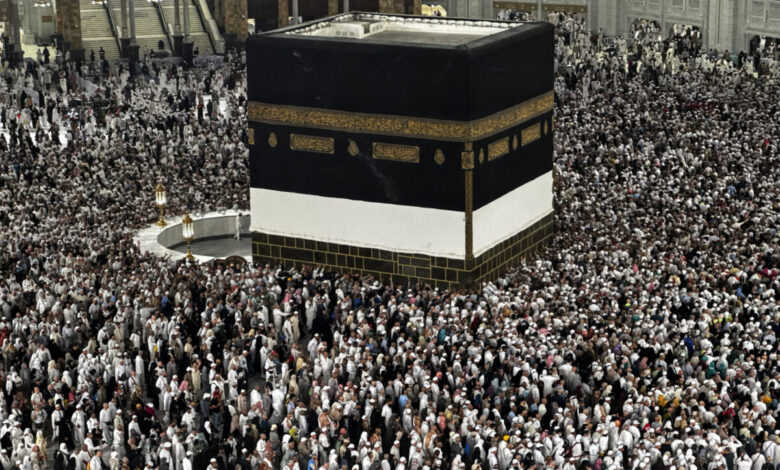
Millions of Muslims around the world are preparing to celebrate Eid al-Adha. Once again, the story of Prophet Abraham and his son Ishmael is remembered as a narrative about faith, submission, and ultimately the refusal to sacrifice a child. At the heart of this story lies a profound moral turning point: a child was not meant to be sacrificed.
Yet today, across different parts of the world, millions of children continue to die in wars, under occupation, and within the violent structures of global political conflict. In Gaza, Sudan, Yemen, and many other places, children are no longer treated merely as unintended victims of war. They are becoming bodies abandoned to death before the silence of the international system.
The deaths of children are no longer presented merely as tragic consequences of war, but increasingly as ordinary elements of the global news cycle.

The image of a child’s lifeless body circulates across screens for a few hours before disappearing into the next political crisis. Modern society has not only failed to protect children; it has also learned how to normalize their deaths.
For a child in Gaza today, Eid often means listening to the sound of bombs falling from the sky. Toys are replaced by rubble, family tables by temporary tents, and children’s laughter by grief and fear. Reports from the United Nations and international human rights organizations repeatedly demonstrate that children carry the heaviest burden of war. Despite this, the global public increasingly consumes the deaths of children as routine images within an endless stream of media spectacle.
The ethical meaning of Eid al-Adha must therefore be reconsidered. If the story of Abraham represents a moral boundary against the sacrifice of children, then the modern world has already violated that boundary. Children today are not only dying in wars; they are being rendered disposable within political calculations, international silence, and global hypocrisy.
Within religious traditions, children are associated with innocence and purity, and it is common to hear that children killed in war become “angels.”
But perhaps the real question is this: why does the world prefer to sanctify children after death instead of protecting them while they are alive?
The issue is no longer simply believing that children go to heaven; it is confronting the political order that has failed to protect them on earth.
Reducing the deaths of children to purely religious or emotional narratives often obscures political responsibility. As long as children killed in wars are framed as “inevitable casualties,” the role of states, arms industries, and international actors remains hidden in the background. Yet what kills children is not only bombs themselves, but also the political decisions that make those bombs possible.
The contradiction between Western human rights discourse and contemporary war policies can no longer be concealed. While democracy, freedom, and children’s rights are celebrated in political rhetoric, arms trade networks continue to profit from wars that kill civilians and children. Calls to protect innocent lives remain weak, selective, and politically conditional. The unequal value assigned to children’s lives reveals the deep moral hierarchy operating within the global order.
Moreover, the issue is not limited to physical death alone. Millions of children who survive war continue to grow up within poverty, displacement, trauma, and constant fear. A child forced to learn the language of survival instead of the language of play represents not only a humanitarian crisis but also a collective moral failure of humanity itself. Perhaps the greatest moral crisis today lies in the difference between mourning children’s deaths and preventing them. The modern world appears far more comfortable with grief than with political responsibility.
Perhaps the most disturbing reality is not simply that children continue to die, but that the world has gradually become accustomed to their deaths. What once should have shocked human conscience now disappears rapidly within political debates, media cycles, and diplomatic calculations.
Therefore, when speaking about Eid al-Adha today, we must speak not only about a religious ritual but also about the right of children to live. If no child should ever be sacrificed, then the same moral clarity must be directed against wars, occupations, borders, and political systems that continue to sacrifice children in different forms. Otherwise, the modern world will continue reproducing, in new political forms, precisely the kind of sacrifice that Abraham once refused.
The author is an early childhood education scholar at Adıyaman University, Turkey. Her work explores the intersection of childhood, displacement and justice, focusing on how education can serve as a space of resistance and voice for refugee children.
The views expressed in this article belong to the author and do not necessarily reflect the editorial policy of Middle East Monitor.