People can be consciously aware of atrocities without experiencing the moral outrage those horrors warrant. This emotional detachment is particularly pronounced when atrocities target “those who are different,” occur in seemingly “remote” lands, or repeat so frequently that they dissolve into a familiar, predictable monotony. Psychological frameworks explain this affective insularity through cognitive biases like the “just-world fallacy,” which blocks empathy in otherwise deserving cases to protect one’s own psychological comfort. Alternatively, it manifests as victim-blaming to rationalize aligning with the oppressor, or as compliance with propaganda narratives designed to dehumanize victims and render them unworthy of concern.
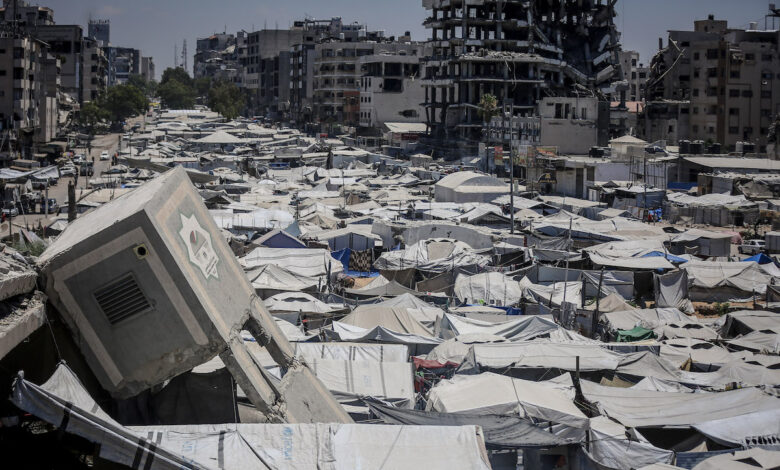
The rendering of atrocities into something ordinary through repetitive exposure systematically erodes the human capacity for a fittingly shocked response. This was vividly demonstrated as Israeli forces systematically targeted hospitals across the Gaza Strip one after another, until such strikes became routine footnotes in daily news cycles. A similar desensitization occurred regarding the targeted attacks on United Nations facilities. Once an initial war crime is permitted to pass, its predictable repetition fosters a form of emotional conditioning among the public—even alongside the abstract knowledge that a grave violation is occurring. The global public has grown accustomed to watching high-rise residential blocks collapse in seconds under Israeli bombardment. Consequently, this recurring crime no longer registers as an anomaly, so long as it remains confined to Gaza. This shift can be measured by comparing the fierce global condemnation that followed the May 15, 2021, destruction of Gaza City’s 11-story al-Jalaa Tower with the relative apathy with which the systematic destruction of Gaza’s remaining residential high-rises through a series of Israeli airstrikes was met in September 2025. Breaking free from this paralyzing sense of desensitisation is a profound challenge if our world is to avoid acclimatizing to atrocities in the twenty-first century.
Another critical dilemma is that our perception of the gravity of such brutality can be disrupted when they are executed through modern, highly sophisticated tools.


Human horror is easily triggered by the primal image of a vicious killer in ragged clothes holding a blood-dripping blade over a helpless victim. Yet, that killer becomes entirely invisible when stationed in a distant control room, calmly orchestrating mass slaughter against innocent civilians in Gaza by pressing glowing buttons while sipping American coffee in front of a screen—a method inherently more efficient than a primitive blade.
This dilemma deepens when the act of killing is fully outsourced to technology, such as unmanned drones or autonomous AI-driven targeting systems, both of which the Israeli occupation military relied upon to perpetrate genocidal atrocities in Gaza. While this modern machinery is faster, deadlier, and vastly more devastating than primitive butchery, it acts as a powerful buffer, inducing a profound emotional numbness toward the horrors being inflicted.
READ: Gaza officials warn of ‘silent famine’ as aid deliveries fall far below planned levels
Modern brutality often wears friendly masks that shield the observer from immediate shock or revulsion. It does not slit children’s throats with knives; instead, it obliterates their bodies entirely. At times, children literally vaporize under the impact of advanced, multi-ton munitions dropped onto impoverished refugee camps. The viewer is ultimately presented with nothing but a massive crater, concealing the gruesome details of mass slaughter and vast destruction. Despite this, numerous Israeli officers and soldiers have refused to suppress their appetite for hunting humans, abusing captives, and indulging in primal cruelties—frequently filming their actions to boast about them on social media.
It is vital to recognize how this genocide has operated on a scale that completely caught contemporary generations off guard. Many believed that such staggering atrocities belonged strictly to a black-and-white past, assuming that fascism and war crimes would only reappear alongside the vintage, recognizable imagery of defunct regimes. The human psyche was unprepared to comprehend that a twenty-first-century genocide could be so highly organized, technologically advanced, and meticulously targeted.
Indeed, this is the first genocide in history where artificial intelligence has been deployed as a primary tool for slaughter and devastation. Furthermore, this genocide is backed by a dedicated propaganda apparatus designed to instantly rationalize every atrocity.
It deploys tightly woven narratives delivered by leaders, spokespersons, and commentators skilled in rhetorical evasion and body language, all working in tandem to divert global attention away from the killing fields of the Gaza Strip.
Awakening the human conscience to the reality of the horrific genocide perpetrated in the Gaza Strip for at least two years demands an unrelenting effort to expose its chapters, re-open its cases, and launch intensive, coordinated initiatives. These efforts must elevate field testimonies and documented facts from independent international reports into the active domain of human awareness. It is only fair to acknowledge that significant journalistic, creative, and grassroots efforts have been made worldwide in this regard, but the sheer duration of this genocide demands increasingly creative and unyielding approaches.
READ: Israel places detained Gaza hospital director Dr Hussam Abu Safiya in solitary confinement
Consider the profound impact of reimagining the scenes of genocide, ethnic cleansing, total destruction, and manufactured starvation through diverse literary, artistic, and cinematic works. Such creative interventions can produce world-class, brilliant pieces, even if Hollywood and mainstream institutions maintain their traditional indifference toward Palestine. Imagine visual works depicting this modern genocide in stark black-and-white, a stylistic choice that emotionally and intellectually links Gaza to past mass killings and crimes against humanity already solidified in the global conscience. This framing positions Gaza’s horrors as a logical continuation of historical brutality, which they undeniably are. This approach has already been successfully championed by highly conscious grassroots movements. For instance, in the Basque Region of Spain, highly artistic public demonstrations have repeatedly linked the atrocities in Gaza to the horrors of Guernica, famously immortalized by Pablo Picasso in 1937. Such initiatives are indispensable to confronting and exposing the deep-seated tendency of genocide denial pushed by prominent global leaders and elites.
Humanizing the victims is an indispensable entry point; they must be given recognizable faces, familiar names, and stories to be told. This begins by invoking individuals like the child Hind Rajab, the academic and poet Refaat Alareer, or the abducted physician Hussam Abu Safiye, among countless others.
We must unearth the latent human symbolism embedded within this landscape of tragedy and profound moral fortitude. We also need the symbolism of the place itself. The crowded sites of destruction and resilience throughout Gaza must move the human conscience through uncovering of stories currently buried beneath the rubble.”
Presenting these faces, names, and details with the dignity they deserve is capable of stirring a global sense of shared humanity and moral alignment with those targeted by this genocide—an atrocity the world has watched live on mobile screens for at least two full years. We must collectively internalize that the displaced, starving child is everyone’s child. The grandmother whose frail body was crushed beneath collapsing walls, left trapped until her final breath, is everyone’s grandmother. The same holds true for the mothers, the sick, and the disabled. It is no exaggeration to recognize that the victims are us. An assault on them is an assault on the very fabric of human life and dignity. The dismantling of international law and universal values means that every one of us is directly affected by these horrific violations, regardless of how they are spun by sophisticated propaganda or sustained through international complicity. Transforming an overwhelming statistical body of victims into deeply personal stories and recognizable symbols is an urgent necessity if we are to escape the trap of statistical reductionism, which reduces human beings to mere numbers devoid of feeling.
Awakening this human consciousness is the ultimate key to compelling individuals worldwide to honour their ethical commitments, translating empty slogans into concrete action. It is the catalyst needed to pressure the enablers of genocide and challenge those political discourses that insult public intelligence and moral decency. When these deeper human impulses are awakened, people will naturally discover their roles in confronting this pervasive injustice and aggression. This emotional awakening will pave the way for sustained mobilization, converting raw sentiment into tangible pressure, accountability, and justice—ensuring that the horrific genocide against the Palestinian people in Gaza remains at the centre of global consciousness for generations to come.
OPINION: The impact of these documented atrocities must be preserved
The views expressed in this article belong to the author and do not necessarily reflect the editorial policy of Middle East Monitor.