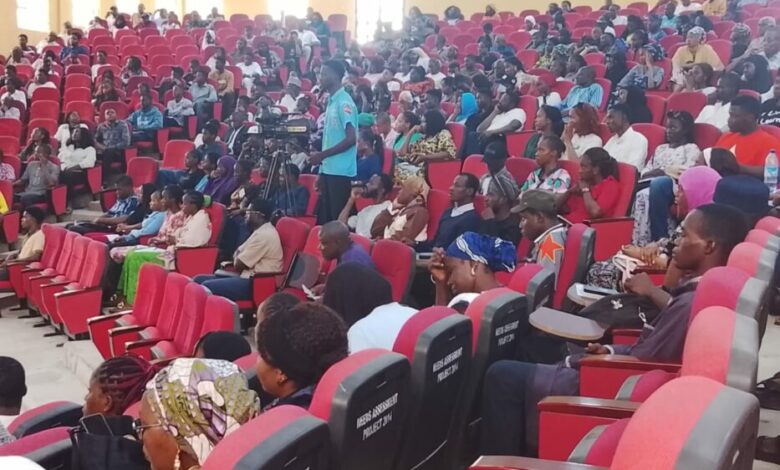
Director of the Zion Study Centre, Mr Toyin Joseph Larayintan, has called on the Nigerian government to prioritise investment in educational technology.He argued that the move is essential to sustain learning amid the escalating security crises disrupting communities nationwide.
Larayintan gave the charge during the monthly “Echoes of Zion” programme, a flagship initiative of the centre designed to engage and empower young people through critical discourse on pressing contemporary issues.


In a detailed statement, he highlighted how widespread insecurity—ranging from insurgency to banditry—has increasingly forced school closures and restricted educational access for thousands of students across affected regions.
According to Larayintan, technology offers a viable and immediate solution to keep education operational when physical attendance becomes dangerous or impossible.
“The government must recognize that education cannot be placed on hold simply because of insecurity,” he asserted. “Strategic investments in digital learning platforms, virtual classrooms, reliable internet connectivity, and modern educational infrastructure will ensure that students continue to learn, regardless of the prevailing security challenges.”
To underscore the feasibility of his proposal, Larayintan cited international benchmarks. In the United States, for instance, over 95 percent of schools benefit from high-speed internet access, enabling the widespread adoption of online learning tools.
South Korea, one of the world’s most digitally advanced nations, has achieved near-universal connectivity, with virtually all schools integrated into digital learning ecosystems and more than 99 percent of households online. Finland has embedded digital literacy directly into its national curriculum, allowing students to transition fluidly between physical and remote learning environments.
He also drew lessons from the COVID-19 pandemic, when countries with robust digital education infrastructures experienced markedly less academic disruption. Global education reports indicate that while more than 1.6 billion learners were affected by school closures in 2020 alone, nations with strong technology frameworks maintained remarkable continuity of learning.
Against this backdrop, Larayintan urged Nigeria to adopt a forward-looking strategy focused on expanding broadband coverage, improving electricity supply to schools, subsidizing or providing affordable digital devices, and equipping teachers with the skills needed to effectively deploy educational technology. He emphasized that such investments would do more than mitigate security-related disruptions—they would also prepare Nigerian youth to compete in the global digital economy, where technological competence increasingly dictates economic opportunity.
Beyond his appeal to the government, Larayintan encouraged young Nigerians to actively embrace digital skills and lifelong learning, describing technology as an indispensable tool for both personal advancement and national progress.