Despite growing opportunities in renewable energy, circular economy initiatives and green job creation, Nigeria’s quest to achieve its sustainability and climate change objectives faces significant obstacles, including inadequate financing, weak data systems, rapid urbanisation and limited institutional capacity.
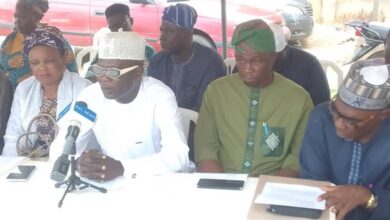
These concerns formed the topic of discourse at a webinar organised by the Nigeria Academy of Engineering (NAE) on the theme, “Achieving Nigeria’s Sustainability and Climate Change Goals: Challenges, Opportunities and Practice.”


Speakers at the event stressed that climate action must move beyond policy declarations to practical implementation.
Delivering the keynote address, United Nations Deputy Secretary-General, Amina Mohammed described Nigeria’s updated Nationally Determined Contributions (NDC 3.0) as a blueprint for economic transformation rather than merely a climate document.
According to her, “Nigeria’s national climate plan, its nationally determined contributions submitted in September last year, is more than a climate document. It is a blueprint for a better, stronger and more resilient economy. It sets out a pathway for economy-wide action, backed by concrete measures across key sectors and anchored in development, resilience and opportunity.”
She warned that climate impacts were already reshaping lives and livelihoods across the country.
“Across Nigeria, climate impacts are intensifying, from floods and coastal erosion to drought, extreme heat and changing rainfall patterns. These are no longer distant risks. They are shaping lives, livelihoods, infrastructure, food systems and communities today.
“With predictions of a 2026 El Niño, every investment must turn into long-term resilience and independence. We can no longer build infrastructure or design technology based on yesterday’s climate. We must build and design for the warmer, more uncertain climate of the future,” she said.
Mohammed noted that engineers would play a critical role in translating climate commitments into practical projects capable of withstanding future environmental challenges.
“Engineers are central to moving from commitments on paper to projects on the ground. You are the people who will help turn ambition into systems, structures, technologies and solutions that can endure,” she stated.
She further advocated a just energy transition, saying, “We must act with urgency to transition away from fossil fuels and towards renewables. But it must be a just transition, one that also embraces the country’s growth. Climate action today is not only about reducing emissions; it is about economic transformation, jobs, clean energy, food security, resilient infrastructure and opportunity for young people.”
While speaking on sub-national climate governance, Special Adviser to Lagos State Governor on Climate Change and Circular Economy, Mrs Titlayo Oshodi explained Lagos State’s environmental vulnerabilities, citing flooding, coastal erosion, rising temperatures and mounting pressure on infrastructure resulting from rapid population growth.
“We have very worrying situations around our climate trajectory, cutting across flooding into coastal erosion. As Lagos continues to rise above sea level and our coastal areas continue to recede, everybody can attest to rising temperatures. We also suffer extreme heat, deforestation and increasing pressure on food systems, infrastructure and livelihoods,” she said.
The Lagos climate adviser revealed that the state had developed State Determined Contributions (SDCs) to localise federal climate policies and make them relevant to local realities.
She explained that while climate policies exist, implementation remains constrained by inadequate funding, weak data collection systems, fragmented institutional coordination and limited technical capacity.
“Capital is really very critical. One of the things that can help us achieve climate resilience is the inclusion of as much funding as possible. Our data systems are weak. We are not able to effectively track emissions, and we do not even understand how to evaluate our performance in those spaces,” Oshodi stated.
According to her, Lagos is leveraging the circular economy model to convert environmental challenges into economic opportunities.
“Nigeria is increasingly focused on promoting a circular economy approach to waste management. We see it as a way to address climate change while creating economic opportunities and building capacity within our economy,” she said.
She highlighted the state’s Eco-Circulate Programme, which allows residents to exchange waste materials for school fees, agricultural produce, transportation incentives, mobile data and cash rewards.