COPD Burden Chokes Africa: Millions Struggle To Breathe As Pollution, Smoking, Health System Gaps Escalate

0
A silent but devastating respiratory disease epidemic is tightening its grip across Africa, leaving millions struggling for breath as smoking, worsening air pollution, substance abuse and fragile healthcare systems combine to drive an escalating public health emergency that experts warn can no longer be ignored. CHIOMA UMEHA writes
From overcrowded urban settlements to rural communities dependent on biomass fuels for cooking, chronic respiratory diseases are steadily claiming lives, limiting productivity and placing enormous pressure on already overstretched healthcare systems. Health experts are now sounding the alarm that, without urgent intervention, the burden of lung disease will continue to rise across the continent, with the poorest communities bearing the heaviest consequences.
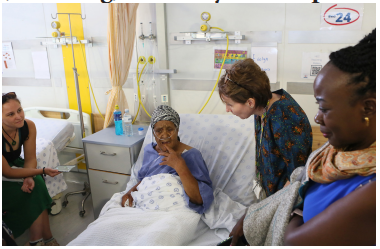
The human cost of the crisis is reflected in the experience of 69-year-old Jennifer Samaai, whose daily battle to breathe underscores the devastating impact of Chronic Obstructive Pulmonary Disease (COPD), one of the world’s leading causes of death.


Lying on a hospital bed at the Heideveld Community Day Clinic in Cape Town, South Africa, Samaai struggles through conversations, pausing frequently to catch her breath as years of progressive lung damage continue to erode her quality of life.
Diagnosed with COPD more than a decade ago, she recalls the frightening symptoms that repeatedly forced her to seek medical attention.
“I couldn’t breathe properly, and the pain in my lung was very severe,” she recalls, recounting the symptoms that have repeatedly driven her back to hospital wards. The burden has grown heavy with time. “I get tired very quickly, I can’t do much for myself anymore,” she adds, her voice tinged with resignation and resolve in equal measure.
Madam Jennifer links her illness to years of smoking – a habit she now regrets deeply. “I want to tell young people to stay away from smoking; tobacco smoking is not good for your health. You don’t feel it when you are young, but later it takes away your strength, your appetite, everything,” she says.
Her experience reflects a broader public health crisis. The World Health Organisation (WHO) places COPD as the fourth leading cause of death globally, responsible for about 3.5 million deaths each year, with nearly 90 percent occurring in low- and middle-income countries. The drivers extend far beyond tobacco use. Air pollution, indoor smoke from cooking fuels, and exposure to harmful substances all contribute to the rise of COPD in Africa. Across the continent, children miss school due to illness, and elderly patients struggle with inhalers that can be difficult to use, while COPD rates continue to rise. Millions remain cut off from life-saving treatments, underscoring the urgency of local innovation and robust health systems.
The crisis was spotlighted at a training session for African Journalists in Cape Town, organised by the WHO in collaboration with Pace University under the theme “Unpacking the Chronic Respiratory Disease Epidemic.”
Scientific And Clinical Perspectives: What’s Driving The Rise?
Professor Richard van Zyl-Smit, Deputy Head of the Division of Pulmonology at the University of Cape Town and a pulmonologist at Groote Schuur Hospital, explains that lung damage can result from repeated exposure to smoke from a variety of sources. “Any smoke is harmful to the lungs, whether it comes from wood, charcoal, grass or crop residue. Breathing it repeatedly can cause long-term damage,” he notes.
While asthma often begins in childhood, COPD develops gradually and leads to persistent breathing difficulties. “Traditionally we thought COPD appeared later in life because it required years of smoking, but we now know there are many other factors – including severe childhood infections, air pollution and drug exposure – that can damage the lungs earlier,” he adds.
The issue is compounded by gaps in health systems. Prof Bob Mash, Professor of Family Medicine and Primary Care at Stellenbosch University, highlights that many African primary healthcare systems were not adequately equipped to manage chronic respiratory diseases. He estimates that about 20 percent of adults over 40 in Cape Town could be affected, placing pressure on limited specialist services.
“Many bypass primary clinics entirely, travelling long distances to hospitals in search of medication, sometimes paying significant costs out of pocket,” he says. Limited training and inadequate diagnostic tools often lead to delayed or incorrect diagnoses. “Patients are often left with little understanding of their illness; doctors give medication without really explaining what is happening in the lungs or what lifestyle changes might help,” Mash notes, with the strain on the system palpable at Heideveld.
The local toll: admissions, demographics, and pathways to care
At Heideveld, the strain on the health system is evident. Ms Portia Williams, a senior medical officer at the clinic, reveals a troubling trend: chronic lung diseases account for nearly a third of monthly admissions. “Many cases are linked not only to cigarette smoking but also to substance use – drugs such as heroin, cannabis and crystal methamphetamine, which has devastating consequences for lung and heart health – are widely used in some communities,” she says.
Williams also points to a concerning shift in the demographics of the disease. There is a rising number of younger patients presenting with advanced disease, a sign that prevention, diagnosis, and early intervention are not keeping pace with the challenges faced by many communities.
Policy-focused voices have urged urgent action. Mr José Luis Castro, WHO Special Envoy on Chronic Respiratory Diseases, warns that the condition has not received adequate global attention. “COPD kills more than three and a half million people every year yet has remained largely invisible in global policy discussions,” he asserts. He calls for stronger measures to curb risk factors and bolster health systems, including tobacco taxation and regulation of polluting industries, arguing that such steps could reduce exposure and provide revenue for healthcare improvements.
Second-hand smoke and indoor air pollution – particularly from cooking fuels -continue to endanger millions, with women and children disproportionately affected. Rapid urbanisation and heightened industrial activity further worsen air quality in many cities, magnifying the risk of chronic respiratory diseases.
The Policy And Practice Gap: Translating Knowledge Into Care
Back on her hospital bed, Madam Jennifer’s reflections are piercing in their simplicity. “If you cannot breathe, you cannot function, you cannot work, you cannot study, you cannot even do the simplest daily tasks,” she says. The toll is not only personal but societal: disabling loss of productivity, heightened dependency on caregivers, and escalating healthcare costs.
Dr Castro emphasises that addressing chronic respiratory diseases aligns with Sustainable Development Goal 3, which seeks to ensure healthy lives and well-being for all. The emphasis for health professionals is clear: early diagnosis, access to inhalers, improved training for primary healthcare workers, and robust public education to improve outcomes.
A Call To Action
COPD is tightening its grip on communities, demanding urgent and coordinated action. Health experts stress that the fight must begin at the grassroots. Clinics need to strengthen primary healthcare by training more staff to diagnose and manage the disease, while ensuring patients have easier access to inhalers and therapies.
Equipping local facilities with simple, reliable methods to improve diagnostic tools will allow early detection and timely intervention, preventing needless suffering. At the same time, governments must tackle risk factors head-on – reducing tobacco use, regulating polluting industries, and addressing indoor air pollution from cooking fuels.
Families living with COPD need clear, practical guidance. Efforts to support patients and families should focus on disease management, daily adjustments, and rehabilitation options that ease the burden of care. Finally, the path forward must embrace creativity: Investing in local innovation, from affordable inhalers to culturally tailored campaigns, will ensure solutions resonate where they are needed most.
A Mounting Crisis That Demands Sustained Action
For Madam Jennifer and countless others, COPD is more than a diagnosis; it is a daily test of endurance and dignity. Her words-frank, direct, and full of warning for the young-underscore the human cost of the broader respiratory crisis gripping Africa. The data and the testimonies converge: COPD is a leading killer, driven by a mix of tobacco use, air pollution, indoor cooking fuels, and systemic health gaps. The challenge is clear, and we need to act now.
A coordinated approach – grounded in strengthened primary care, smarter policy, and locally tailored healthcare delivery – offers the best chance to relieve the burden. As nations wrestle with competing priorities, the question remains: will COPD’s quiet, deadly toll finally command the sustained attention, resources, and leadership it demands?