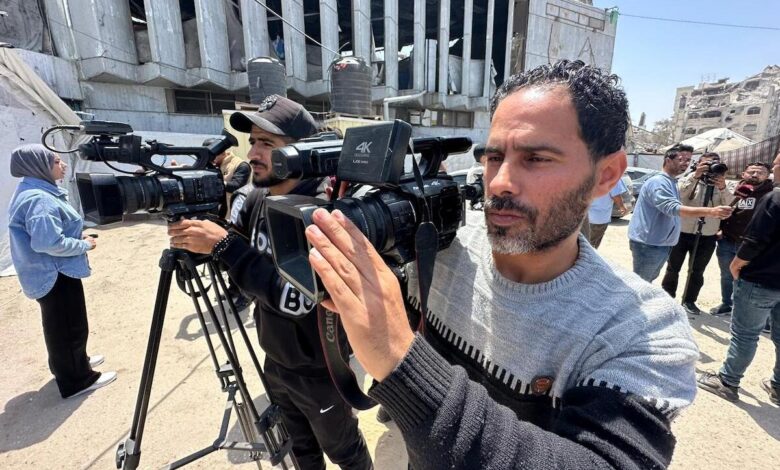
The decline of political journalism in the Arab world marks a critical turning point in how public discourse is shaped. Once the backbone of informed analysis and accountability, traditional newspapers and long-form journalism have suffered a steady erosion over the past two decades. This crisis was exacerbated by events such as the COVID-19 pandemic, the Beirut explosion, and the economic collapse of key media hubs. In their absence, social media platforms and political satire shows have emerged as alternative sources of news and commentary. While these outlets offer new forms of engagement, they lack the depth and rigor that traditional journalism once provided, leaving a critical gap in the region’s public sphere.
The death of major Arab newspapers, such as Al-Hayat and As-Safir, is not just a story of economic decline or changing audience habits. It signals a deeper structural crisis in how Arab societies engage with political ideas. Newspapers once provided a space where seasoned journalists, with years of expertise, analysed complex issues and offered historical context. At one point, journalists like Ghassan Tueni, Mohamed Hassanein Heikal, and Samir Kassir were celebrated as intellectual powerhouses, their names as influential as the stories they told. These figures were trusted voices who shaped public understanding, often remembered as cultural icons. Today, the death of the tradition of having a favourite journalist reflects the erosion of journalism’s status itself in ordinary Arab lives.
The closure of influential newspapers in the Arab world coincided with a broader decline in print media globally. Economic instability, declining advertising revenues, and political pressure have rendered traditional media unsustainable.

The 2020 Beirut explosion decimated Lebanon’s media industry, while the pandemic further exacerbated financial challenges for already struggling outlets. What remains is a hollowed-out media landscape where seasoned journalists with years of expertise are replaced by fragmented narratives on digital platforms.
This loss comes at a critical time for the region. As countries like Lebanon, Sudan, and Iraq grapple with political and economic turmoil, the absence of robust journalism leaves the public sphere vulnerable to misinformation, propaganda, and sensationalism. Newspapers once offered detailed analyses that connected current events to historical and regional dynamics. Their disappearance has left key questions unanswered: What exactly is happening? What are the structural conditions that make current regional events possible? How do local crises tie into broader geopolitical struggles? Without these insights, public discourse risks becoming reactive rather than reflective.
Amid this decline, social media platforms like Meta, X, and TikTok have emerged as the primary sources of news for much of the Arab world. This trend has its roots in the Arab Spring, when platforms like Twitter were instrumental in documenting protests, bypassing institutional narratives, and coordinating grassroots movements. Social media earned a reputation as more reliable than traditional outlets, particularly as fighting broke out (live, nonetheless) on traditional media with accusations of bias.
READ: Israeli rights group calls for probe into rape of German journalist in central Israel prison
Today, this legacy endures.
A significant portion of Arabs now consume news almost exclusively through social networking sites, which admittedly offer immediacy, accessibility, and a diversity of viewpoints.
However, the fragmented nature of these platforms prevents the kind of sustained, in-depth analysis that traditional journalism once provided. Algorithms prioritize sensationalism and virality, amplifying polarization and misinformation while sidelining thoughtful investigations.
In addition to social networking sites, political satire shows have also become key sources of information and pseudo-analysis for many Arabs. Programs like Joe Show and The Basheer Show blend humour with commentary, offering audiences digestible summaries of complex issues. While these programs provide a sense of relief and connection amid political disillusionment, their primary aim is entertainment rather than substantive analysis. Together, these trends reflect a broader shift in how Arab audiences engage with their own political realities, seeking brevity and humour over understanding and rigor.
Naturally, one of the most significant casualties of this transition is depth.
Journalism is not merely about reporting facts; it is about contextualizing them, connecting and disconnecting them to broader historical, cultural, and political dynamics.
For example, traditional Arab media once offered nuanced coverage of every angle of the Palestinian struggle, situating its many shades within historical, regional and counter contexts. In contrast, much of today’s discourse on social media reduces all that can be said about the Palestinian cause to hashtags, slogans, trends and viral videos, which, while powerful, lack the analytical rigor to sustain long-term engagement.
This issue is particularly evident in the Arab world’s response to recent crises. The 2021 Palestinian upheavals in Sheikh Jarrah and the ongoing protests in Sudan have generated immense online solidarity, yet the loss of appetite for professional journalism in the Arab world has left key events under analysed. Without a dialectic relationship with seasoned journalists to explore the structural causes of these conflicts or their broader implications, public discourse risks becoming reactive, performative, and shallow; unable to reconstruct the rationalities behind its own political activism.
READ: Mainstream US media complicit in selling Gaza genocide, sweeping new analysis finds
The question, then, is whether digital media can realistically fill the void left by the decline of traditional journalism. While platforms like YouTube and other Tech giants have the potential to provide an important, unfiltered coverage, they face significant challenges. Many rely on precarious funding models, such as advertising, which often reproduces the economic disincentives for expressing unpopular political viewpoints. Additionally, the fast-paced nature of digital media incentivizes quick takes over thoughtful investigations, making it difficult to bring the average scroller to the same level of understanding that journalism once guided readers towards.
Moreover, the shift to social networking sites has introduced new vulnerabilities. Misinformation campaigns and bot-generated propaganda increasingly dominate the digital sphere. These dynamics undermine the potential of social media to foster meaningful political discourse, raising questions about whether a so-called Arab public sphere can survive at all without the institutional rigor of traditional journalism.
Interestingly, the biggest winners emerging from the decline of political journalism seem to be think tanks and independent research institutions. During the unfolding of the Gaza conflict, it was common to see think tanks such as the DC-based Middle East Institute and the London/Manama-based International Institute for HYPERLINK “https://www.iiss.org/”Strategic Studies become more assertive shapers of global discourse. Today, both have become indispensable; lending their geopolitical grammar to the current Gulf War. Unlike social media platforms and satire programs, think tanks are, indeed, well-positioned to provide the kind of nuanced, conceptually rigorous analysis that public discourse desperately needs. By producing accessible reports, leveraging platforms, and engaging with younger audiences, think tanks can bridge the divide between scholarly expertise and popular understanding.
The decline of political journalism in the Arab world is not just a media crisis; it is a crisis of informed citizenship. As digital platforms, satire programs and think tanks reshape the public sphere, the challenge is not merely to adapt but to reimagine journalism for the digital age. Without credible, in-depth analysis, the Arab world risks losing not just its newspapers, but its political awareness.
OPINION: A documentary-level introduction to the 1979 Iranian Revolution
The views expressed in this article belong to the author and do not necessarily reflect the editorial policy of Middle East Monitor.