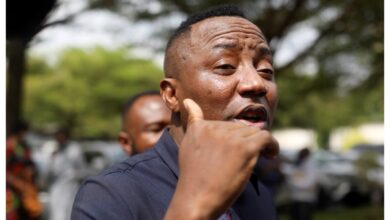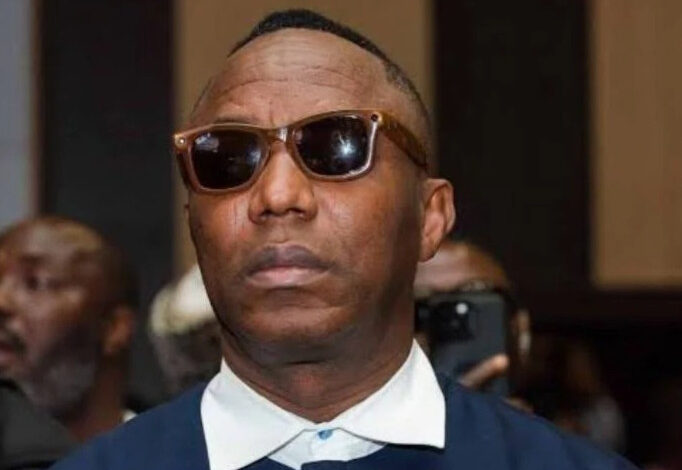
The Department of State Services (DSS) has denied responsibility for the latest remand of activist and publisher Omoyele Sowore at the Kuje Custodial Centre, maintaining that the decision stemmed entirely from court proceedings and not from any action taken by the secretary police agency.
The DSS stated this on Wednesday amid public outcry over the circumstances that led to Sowore’s remand following dramatic scenes at the Federal High Court in Abuja Monday.

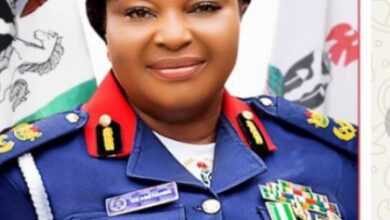
In a statement issued by its Deputy Director of Public Relations and Strategic Communications, Favour Dozie, the agency said the revocation of Sowore’s bail and his subsequent remand in prison were outcomes of judicial decisions.
“From the foregoing, it is clear that the issues which led to the revocation of his bail and his subsequent remand arose entirely from court processes, as the Service neither arrested him nor opposed his bail application,” the statement said.
The DSS also disclosed that its Director-General, Tosin Ajayi, had ordered an investigation into the conduct of operatives seen in videos recorded at the Federal High Court on Monday, June 22.
According to the agency, it had taken note of public concerns over footage showing Sowore in an altercation with an officer of the Nigerian Correctional Service (NCoS), as well as what appeared to be a scuffle involving DSS personnel at the court premises.
The agency noted that after the incident, Sowore opted to enter a DSS vehicle rather than a vehicle belonging to the Nigerian Correctional Service. Nevertheless, it said an immediate probe had been launched into the actions of officers involved in the incident.
Providing background to the case, the DSS said the matter originated from social media posts made by Sowore on August 25, 2025, concerning President Bola Tinubu following comments allegedly made by the President during a visit to Brazil.
Rather than arrest the activist, the agency said it initially pursued a non-confrontational approach.
“Rather than resort to arrest, the Service, in a letter dated 4th September 2025, demanded a retraction within one week,” it stated.
The DSS explained that the decision reflected the leadership style of the current Director-General, who prefers dialogue and legal remedies before considering enforcement actions.
On the prosecution itself, the agency said charges were filed under Section 24 of the Cybercrimes (Prohibition, Prevention, etc.) (Amendment) Act, 2024, in Suit No. FHC/ABJ/CR/481/2025.
According to the DSS, the suit was instituted to enable the court determine whether Sowore’s remarks about the President violated provisions of the law.
The agency further cited previous cases to demonstrate what it described as its commitment to resolving disputes through legal channels.
It referenced its legal action concerning the Shadow Government initiative proposed by Prof. Pat Utomi, noting that no arrest or invitation was issued before the matter was taken to court.
“Specifically, in the case of Prof. Pat Utomi’s Shadow Government, the Service sought judicial clarification without making any arrest or issuing any invitation. The Federal High Court subsequently declared the Shadow Government unconstitutional,” the statement added.
The DSS also recalled controversies involving reports that its operatives invaded the Lagos State House of Assembly and the National Assembly Complex. It said that in both instances, it sought public apologies and later withdrew legal actions after corrections were made.
In addition, the agency pointed to separate defamation and libel cases instituted by two of its operatives against the Socio-Economic Rights and Accountability Project (SERAP), noting that the courts ruled in favour of the officers.
The DSS argued that the examples reflected its preference for lawful dispute resolution and adherence to the rule of law.
It also stressed that Sowore was granted bail on self-recognition at the commencement of his trial and that the agency did not oppose the application.