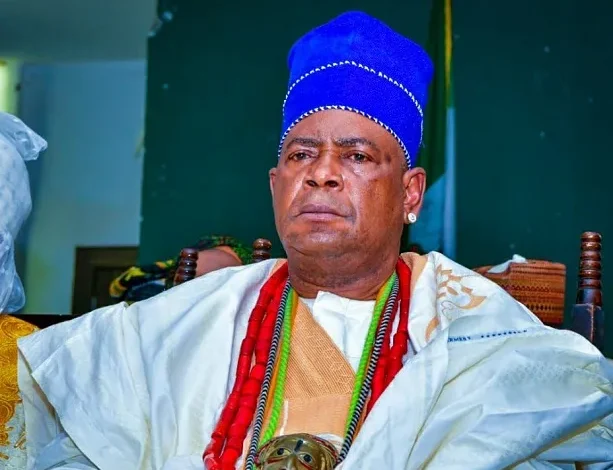
A High Court sitting in Lokoja has dismissed a suit filed by Prince Abdullahi Adejo Aliyu Obaje challenging the emergence and installation of Dr. Alhaji Mathew Opaluwa as the Attah Igala.
Delivering judgment, Justice Etsu Muhammad Umar held that the appointment of Dr. Opaluwa by the Kogi State government was carried out in accordance with the customs and traditions of the Igala Kingdom.


Prince Obaje had argued that under Igala native law and custom, only direct biological sons of previous Attahs qualified to ascend the revered throne.
However, Justice Umar ruled that the claimant failed to establish the existence of any binding customary law limiting succession exclusively to direct sons of former Attahs. He held that the foundation of the suit collapsed due to the absence of credible evidence.
The judge emphasized that customary law, particularly in chieftaincy matters, must be proved by cogent, credible and compelling evidence, noting that mere assertion, sentiment or assumption could not sustain a claim seeking to invalidate a traditional institution.
A major issue in the case was Gazette No. 2 of 2015, which the claimant relied upon to challenge the appointment process. The court, however, held that the same Gazette contradicted the claimant’s position by recognising that grandchildren of a former Attah are also eligible to ascend the throne, thereby weakening his argument that only direct sons qualify.
Justice Umar further held that evidence before the court showed that Dr. Opaluwa emerged from the Aju Ame-Acho ruling house, the recognised ruling house entitled to produce the Attah Igala, and that his nomination, screening, consultation and recommendation substantially complied with established traditional and administrative procedures.
On the issue of due process, the court ruled that the appointment enjoyed the statutory presumption of regularity, having passed through all recognised channels, including the kingmakers, the Igala Area Traditional Council, relevant administrative authorities and final approval by the Kogi State government before his coronation.
The court held that the claimant failed to rebut this presumption or prove any substantial illegality in the selection process, stressing that dissatisfaction with the outcome alone could not justify nullifying the exercise.
Rejecting the claimant’s request to declare him qualified and order his installation as Attah Igala, Justice Umar maintained that the judiciary “is not a kingmaker” and lacks the constitutional authority to nominate or install traditional rulers, as such responsibilities lie with customary institutions and the executive authorities empowered by law.
Consequently, the court dismissed the suit in its entirety for lacking merit and affirmed the lawful nomination, approval and installation of Dr. Alhaji Mathew Opaluwa as the Attah Igala.