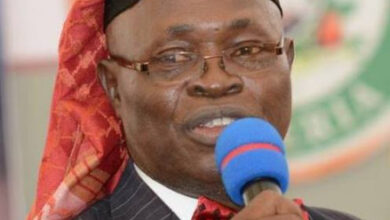
The Coordinator of a foremost pro-democracy group, Kwara Must Change, Mr Abdulrazaq Hamzat, has expressed concern over what he described as the limited impact of Nigeria’s democratic governance on citizens’ welfare despite more than two decades of uninterrupted civilian rule.
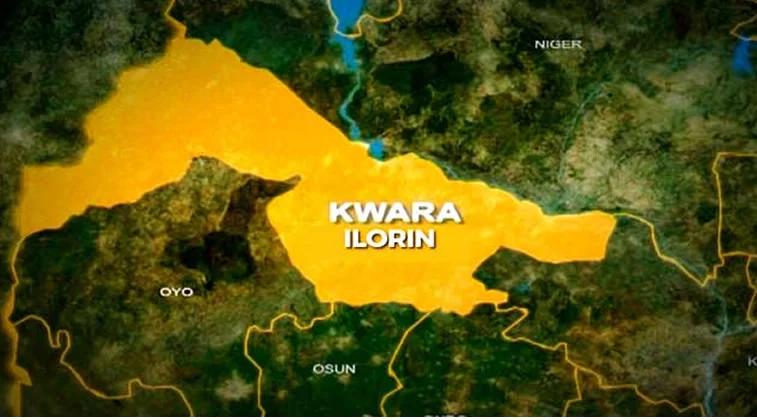
Hamzat, who spoke with LEADERSHIP in Ilorin, acknowledged that Nigeria has sustained uninterrupted democratic governance since 1999, describing it as the country’s longest period of civilian administration since independence.

He noted that the period, commonly referred to as the Fourth Republic, marked a significant departure from years of military rule but argued that the democratic experience has fallen short of public expectations in critical areas of governance and development.
According to him, while Nigeria has maintained the formal structures of democracy through regular elections, multiparty participation and periodic transfer of power, the actual outcomes of governance remain widely debated.
He said elections have become central to political life, but concerns over electoral integrity continue to persist, including vote buying, political violence, weak enforcement of electoral regulations and growing public distrust in outcomes.
“In many cases, elections are perceived less as competitive contests of ideas and more as struggles among entrenched political elites,” he said.
Hamzat further argued that Nigeria’s democratic system has continued to reflect elite dominance and weak internal party democracy.
According to him, political competition is often concentrated among a small group of actors who move across political parties, while grassroots participation in candidate selection and governance remains limited.
He also identified institutional accountability as a major challenge, noting that oversight institutions frequently face political interference while anti-corruption enforcement remains inconsistent.
This, he said, has contributed to a governance environment where accountability is selective and uneven.
On the economic front, Hamzat maintained that democratic governance has not significantly improved living standards for many Nigerians.
He cited unemployment, inflation, poverty and widening inequality as factors shaping public perception of democracy, adding that many citizens have yet to experience meaningful improvements in their daily lives.
He further noted that security challenges, including insurgency, banditry, kidnapping and communal conflicts, have weakened public confidence in the government’s capacity to protect lives and property.
Overall, Hamzat described Nigeria’s democratic journey since 1999 as politically stable but institutionally and economically underperforming.
“It is a system that has succeeded in maintaining continuity but continues to struggle with delivering strong governance outcomes, accountability and broad-based development,” he added.