DIG Rallies Security Stakeholders, Monarchs To Deepen Intelligence Network In Anambra

0
Efforts to strengthen security architecture and promote lasting peace in Anambra State received a major boost on Tuesday as the Deputy Inspector-General of Police in charge of the South-East Geopolitical Zone, Kenechukwu Onwuemelie, convened a high-level stakeholders’ dialogue aimed at fostering stronger collaboration among security actors and communities.
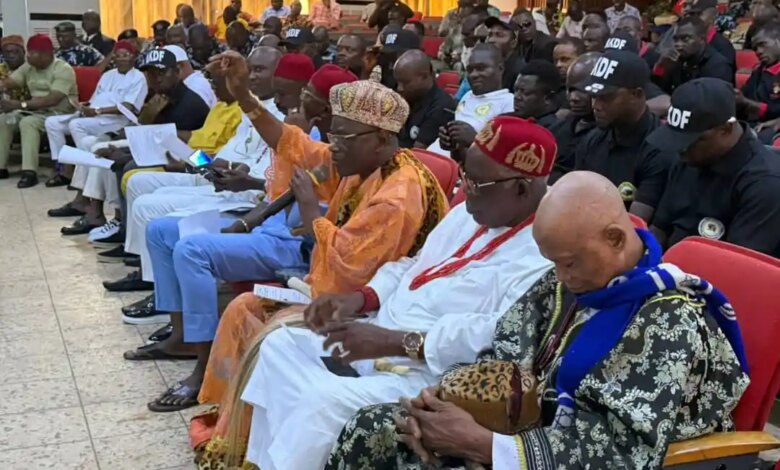
The engagement, held on behalf of Olatunji Rilwan Disu, brought together security agencies, traditional institutions, government officials, community leaders, and key interest groups to review emerging security threats and identify practical measures for sustaining peace and stability across the region.
Rather than focusing solely on enforcement strategies, the meeting emphasized the importance of intelligence-driven policing and grassroots participation as critical tools for addressing insecurity.


Speaking during the session, DIG Onwuemelie stressed that security remains a collective responsibility and urged citizens to move beyond passive observation by becoming active partners in the fight against crime.
According to him, timely and reliable information from residents and community leaders remains one of the most effective ways to combat criminal activities and strengthen public safety.
He noted that the stakeholders’ dialogue, currently being replicated across Nigeria’s geopolitical zones, is designed to encourage intelligence sharing, strengthen inter-agency cooperation, and build public confidence in security operations.
As part of his visit to the state, the DIG also paid a courtesy call on the traditional ruler of Awka Kingdom, Gibson Nwosu, in recognition of the strategic role traditional institutions continue to play in conflict resolution, peacebuilding, and community intelligence gathering.
Responding, the monarch commended security agencies for their commitment toward maintaining peace and assured the police hierarchy of the continued support of traditional institutions in promoting security at the grassroots level.
The event attracted heads of security formations, state vigilante groups, members of the traditional council, transport unions, civil society organisations, media representatives and leaders of various community groups.
Observers noted that the dialogue further underscored a growing shift toward inclusive security strategies where communities, traditional institutions, and law enforcement agencies work together to preserve peace and strengthen regional stability