0
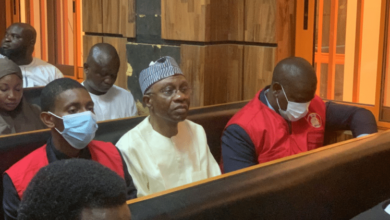
Human rights lawyer, public interest advocate, and Freedom of Information campaigner, President Aigbokhan, has been selected to serve as the presiding judge in the semi-final rounds of the prestigious Wahab Egbewole, SAN, National Disability Moot Court Competition scheduled to hold at the University of Ilorin.
The Wahab Egbewole, SAN, National Disability Moot Court Competition is regarded as one of the foremost platforms for promoting disability rights education among Nigerian law students.
Speaking on his appointment, Aigbokhan expressed appreciation to the organisers for the confidence reposed in him and commended the initiative for fostering legal scholarship on disability rights.


He noted that the protection of persons with disabilities remains one of the defining human rights challenges of contemporary society and requires continuous engagement from the legal profession.
Over the years, Aigbokhan has distinguished himself through strategic litigation, legal advocacy, and capacity-building initiatives aimed at promoting transparency, accountability, and the protection of vulnerable groups.
His work before domestic and regional courts has contributed significantly to the development of human rights law and public interest jurisprudence in Nigeria and West Africa.
The finals will be held as part of the activities surrounding the conference of the African Network of Constitutional Lawyers, bringing together academics, jurists, legal practitioners, and policymakers from across Africa.
The appointment is a recognition of Aigbokhan’s longstanding commitment to human rights, constitutionalism, access to justice, and public interest litigation particularly his advocacy in the case of Unemployed Youths of Nigeria v. Federal Republic of Nigeria & Ors (Suit No: ECW/CCJ/APP/51/2020), wherein the applicants sued the Nigerian government over discriminatory recruitment criteria in Department of State Services (DSS).
The suit challenged the Department of State Services (DSS) recruitment guidelines that automatically disqualified candidates with natural disabilities (like stammering) and past orthopedic operations as violating disability rights.
The court was called upon to properly assess whether the recruitment of officers in the DSS without compliance with Article 19 of the Protocol to the African Charter on Rights of Persons with Disabilities and Section 29 of the Discrimination against Persons with Disabilities Act of 2019, and whether evidence of higher numbers of appointees from the Northern parts of the country over the southern parts of the country is not discriminatory.
In this case, the applicant’s counsel, President Aigbokhan, argued that such strict, unaccommodating recruitment policies effectively disenfranchise qualified job seekers.
The applicant challenged the state agencies to implement a minimum 5% employment opportunities for persons with disabilities, aligning with national inclusion mandates.
The Court in its judgment held that “any distinction, exclusion or preference in respect of a particular job based on the inherent requirement cannot be deemed to be discrimination.
“When it comes to employment in certain occupations or professions, due to the peculiar nature or complexity of the job, certain qualifications are imperative and may exclude some category of people who may not be fully enabled to adequately execute the job.
“In such a situation, the exclusion of these persons cannot be termed as discrimination, unless there is uncontroverted proof that those excluded can adequately execute the job.
“In that wise, the court has not been presented with any uncontroverted proof that the affected persons who stammer or have orthopedic problems, as excluded, can nevertheless perform the job required in a State Security Service.”
The court held further that “Appointment must be guided by indices applied by the DSS in the appointment of individuals into the service, which include merits.
“The applicant has not adduced any evidence to show that individuals from the south performed better or scored higher than individuals from the north in assessment tests or interviews conducted, and were still denied employment.
“A mere allegation that the recruitment was lopsided without such proof of differential treatment is speculative and can therefore not be relieved by the court.
In light of this analysis, the applicant has not sufficiently substantiated their allegation of discriminatory employment based on place of origin.”
The court also observed that the Respondent has not ratified the Protocol to the African Charter on the Rights of Persons with Disabilities.
The Respondent, not being a signatory to the Protocol to the African Charter on the Rights of Persons with Disabilities, cannot be held in violation of its content.
The national competition has been on for three years, and it brings together leading faculties of law from across Nigeria to engage emerging legal issues affecting persons with disabilities and the advancement of disability rights jurisprudence.