There is a well-worn playbook for seizing power over information. First, declare the existing press corrupt, dishonest and contemptible, then position yourself as the only clean , honest, and ‘worthy’ alternative. Finally, use that claimed moral high ground to attack any criticism as coming from the very rot you claim to have cured.
Adolf Hitler perfected it with his Lugenpresse ‘ The ‘lying press’. Donald Trump revived it with ‘fake news’ and ‘ enemy of the people’. And now, a ubiquitous ,sleek, bullet -pointed American news outlet quietly adopted the same rhetorical strategy, wrapped in a minimalist logo . The promise to establish only what is ‘worthy’ of the reader’s time, hence the name Axios, a Greek word for ‘ worthy’. With its mission statement about ‘smart brevity’ to facilitate quick reading, ( shorter than 300 words) with bullet points, Axios became incredibly influential especially during the latest Middle East crisis.
Though Axios presents itself as a solution to a broken media landscape, the irony is that its own foundations are built on something far less innocent: deep undisclosed ties to the Israeli state. This year Axios turns ten. A decade of Israeli manipulation.

The Founding Lie: ‘Media is Broken’
Axios was founded in 2016 by three former Politico journalists: Jim VandeHei, Mike Allen, and Roy Schwartz. In VandeHei’s words, ‘media is broken- and too often a scam’. Put in historical perspective, the comparison becomes something more sinister. The accusation that the press is fundamentally corrupt, i.e cannot be trusted, and that it produces ‘ crap’ ( VanderHei’s term’) is the same accusation that populist authoritarians have used to clear ground for their own information monopolies. Hitler’s Lugenpresse was a wholesale de-legitimization of any independent journalism that stood in his way. Trump’s ‘fake news’ operates almost identically.
The founders of Axios certainly did not intend to draw a parallel to the Lugenpresse, but they built a brand name on the same rhetorical foundation: we are the only honest ones and everyone else is broken.
The Israeli thread running through Axios
To see through the branding, we need to examine exactly who runs the Axios machine and writes its most influential foreign policy coverage. Looking at these figures makes the company’s claim of honesty untenable. Roy Schwartz, the company’s co-founder and president, ( he was Politico’s chief officer before going to Axios) is a Jewish American- Israeli businessman born in Israel in 1975. By his own biography , he maintains deep ties to his country of origin. Schwartz is not a reporter, he is the architect of Axio’s business model and corporate culture. But his presence at the top raises an inescapable question. A news outlet that is founded and led by an Israeli national inherently carries deep-seated cultural, social, and national biases that quietly but powerfully shape its Middle East coverage.
The question becomes even more urgent when you look at Barak Ravid, Axios’ White House reporter and global affairs correspondent, described by critics as ‘Trump’s mouthpiece’. He is not only an Israeli citizen and a former senior analyst for Unit 8200, –the Israeli army’s elite intelligence and cyberwarfare corps-, which according to whistleblowers, monitors Palestinians, compiles dossiers, and enables extra legal operations. The Guardian revealed that Unit 8200 engineered an intrusive mass surveillance network capable of intercepting millions of civilian mobile phone calls every single day within Gaza and the West Bank.
Ravid was drafted into the Israeli army at 18 where he served as a military intelligence analyst and where he remains as an IDF reservist to this day. Now , he covers the White House for Axios, as well as U.S policy toward Israel and Iran. Haaretz writer Yasmin Levy recently wrote ( 9 June 2026) that Israeli journalist Barak Ravid has ‘ unusual access to Trump’, but ‘at what cost? ’ she asks. Not only is he CNN commentator for Axios, he is also Israel’s Channel 12’s Washington correspondence, making him one of Trump’s main channels to the Israeli public.
Let us pause for a moment to appreciate this irony. If any newspaper had a co-founder born in Russia for instance, and a Pentagon reporter who served in the Russian Intelligence, the American public would call that a national security scandal. But because the country is Israel, and because Axios has successfully branded itself as the ‘worthy’ alternative, this arrangement has largely gone unnoticed for a full decade.
Context is critical here. While Axios’s regional coverage is frequently scrutinized due to the deep establishment ties of its top reporters, especially Barak Ravid, its chief competitor, Politico, (founded 2006) operates under an even more formalized institutional mandate. Axios itself was born out of Politico, by the very journalists who built Politico’s reporting model before launching their own, utilising similar business models to target a highly influential niche audience, ( in addition to offering premium advertising and subscription rates). Both companies are based in Arlington, Virginia; they share the same DNA.
Uncovering this hidden framework requires looking past daily headlines. Only through advanced AI analysis was I able to dig beneath the surface of digital media ownership, connecting the dots to reveal the full scale of the corporate mandates and West Bank real estate profits of prominent German media mogul and Politico’s co-owner Axel Springer (1912-1985), who shaped post-war European journalism . Without modern algorithmic scrutiny, these mechanisms shaping our news would remain buried deep in corporate boardrooms. This AI-driven investigation revealed that following its billion-dollar acquisition by Axel Springer SE, Politico became explicitly bound to a strict corporate constitution legally requiring the promotion of Israel.
Driven by historic German national guilt, non-Jewish executives like CEO Mathias Döpfner have weaponized this boardroom directive, explicitly telling American staffers that anyone who disagrees with this pro-Israel stance should resign. Strangely, and far more sinister than a mere abstract ideological alignment , this corporate bias is backed by direct commercial interests: Axel Springer SE actively profits from Israeli real estate through its ownership of Yad 2, ( Israel’s largest classified advertisement portal ) that profits from real estate rentals and sales built in illegal West Bank settlements .
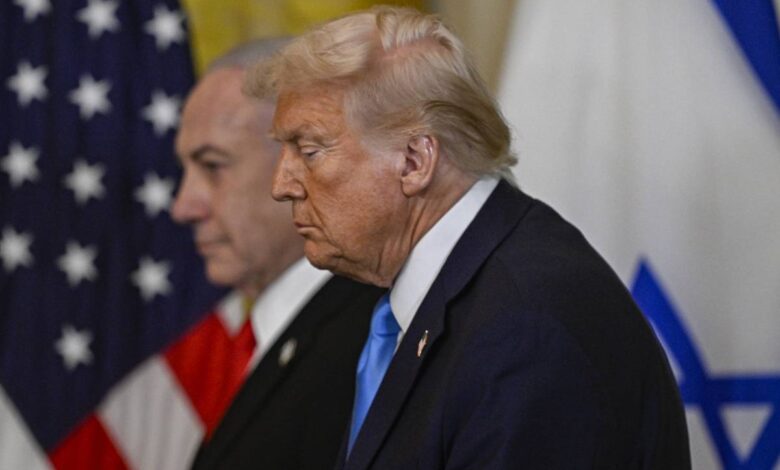
While Donald Trump shocked Washington by reviving authoritarian, Goebbels-esque rhetoric to label the mainstream press the ‘enemy of the people’ , the true danger to an independent press isn’t just hostile words from a politician. It is the quieter, systemic co-opting of the media itself- whether through Politico’s German boardroom explicitly mandating absolute geopolitical allegiance to a foreign state, or through Axios allowing an intelligence veteran to gatekeep your daily news feed. Apparently, ‘ worth’ means whatever the Israeli intelligence graduate Ravid decides what you need to read.
The Political and Financial consequences
This is not an abstract conflict of interest. Barak Ravid’s reporting has shaped US foreign policy narratives in real time. He has broken stories about US-Iran negotiations that were followed , suspiciously, by massive anonymous trades betting on falling oil prices. On 6 May 2026, nearly one billion dollars in down betting were placed approximately seventy minutes before Ravid published an ‘ imminent deal’ report. When oil prices dropped , anonymous traders made enormous profits.
Iranian media has dubbed this pattern ‘ Operation Fauxios’, ( coined by Ghalibaf, speaker of the Iranian parliament, a combination between the French/English word ‘faux’ -meaning fake or false– with the name Axios ) . This is devastating news for a news outlet that calls itself ‘ worthy’ .
Moreover, any critic can be dismissed as part of the ‘ broken ‘ legacy media, a tactic straight out of Hitler’s playbook, whose true genius was the adage: it does not need to be true, it only needs to be believed, a strategy perfected by Joseph Goebbels who famously noted that the best propagandist technique must confine itself to a few key points and ‘repeat them over and over’.
In conclusion, Axios was founded on a claim of moral and professional superiority, but that claim collapses under the weight of its own Israeli connections. A news organization cannot claim the moral high ground while embedding a former foreign intelligence officer in the White House, whose co-founder was born in a country whose interests are directly advanced by it’s reporting.
Axios may not always be wrong, but the problem is that it has trained its readers to trust it completely while hiding the most relevant facts about its own leadership and reporters. This is not journalism , it is propaganda in grand style.
Hitler called it ‘The lying press’ to clear the way for state control. Trump repeatedly calls the press the ‘enemy of the people’ in order to immunise himself from accountability. The U.N Special Rapporteurs on Freedom of Expression issued formal warnings explicitly stating that Trump’s attacks were ‘strategic, designed to undermine confidence in reporting and raise doubts about verifiable facts.’ Axios calls it ‘ broken’ to sell the same product, only better disguised.
Ultimately, the line between Politico’s corporate mandates and Axio’s sanitised brevity reveals a deeper truth : together they have spent two decades setting a media agenda that normalises unconditional support for Israel.
OPINION: The heirs of the Nizamiyyah: Persian patience, American hubris
The views expressed in this article belong to the author and do not necessarily reflect the editorial policy of Middle East Monitor.