0
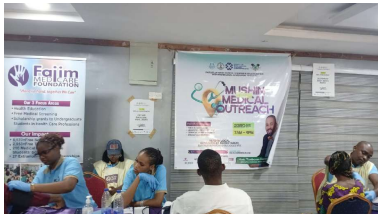
The Faculty of Basic Clinical Sciences (FBCS), College of Medicine University of Lagos (CMUL) has taken healthcare directly to the doorstep of residents of Mushin, one of Lagos State’s most densely populated communities, providing free medical services to more than 500 people. The intervention is aimed at expanding access to preventive healthcare while strengthening the connection between medical research and community wellbeing.
The large-scale medical outreach, organised by the Faculty of Basic Clinical Sciences (FBCS) of the College of Medicine in collaboration with Mushin Local Government and key healthcare partners, brought hundreds of residents together for health education, medical consultations, disease screenings and other essential healthcare services that many beneficiaries said they might not otherwise have been able to access.
The intervention, which attracted residents from different parts of the community, highlighted growing efforts by academic institutions and healthcare stakeholders to bridge healthcare gaps by taking services beyond hospital walls and directly into underserved communities.
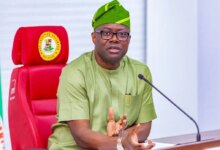
Speaking during the outreach in Lagos on Tuesday, Dean of the Faculty of Basic Clinical Sciences, Professor Fatima Abdulkareem, described the initiative as a practical demonstration of the faculty’s commitment to ensuring that research outcomes translate into tangible benefits for society.
According to her, the outreach represents one of the key objectives of the faculty, which is to ensure that scientific discoveries and research findings do not remain confined to academic publications and conference halls but are brought directly to the people whose lives they are intended to improve.
She explained that the programme also served as a means of giving back to society while creating awareness about the importance of preventive healthcare and early disease detection.
Professor Abdulkareem noted that the outreach formed part of activities marking the faculty’s inaugural conference and reflected its determination to make research more relevant to the healthcare needs of Nigerians.
She disclosed that beneficiaries received a wide range of healthcare services, including health education, medical consultations, blood sugar screening, hepatitis screening, cervical cancer screening, prostate screening, breast examinations and the distribution of treated mosquito nets.
According to her, the outreach marked a significant milestone for the faculty following its establishment and the development of research initiatives designed to address pressing healthcare concerns.
“This is the first outreach and inaugural conference of the faculty following its being instituted and coming up with research. Part of our mandate is to cascade the outcomes of our research to the communities,” she said.
N1 Billion Endowment Fund Targets Home-Grown Solutions
Professor Abdulkareem further revealed that the faculty would utilise the platform of the conference to launch a N1 billion endowment support fund aimed at strengthening local research capacity and reducing dependence on external interventions.
She said the proposed fund would complement support currently received from government agencies and international organisations while encouraging Nigerian researchers to develop home-grown solutions to the country’s health challenges.
“We are also using the opportunity of the conference to launch a N1 billion endowment support fund for research findings to augment interventions from the government and international bodies. The idea is to encourage local researchers to enable us to proffer solutions to the health needs of Nigeria,” she said.
The emphasis on local research and innovation comes at a time when healthcare experts continue to advocate greater investment in scientific studies capable of addressing the unique health realities confronting Nigeria and other African countries.
For many residents who attended the outreach, however, the immediate value lay in the opportunity to receive medical attention free of charge.
The event witnessed strong participation from community members who underwent various health assessments and received professional medical advice on disease prevention and management.
Mushin Local Government Chairman, Mr Tunbosun Aruwe, who attended the outreach and also received healthcare services, commended the organisers for selecting Mushin as the host community for the intervention.
Describing the programme as highly impactful, he urged residents to take full advantage of the services provided, noting that access to healthcare remains a priority for his administration.
According to him, the local government has consistently demonstrated its commitment to public health through the organisation of free healthcare programmes for residents on a regular basis.
Aruwe said the outreach complemented ongoing efforts by the council to improve health outcomes within the community and encouraged residents to make preventive healthcare a routine part of their lives.
Mushin Chosen For High-Impact Intervention The outreach was organised with the support of the Health Business Academy for Africa (HBA), one of the key partners of the initiative.
Executive Director of HBA, Mr Wale Olajubu, stressed the importance of increased investment in healthcare leadership, research funding and human capital development as critical components of efforts to strengthen Nigeria’s healthcare system.
According to him, HBA’s involvement reflects its broader mission of empowering healthcare leaders and organisations through training, investment, strategic support and institutional growth.
He explained that the outreach was designed to ensure that healthcare interventions extend beyond policy discussions and academic exchanges to deliver measurable benefits to ordinary citizens.
“What we are here today to do is part of what we do – empowering the community by empowering the leaders of the community. What we are here for is an outreach to empower the community here in Mushin,” he said.
Olajubu noted that the organisation has supported similar community interventions across Lagos, with more than 10,000 people benefiting from previous programmes implemented in partnership with healthcare institutions.
He emphasised that while conferences remain important platforms for professional development and knowledge sharing, healthcare leadership must ultimately translate into improved access to care for vulnerable populations.
“The significance of this outreach is that it takes healthcare directly to the people. While conferences are often associated with discussions and knowledge sharing, we believe that healthcare leadership must also translate into community impact,” he said.
Stakeholders Push Preventive Healthcare
According to him, the programme provides residents with access to health education, screening services, medical consultations and referrals, particularly for individuals who may not routinely seek preventive healthcare.
He added that the initiative reflects a deliberate effort to ensure that the benefits of the conference are felt beyond academic circles and contribute directly to community wellbeing.
Explaining the decision to choose Mushin as the host community, Olajubu described the area as one of Lagos’ most vibrant and densely populated communities, with a large and diverse population facing significant healthcare needs.
“We wanted to take this intervention to a community where it could have meaningful impact and where residents would benefit from increased access to health screening, education and professional medical advice,” he said.
He further stated that the choice of Mushin aligns with the organisation’s commitment to ensuring that healthcare services reach ordinary Nigerians and communities that play a vital role in the social and economic life of Lagos State.
As the outreach continued throughout the day, organisers reported significant participation across various screening and consultation stations, with expectations that several hundred residents would benefit before the conclusion of activities.
According to Olajubu, the focus extends beyond numerical targets to ensuring that every participant receives quality attention, accurate health information and appropriate referrals where further medical intervention is required.
He encouraged residents to take advantage of opportunities for regular health checks, stressing that many health conditions can be prevented, controlled or successfully treated when detected early.
“Many health conditions can be prevented or managed effectively when detected early,” he said.
He also expressed appreciation to members of the Mushin community for their enthusiastic participation and support, noting that the strong turnout demonstrated the importance of bringing healthcare services closer to communities that need them most.
Beneficiaries Welcome Lifeline
The impact of the outreach was evident in the testimonies of beneficiaries who welcomed the opportunity to access specialised screening services and professional medical advice without financial barriers.
Among them were Mrs Fumilayo Kayode and Mr Tajudeen Akande, who expressed satisfaction with the programme after benefiting from the services provided.
Kayode said she was able to undergo cervical cancer screening, while Akande received prostate screening and other medical assessments as part of the comprehensive healthcare package offered during the outreach.
Organisers Advocate Early Detection
Their experiences reflected the broader significance of the intervention, which sought not only to provide immediate healthcare services but also to promote awareness, encourage preventive health practices and strengthen community engagement in health matters.
As healthcare stakeholders advocate for stronger investments in research, innovation, and community-based care, the Mushin outreach shows how collaboration between academic institutions, local authorities, and development partners can bring healthcare closer to people and improve access to life-saving services.
For hundreds of residents who turned out for consultations, screenings and health education, the initiative represented more than a medical exercise. It provided a rare opportunity to know their health status, receive professional guidance and take proactive steps towards healthier lives, reinforcing the growing call for healthcare interventions that place communities at the centre of the nation’s public health agenda.