Federal University Lokoja Promotes Community Development Through Participatory Drama Project

0
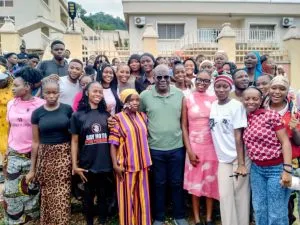
The Students of the Department Theatre Arts, Federal University Lokoja (FUL), have used drama to sensitize residents of Karaworo Community, New Layout, on unity and peaceful coexistence as they concluded their 2026 Community Theatre Project.
Through a series of drama on Saturday, the 300-level students highlighted how tribalism, division, and lack of cooperation fuel local challenges, urging the community to embrace dialogue and collective responsibility as the foundation for development.
The students used drama to sensitize residents on self-help, unity, and community development while dignitaries urged students to turn their skills into businesses.
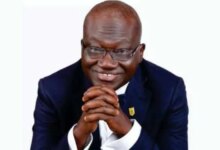
Vice Chancellor, Prof. Gbenga Ibileye, noted theatre arts now attracts more applicants than any humanities course at FUL, and stressed that the university-community relationship must impact all ramifications.
He applauded Etsu Lokoja, HRH Emmanuel Akamisoko Dauda-Shelika, Yampa IV, for “fatherly” hospitality, and said the students’ work helps the community rediscover its essence and identify solutions it can implement without waiting for government.
The VC advocated a joint university-community committee to follow up on gaps identified and escalate them to relevant authorities.
Prof Ibileye, who declared the program “cherished and enviable,” told the students that their training should translate into livelihoods and jobs for others.
“This is something that would give you food, a quality livelihood. It will make you your own employer and, if diligent, employer of several other people,” he said.
The VC charged students in costume design, stage design, playwriting, makeup, and event coordination to commercialize their skills.
“Why are you looking for a job? The job is in you. You should be able to use your skill to earn a living and employ people,” he said.
Dr. Felix Egwuda, the Head of Department of Theatre Arts, described the exercise as a 6-credit course for the participating 300-level students, with marks awarded as part of exams.
He said the project has two phases: conscientizing the community, then returning for follow-up to assess what has been done by residents and government.
“If government is not doing it, they should do it,” he stressed, citing roads and water as issues communities can tackle collectively.
The Chairman, Planning Committee of the 2026 edition, Prof. Awam David Menegbe, said the team gathered data, analyzed community issues, and produced skits addressing them.
“We have come to sensitize the people about the necessity for self-help, for cooperating, and communal efforts towards communal development.
“This year’s outreach to Karaworo follows previous projects in Lokongoma, Ganaja, and Adankolo,” he explained.
Prof. Menegbe praised Karaworo residents as the most receptive community he has worked with in over four decades, noting they provided good accommodation and financial support unlike the usual school buildings used elsewhere.
Mr. Emmanuel Sunday Ikpelemoh added that FUL’s curriculum includes community theatre to interrogate socio-political and cultural challenges with residents and co-create solutions through play production.
He said follow-up visits to past communities like Adankolo and Ganaja have shown improvements in sanitation, security, and communal engagement.
He commended Prof. Ibileye’s support, noting the VC, former HOD of Theatre Arts, has consistently backed the engagement.
The highlight of the occasion was a series of playlets by 86 students of FUL’s Faculty of Theatre and Art, each addressing a pressing local issue.
One drama focused on the lack of potable water and water scarcity, which forces residents to adopt unhygienic alternative sources and has led to cholera outbreaks.
Another playlet dramatized how bad roads cause accidents and vehicle damage, while a third tackled epileptic power supply.
A Student, Yakubu Paul, said the summary of all the playlets was a call for community responsibility and unity: “If they could be united, drop pride, tribalism and religion, come together and discuss, they could help themselves and then go to the right leaders.”
The performances also emphasized doing the right thing even when no one is watching.
The Etsu Lokoja, HRH Emmanuel Akamisoko Dauda-Shelika, expressed honour at hosting FUL, saying the students “narrowed the angles” by identifying problems and preaching harmony.
“There is no human being called government. You can’t go to any office and say, ‘I’ve come to arrest government.’ We are the government,” he stated.
The royal father urged residents to be more societal and communal in outlook, saying: “That thing you want for yourself is what everybody should have.”
On government engagement, the royal father commended Gov. Ahmed Ododo for ensuring water supply in Lokoja, paying civil servants, and maintaining relative peace.
The department reaffirmed its commitment to follow-up mechanisms, ensuring recommendations are escalated and results tracked in years to come.