0
…Approves $2.96bn Financing For Transport, Power, MSMEs
…Set To Reform NYSC, Considers Technocrats To Lead Scheme
ABUJA – President Bola Tinubu on Monday, presided over the Federal Executive Council (FEC) where he gave express approval for N2.078 trillion for road infrastructure across 10 states.
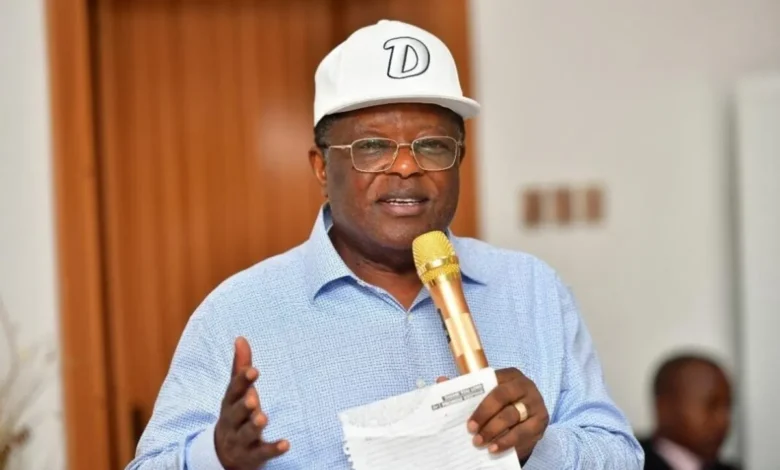
Minister of Works, David Umahi, gave the information, where he noted that FEC cleared 23 major road projects spanning Adamawa, Taraba, Ebonyi, Kwara, Cross River, Kogi, Lagos, Niger, Oyo and Plateau.

According to Umahi, government is poised to boost connectivity, ease the movement of people and goods, and stimulate economic activity.
He maintained that FEC ratified a presidential approval to augment by N15 billion a 2022‑awarded road contract in Gashua, Yobe State, citing higher construction material costs. In addition, the council approved N15.246 billion for Phase II of the Yola–Fufore–Gurin Road following completion of Phase I.
Speaking on the Lagos– Ibadan Expressway, the minister noted that Full Business Case approval was given for its operation and maintenance under a modified Swiss Challenge procurement.
“President Bola Tinubu directed the ministry to proceed with procurement for reconstruction of deteriorating sections using concrete pavement technology to enhance safety and longevity.
“The council also approved reconstruction of about 400.9 kilometres of federal roads under a tax credit arrangement to be executed by the Dangote Group at a cost of N1.8325 trillion. The package replaces an earlier 2022 contract and is expected to accelerate delivery of key road infrastructure,” he stated.
Umahi added that the first 118‑kilometre section of the Abuja–Kaduna–Kano highway, valued at N137 billion, is complete, while the remaining 164 kilometres are due for completion in November.
Government also approved N34.398 billion for construction of an airstrip in Gboko, Benue State.
Minister of Aviation and Aerospace Development, Festus Keyamo, said the contract was awarded to CCECC Nigeria Limited.
He said the facility will serve agricultural operations, strengthen security, and support humanitarian and emergency medical services in the area.
The Council also approved maritime infrastructure and safety projects worth about N286 billion to modernise port operations, strengthen maritime safety and protect Nigeria’s marine environment.
Briefing on behalf of the Minister of Marine and Blue Economy, Gboyega Oyetola, the Minister of Environment, Balarabe Lawal, said the council approved four strategic initiatives to boost port efficiency, enhance navigational safety and improve environmental protection across coastal and inland waterways.
He said FEC authorised the purchase of two pollution-control vessels for roughly N59.05 billion to tackle plastic pollution and other marine waste in Nigerian waters, creeks and inland channels, and to improve navigational safety.
The council also approved the acquisition of six pilot cutter boats at an estimated cost of N80.03 billion. The vessels will ferry marine pilots to and from ships, aid navigation through port channels and support coordination with the Nigerian Ports Authority.
In addition, FEC granted approval for two firefighting boats valued at about N34.06 billion (approximately US$16 million) to strengthen emergency response to fires on vessels, oil terminals, jetties and other port facilities.
Lawal further said the council approved N112.85 billion for capital and maintenance dredging of the Escravos Channel under a public-private partnership between the Nigerian Ports Authority and private sector operators. The dredging is intended to improve channel access, remove obstructions, bolster pollution surveillance, maintain navigational aids and raise overall maritime safety and efficiency.
He described the four approvals as a strategic investment in Nigeria’s blue economy that will enhance navigational safety, boost port performance, protect the marine ecosystem and create economic opportunities.
FG Approves $2.96bn Financing Package For Transport, Power, MSMEs
Meanwhile, the Federal Executive Council (FEC) presided over by President Bola Tinubu approved series of financing arrangements worth about $2.96 billion, N200 million and N215 billion to boost transport, agriculture, power, infrastructure and micro, small and medium enterprises (MSMEs).
According to Minister of Finance and Coordinating Minister of the Economy, Taiwo Oyedele, who spoke with State House correspondents after the Federal Executive Council (FEC) meeting, “For Council, we made very strategic decisions, which I have decided to categorize under five headings,” summarising approvals drawn from 14 memoranda submitted by the Ministry of Finance.
For transport, he explained that FEC approved N215 billion to complete investments in the Presidential Compressed Natural Gas (CNG) initiative, covering CNG buses, electric vehicles, CNG‑powered tricycles and vehicle conversion centres.
“The first one is to do with transportation, how to bring the cost of transportation down,” he said, adding that the approvals will allow remaining investments under the programme to proceed.
For Agriculture, Oyedele said financing arrangements totalling $900 million were approved to support rural technical and vocational training, Special Agro‑Industrial Processing Zones (SAPZ) and agricultural value‑chain projects. “Altogether, we have different financing arrangements coming to a total of 900 million U.S. dollars,” Oyedele said.
On power, the minister said the council approved a $160 million facility for rural solar energy projects in Niger State, with the Islamic Development Bank providing $150 million and the Niger State government providing $10 million as counterpart funding. “This is a 160 million U.S. dollars facility for Niger State solar development projects,” the minister said.
On infrastructure, the minister said a $1.2 billion financing facility was cleared for Section Two of the Sokoto–Badagry Super Highway, a corridor that spans 11 states intended to improve connectivity, ease logistics and support economic development.
For MSMEs and access to credit, Oyedele said FEC approved €200 million and $500 million in financing through the Development Bank of Nigeria (DBN) to expand access to affordable credit for small businesses. “We always have to think about how to support that sector because supporting them is supporting ourselves and our country,” Oyedele said.
FG Set To Reform NYSC, Considers Technocrats To Lead Scheme
The Federal Government, on account of insecurity plaguing the country, may have bowed to pressure, as it has announced plans to reform the National Youth Service Corps (NYSC).
In overhauling the scheme, the Federal Government said it may henceforth appoint civilians to head it, while introducing skills development programmes that aligns more with contemporary needs.
Minister of Youth Development, Ayodele Olawande, disclosed this on Monday, after the Federal Executive Council meeting presided over by President Bola Tinubu at the State House, Abuja.
He noted that the scheme would now include professional trainings for corps members to enhance their employability.
According to Olawande, the NYSC would still retain its one year duration while introducing flexible, skills-based training programmes within the service year.
Under the new framework, he said, the NYSC would remain civilian-led, while the Nigerian military would continue to oversee the security of corps members nationwide.
“Graduates enrolled in specialised streams, such as the proposed Digital Corps, may spend additional time in training before deployment to their primary places of assignment to earn professional certifications that enhance employability and self-employment opportunities,” he said.
The government also explained that the reforms were designed to consolidate youth development programmes under the NYSC for better coordination, monitoring, and accountability.
Commenting on the reforms for further clarification, the Special Adviser to the President on Policy Coordination, Hajia Hadiza Bala-Usman, said “the safety aspect of our core members still remains with the military, but the operational leadership of the NYSC will be civilian-led, but the security will continue to be anchored and implemented by the Nigerian military, increasing the length.”
To give legal backing to the reforms, the Federal Executive Council directed the Attorney-General of the Federation, in collaboration with the Ministry of Youth Development, to amend the NYSC Act and its regulations to enable the immediate implementation of the approved reforms.
While acknowledging the challenge of brain drain, the presidential aide explained that the focus of the government was on producing more graduates, particularly in STEM fields, and equipping them with relevant skills so they can contribute to national development whether they remain in Nigeria or eventually return with global experience.