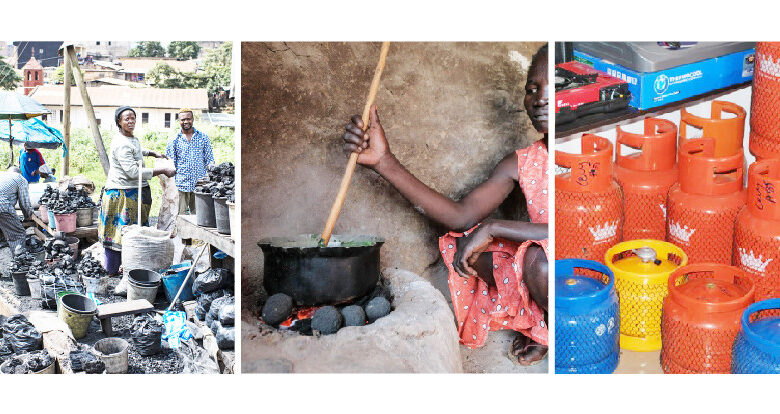
Rising prices for cooking gas and kerosene have driven a surge in charcoal and firewood sales as millions of households seek affordable energy alternatives.
Across markets in cities and rural communities alike, firewood and charcoal traders are witnessing a surge in demand unlike anything they have seen in recent years.


Nonetheless, as the charcoal market booms, environmentalists warn that excessive reliance on charcoal for cooking drives widespread deforestation, degrades soil, and accelerates climate change through massive greenhouse gas emissions.
With the price of Liquefied Petroleum Gas (LPG) climbing beyond N2, 000 per kilogramme in many parts of the country, families, roadside food vendors, and small restaurants are increasingly turning to traditional fuels as a cheaper alternative for daily cooking.
For traders, the trend has translated into brisk business and growing profits.
For consumers, however, it reflects the difficult choices being made amid rising living costs and shrinking household incomes.
Mrs Roseline Achibong, a charcoal trader in Bwari, said her stocks were moving faster than ever before.
She said she bought a bag of charcoal for N6,500 to N7,000 and sold it to consumers for N8,500.
Achibong said previously, consumers preferred gas because it was cleaner and more convenient.
She said many customers patronised her every day because they could no longer afford to refill their gas cylinders.
Another charcoal trader in Dutse, Abuja, Mrs Amina Shuaibu, with excitement on her face, said she smiled at the bank because she made more sales in the business.
“I don dey take good care of my four children now. Before, e dey very hard for me to buy wetin dey want but now, business dey very good.
“Now we dey open shop early and sell our charcoal finish before evening because people now dey use charcoal,” she said in Pidgin English.
A food vendor at Federal Secretariat in Abuja, Mr Rejoice Ona, said the escalating cost of gas had significantly increased their operating expenses, forcing them to seek cheaper options to remain in business.
She explained that switching back to charcoal helped reduce daily cooking costs.
“Gas became too expensive. If we continue using only gas, we would have to increase food prices, and customers may stop coming,” she said.
The same story is unfolding in countless homes where families are carefully managing limited budgets.
Mrs Adedoyin Fashina, a resident of Dei-Dei, said a bag of charcoal or a bundle of firewood offered a more affordable way to prepare meals than purchasing cooking gas.
She said the demand for charcoal kept increasing because everyone was looking for ways to cut costs.
The renewed interest had also boosted activities along the charcoal supply chain, from producers in rural communities to transporters and wholesalers who moved the products to urban centres.