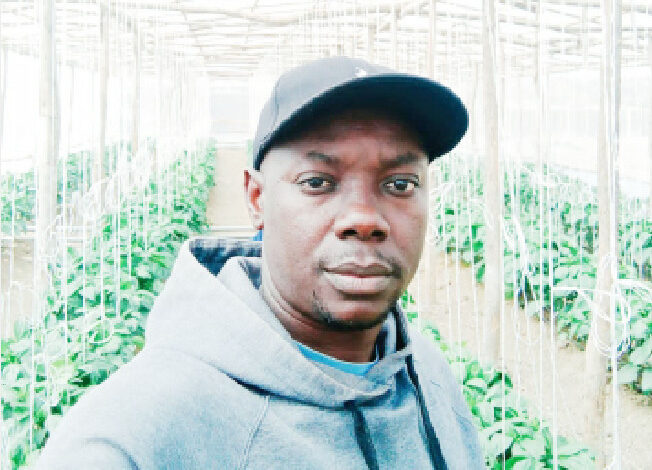
What started as a modest agricultural experiment has evolved into a thriving agribusiness enterprise for Vincent Ojeah, Chief Executive Officer of CAV Agro-Ventures, whose journey from operating a single greenhouse to managing more than 10 facilities is offering valuable lessons for aspiring farmers across Nigeria.
Over the past five years, Ojeah has steadily expanded his greenhouse operations while also training and supporting emerging farmers, demonstrating how strategic planning, innovation and patience can transform agriculture into a profitable venture.

Speaking during a recent media interaction, Ojeah attributed his success to a deliberate decision to start small and build experience before expanding.
According to him, his entry into greenhouse farming was motivated by the need to explore modern agricultural solutions capable of addressing food production challenges, climate variability and profitability concerns associated with conventional farming.
Rather than investing heavily from the outset, he began with a single greenhouse, which served as a practical learning platform for understanding both the technical and commercial aspects of controlled-environment agriculture.
“Many people see the greenhouse structure and immediately think about profits,” Ojeah said. “But before investing, you must understand the system, the crops suitable for greenhouse cultivation, and the management practices required.”
He stressed that acquiring the right knowledge remains the foundation of successful greenhouse farming. Unlike traditional open-field cultivation, greenhouse production requires specialised expertise in irrigation management, nutrient application, pest control, environmental regulation and crop monitoring.
Ojeah noted that starting with one greenhouse enabled him to minimise risks while gaining practical experience, a strategy that eventually paved the way for sustainable expansion.
His steady growth from a single greenhouse to more than 10 facilities has positioned him among the leading advocates of greenhouse technology in Nigeria, particularly as the country seeks solutions to food insecurity and low agricultural productivity.
Beyond technical competence, he identified crop selection as a critical factor in profitability. According to him, greenhouse farming delivers the best returns when farmers focus on high-value crops with strong market demand.
Among the crops he recommended for greenhouse cultivation are bell peppers, tomatoes, cucumbers, broccoli, kale, eggplants, grapes, potatoes, peas, bananas and plantains.
“It is not enough to grow crops successfully,” he said. “You must also know where the market is and what consumers want.”
He explained that this market-driven approach has helped his business maintain profitability by concentrating on crops with proven commercial value.
While highlighting the opportunities in greenhouse farming, Ojeah acknowledged that the sector requires substantial initial investment. He disclosed that depending on the scale and infrastructure requirements, establishing and operating a greenhouse facility could cost about N2.9 million over a 10-month production cycle.
Despite the capital requirements, he maintained that greenhouse farming remains highly rewarding when properly managed.
According to him, premium crops such as bell peppers can generate profit margins of up to 35 per cent, making the investment worthwhile for farmers who adopt best management practices and secure reliable markets.
He emphasised that successful greenhouse operations go beyond constructing protective structures. Essential infrastructure, he said, includes UV-treated nylon coverings, insect-proof nets, drip irrigation systems, fertiliser injection units and spraying equipment.
These technologies help improve water efficiency, reduce pest infestation, optimise nutrient delivery and increase crop yields.
Among the major challenges facing greenhouse operators, Ojeah identified access to water as one of the most critical. Because greenhouse production depends heavily on irrigation rather than rainfall, he advised prospective investors to secure reliable water sources before commencing operations.
He also cited rising input costs, technical management demands and market fluctuations as recurring challenges but expressed confidence that these obstacles can be addressed through proper planning, continuous learning and effective management.