0
…SBM Survey Shows Obi Leading In Voter Sentiment
LAGOS – Nigeria’s worsening economic hardship, deepening insecurity and a fractured opposition landscape are already shaping the contours of the 2027 presidential election, with a new voter sentiment survey by SBM Intelligence suggesting that President Bola Tinubu faces a daunting challenge in securing a second term.
The inaugural SBM Voter Sentiment Tracker, conducted across the country’s six geopolitical zones with 829 respondents, paints a picture of a nation grappling with widespread dissatisfaction over living conditions while revealing significant shifts in voter preferences ahead of the next general election.

The findings come at a time when millions of Nigerians are struggling with soaring food prices, rising poverty and persistent security threats. SBM Intelligence is an Africa-focused market/security intel gathering and strategic consulting firm. It is a leader in strategic research, providing actionable analyses of West Africa’s socio-political and economic landscape via practical means.
Their team of researchers and data scientists provide the intel that helps governments, businesses, and nongovernmental organisations achieve strategic objectives as they initiate or expand regional operations. Since 2013, they have served clients across various sectors in Africa, France, the UK, and the USA.
The United Nations has warned that as many as 35 million Nigerians could face acute hunger between June and August, this year, underscoring the severity of the country’s economic challenges.
At the same time, labour unrest is intensifying, with federal workers rejecting a proposed N100,000 minimum wage and threatening industrial action, while insecurity continues to dominate national discourse following a series of kidnappings, attacks and bandit operations across several states.
Against this backdrop, SBM Intelligence said its survey sought to measure the mood of voters as political actors begin positioning themselves for the 2027 contest.
The results suggest that public perception of President Tinubu has deteriorated significantly amid growing frustration over inflation, unemployment, electricity shortages and insecurity.
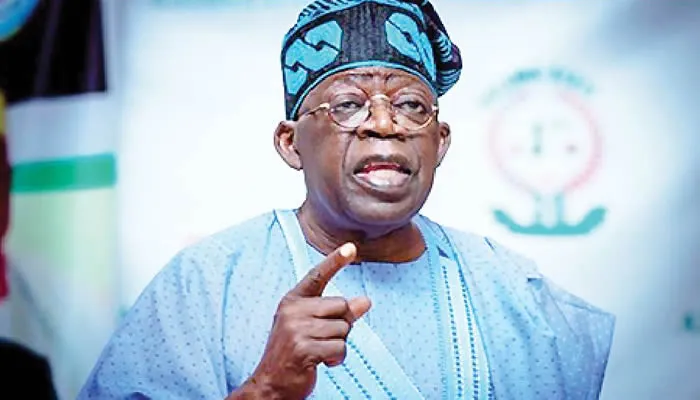
According to the survey, Tinubu enters the 2027 race with a national net favourability score of minus 58.5, the weakest rating among all candidates assessed. The report noted that respondents rated the administration poorly across key governance indicators, including inflation management, job creation, security and power supply.
The president’s performance scores failed to exceed 2.1 out of 4 across the five policy areas measured, with the North-West emerging as the only region where his ratings approached a more favourable assessment.
The findings underscore the political risks facing the incumbent as Nigerians continue to battle the effects of economic reforms that, while aimed at long-term stability, have contributed to a sharp increase in living costs.
For many households, the removal of fuel subsidies, currency reforms and inflationary pressures have translated into higher transportation costs, expensive food prices and declining purchasing power.
Political analysts say that while governments often expect reforms to yield political dividends over time, voters tend to judge leaders based on immediate economic realities.
In contrast to Tinubu’s ratings, the presidential candidate of the Nigeria Democratic Congress (NDC), Peter Obi, emerged as the most popular political figure in the survey. Obi recorded a net favourability score of plus 58.3, making him the only major candidate with a positive national rating.
The survey found that Obi led in voter sentiment across every geopolitical zone except the NorthEast. Perhaps most strikingly, he outperformed President Tinubu even in the South-West, traditionally regarded as the president’s political stronghold.
Among respondents from the region, Obi recorded a net favourability rating of plus 28.9 compared to Tinubu’s plus 15.1, indicating that dissatisfaction with current conditions may be eroding traditional political loyalties.
However, the report cautioned that popularity alone may not translate into electoral victory.
One of the survey’s most important findings relates to voter turnout, which could ultimately determine the outcome of the 2027 election.
According to SBM Intelligence, support for the newly formed National Democratic Congress (NDC), associated with Obi and former Kano State Governor Rabiu Kwankwaso, rises dramatically under higher voter participation scenarios. The NDC’s projected vote share increases from 32 percent under low-turnout conditions to as much as 65 percent when voter turnout is high.
This suggests that the opposition’s fortunes may depend less on persuasion and more on mobilising supporters to actually cast their ballots. The data also reveal significant regional differences in the factors driving voter engagement.
The South-East recorded the highest level of high-turnout intention at 87.4 percent, followed by the South-South at 82.9 percent and the North-West at 82.4 percent. Yet the motivations behind these figures vary considerably.
In the South-South, nearly half of respondents indicated that they registered for their permanent voter cards after the 2023 election, suggesting the emergence of a new and highly motivated voting bloc. In the South-East, turnout enthusiasm appears to be driven largely by voters who were already registered rather than by fresh registrations.
Meanwhile, the North-West’s strong turnout intentions are supported by a long-established voter base, with only 18.6 percent reporting new registrations since the last election. Despite these differences, the common factor across the three regions is a strong determination among voters to participate in the next election.
Political observers say this could create a significantly different electoral environment from previous contests, especially if dissatisfaction with current conditions remains widespread.
The survey identifies the SouthWest and North-East as the two regions most likely to determine the eventual winner, though for different reasons. In the South-West, uncertainty stems from what appears to be a divided electorate.
The region recorded the lowest level of high-turnout intention at 44 percent and the highest proportion of undecided voters among major regions at 23 percent. It also remains the only zone where the ruling All Progressives Congress (APC) retains a substantial support base, accounting for 22 percent of respondents.
Given its large population and strategic electoral importance, the South-West could become the key battleground where the election is won or lost.
Analysts suggest that voters in the region face a critical choice between maintaining support for a president widely regarded as a regional political leader and embracing alternatives amid economic difficulties.
The North-East presents a different challenge. Rather than apathy, the region is characterised by political fragmentation.
The survey shows support split among multiple political forces, with the African Democratic Congress (ADC) attracting 23.1 percent, the APC securing 17.3 percent and the NDC receiving 13.5 percent.
Another 16.4 percent of respondents remain undecided. This absence of a dominant political force means that campaign strategies, alliances and candidate choices could have an outsized impact on voter behaviour in the region. The collapse of the opposition coalition has further complicated the political landscape.
The survey comes in the aftermath of a major political realignment that saw Obi and Kwankwaso leave the ADC to establish the NDC, effectively ending efforts to create a united opposition front against the ruling APC.
The split has triggered accusations of betrayal among opposition figures and raised questions about whether anti-incumbent votes could become fragmented.
Nevertheless, the SBM findings indicate that public dissatisfaction with current economic and security conditions remains the dominant factor influencing voter attitudes.
For the Tinubu administration, the survey serves as an early warning signal that improving economic conditions and restoring public confidence may be critical to re-election prospects.
For the opposition, it highlights both an opportunity and a challenge: while voter sentiment appears to favour change, translating that sentiment into votes will require effective mobilisation and sustained political organisation.
With less than a year before campaigning intensifies, the 2027 race is already taking shape as a referendum on the state of the nation.
If current trends persist, hunger, insecurity and economic hardship may prove more influential than party structures, incumbency advantages or political alliances.
The SBM survey suggests that Nigerians are increasingly eager for alternatives. Whether that desire translates into a change of government may ultimately depend on a single factor: who turns out to vote.