‘If There Wasn’t A Breach, Who Leaked Voter Information From INEC Database?’ — Atiku Demands Answers

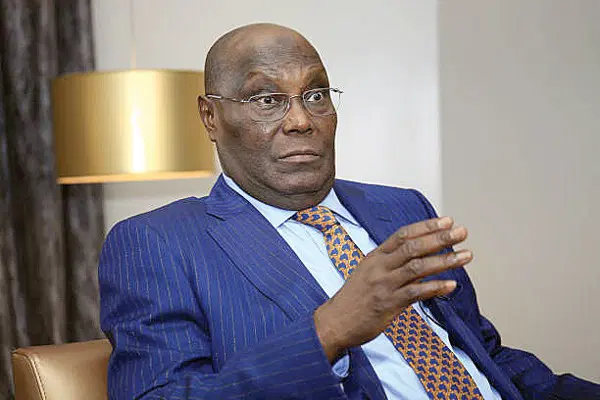
Former Vice President and presidential candidate of the African Democratic Congress (ADC), Atiku Abubakar, has called for a full, transparent and independent investigation into the alleged unauthorised disclosure of voter information from the Independent National Electoral Commission’s (INEC) Continuous Voter Registration (CVR) database, insisting that the electoral body’s latest explanation has raised more questions than answers.
The demand was contained in a statement signed by his Senior Special Assistant on Public Communication, Phrank Shaibu, and released in Abuja on Tuesday in response to INEC’s clarification on the controversy surrounding the disclosure of voter information from its restricted database.


According to Atiku, while INEC has sought to reassure Nigerians that there was no external hacking incident or breach of its ICT infrastructure, the Commission has nevertheless admitted that sensitive voter information was accessed using valid official credentials and subsequently released without authorization.
“INEC’s statement has moved this issue beyond conjecture. The Commission has now confirmed that voter information was accessed through credentials assigned to personnel participating in the ongoing CVR exercise and that such information was released without authority. That admission alone should concern every Nigerian,” he said.
“What Nigerians want to know is simple: how did information that resides within a restricted electoral database find its way into the hands of political actors and their associates? The fact that there was no external hack does not diminish the gravity of the incident. If anything, it raises even more troubling questions about internal controls, institutional safeguards, and the possibility of political interference.”
The former Vice President argued that the controversy was particularly troubling because the information was not exposed by whistleblowers, investigative journalists, or anonymous sources, but was publicly released by Lere Olayinka, the spokesman to the Minister of the Federal Capital Territory, Nyesom Wike.
“INEC has confirmed that this information was retrieved using authorized credentials. Nigerians deserve to know how material obtained from a restricted electoral platform found its way into the public domain through individuals closely associated with a serving minister. That question remains unanswered,” he stated.
Atiku further said the circumstances surrounding the disclosure have heightened public concern, especially given recent political developments.
“What makes this entire episode impossible to ignore is that the information in question did not emerge from a whistleblower, an investigative journalist, or an anti-corruption agency. It was publicly released by Mr. Lere Olayinka, spokesman to the Minister of the Federal Capital Territory, Nyesom Wike.
“INEC has now admitted that the information originated from its restricted voter registration database and was accessed using valid official credentials.
“Nigerians are therefore entitled to ask a simple question: how did information stored within a supposedly secure electoral database travel from INEC’s internal system into the possession of the spokesman of a serving minister?”
The ADC presidential candidate linked the issue to recent remarks made by Wike regarding the 2027 presidential election.
“Only days before this controversy erupted, Minister Wike publicly declared with remarkable certainty that Atiku Abubakar would not secure up to ten percent of the votes in Rivers State in the 2027 presidential election. It was an astonishing claim. Not because politicians are forbidden from making predictions, but because of the confidence, precision, and finality with which it was delivered.
“Ordinarily, such comments could be dismissed as political bravado. However, Nigerians are now confronted with a disturbing reality: individuals operating within the Minister’s political circle have been found in possession of information sourced from INEC’s restricted database.”
He questioned the basis for what he described as the minister’s “extraordinary confidence,” asking whether it reflected mere political rhetoric or a belief that certain political actors enjoy privileged access to institutions that are constitutionally required to remain neutral.
“The question therefore arises: what was the basis of such extraordinary confidence? Was it merely political chest-thumping, or does it reveal a mindset that believes certain political actors possess privileged access to institutions that are constitutionally required to remain neutral?” he asked.
According to Atiku, the matter has evolved beyond the unauthorized disclosure of a single voter record and has become a broader test of the independence and integrity of Nigeria’s democratic institutions.
“This is why the issue can no longer be reduced to the unauthorized disclosure of a single voter record. It has become a test of whether Nigeria’s electoral institutions are truly insulated from political influence or whether politically connected individuals enjoy access and advantages unavailable to ordinary citizens.”
He demanded full disclosure of the chain of custody of the information, including who accessed it, who requested it, who received it, how it left INEC’s custody, and why it eventually surfaced among political actors linked to a serving minister.
“These are not partisan questions. They are questions about the integrity of the democratic process itself. Until they are fully answered, concerns about political interference, privileged access, and the neutrality of key institutions will continue to grow,” he said.