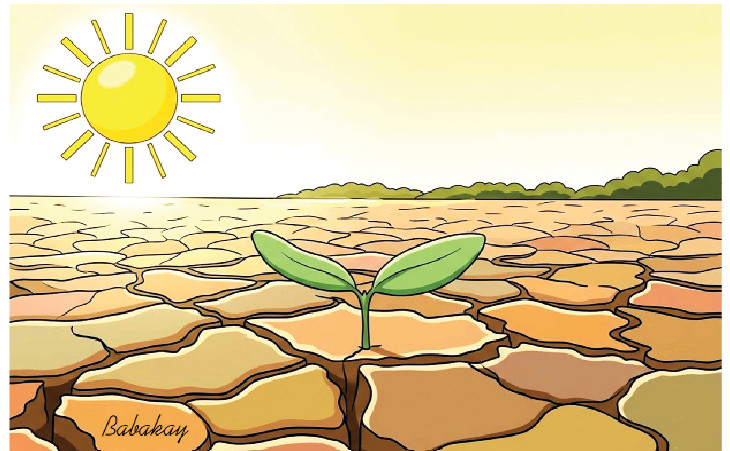
There are some weeks when writing comes easily. The news offers a breakthrough, an inspiring story, a remarkable achievement, or a reason to celebrate. Then there are weeks like this one, when the world seems weighed down by crisis, and finding something hopeful to say or write feels almost like an act of defiance.
Across continents, people are struggling. Wars rage on, displacing millions and leaving communities shattered. Economic uncertainty has become a global reality. Inflation continues to squeeze households. Climate-related disasters are increasing in frequency and intensity. Political divisions have deepened in many countries, and trust in institutions appears to be declining.
Closer to home, Nigeria faces its own daunting challenges. Insecurity remains a daily reality for many citizens. Communities continue to grapple with banditry, kidnapping, insurgency, and communal conflicts. The cost of living has risen sharply, placing immense pressure on families already struggling to make ends meet. Food prices have soared. Millions face difficult choices between feeding their families, paying school fees, accessing healthcare, or meeting other basic needs and now, paying ransom!
The education sector faces persistent challenges. Too many children remain out of school. Public schools often lack adequate resources and protection from insurgents, while universities continue to wrestle with funding constraints and disruptions. In healthcare, many Nigerians still struggle to access quality and affordable medical services. Poverty remains widespread despite the resilience and ingenuity that Nigerians demonstrate every day.
For many people, hope can feel increasingly distant especially when those vested with the responsibility to translate hope into opportunities are the very ones frustrating our collective efforts.
An Age of Crisis Fatigue
Indeed, one of the defining features of our age may be what some have described as “crisis fatigue.” The constant stream of negative headlines everywhere can leave even the most optimistic person feeling overwhelmed. Every day seems to bring another report of conflict, disaster, corruption, economic hardship, or institutional failure.
The question therefore arises: How do we maintain hope when circumstances appear hopeless? How does a nation redeem itself from the brink of destruction when all indicators point to hopelessness?
These are not merely philosophical questions. It is a practical one. Hope is not a luxury. It is a necessity. Individuals, communities, and nations cannot thrive without it.
What Hope Really Means
Hope is often misunderstood. Many people equate hope with wishful thinking. They see it as blind optimism or the refusal to acknowledge reality. But genuine hope is something very different.
Hope does not deny hardship. It confronts hardship honestly while refusing to surrender to it. Hope does not pretend that problems do not exist. It simply believes that problems are not permanent. Hope does not ignore suffering. Rather, it insists that suffering does not have the final word.
History offers powerful evidence for this perspective. Humanity has survived world wars, pandemics, economic depressions, slavery, colonialism, and countless other tragedies. Entire nations have risen from the ruins of conflict to become prosperous and stable societies. Communities devastated by natural disasters have rebuilt stronger than before. Social movements that once seemed impossible have transformed societies and expanded human rights.
Progress has never been linear. It has always been messy, uneven, and often painfully slow. Yet history repeatedly demonstrates that periods of darkness are not permanent.
Nigeria’s own story reflects this reality.
Since independence, the country has faced numerous crises: civil war, military rule, economic recessions, political instability, and security challenges. Yet Nigeria has endured. More importantly, Nigerians have endured. But for how long?